In the areas of the greenhouse where Vink Sion used to suffer the most damage from the tomato looper (Chrysodeixis chalcites), there's now an extra set of eyes keeping watch. These aren't human eyes, but digital ones—the PATS-C camera system, which automates real-time monitoring of flying moths. Each of the pepper grower's three greenhouses in Bitgum is equipped with the system. "For us, it's a very useful tool," says crop manager Albert van der Ziel, who now has several seasons of experience with this technology.
 © PATS
It was owner Jaap Vink who first suggested installing the PATS system a few years ago. "At the time, we didn't know exactly what it was, but we were curious," Albert recalls. That first year was mostly a learning experience. Before long, Albert and his colleagues noticed that the system gave them valuable insight into moth activity. "Over the years, we've come to rely on it more and more."
Photo on the right: Jaap Vink
Deployment of parasitic wasp against tomato looper
The PATS-C cameras have now been hanging in the Frisian greenhouses for about three years. What's new this season is the use of the parasitic wasp Trichogramma against the eggs of the tomato looper. These eggs would otherwise hatch into the notorious caterpillars responsible for feeding damage. In 2024, the team trialed Trichogramma along the greenhouse edges, where moth pressure was usually highest. "We already felt it was helping quite a lot," Albert explains.
This year, Trichogramma was released throughout two of the three greenhouses. "From the PATS-C data, we can clearly see reduced moth activity in houses 1 and 2, where we released Trichogramma across the entire crop. In the greenhouse without them, we actually see higher activity."
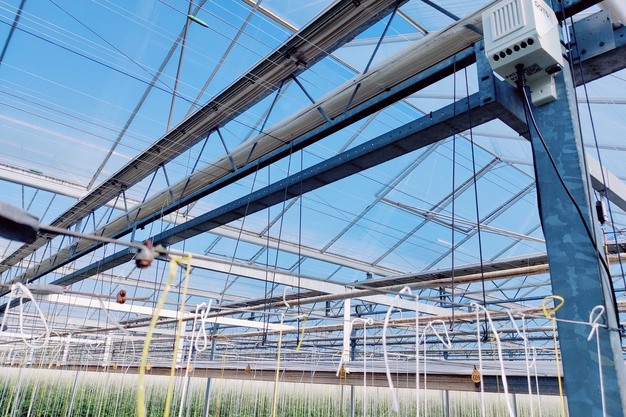 © PATS
Fewer tomato loopers counted
PATS sales advisor Wouter Stam confirmed Albert's observations with figures. "Where no Trichogramma was used, we measured up to five times more moths over the course of the year. In 2024, greenhouse 3 had one and a half times more moths compared to houses 1 and 2 with Trichogramma. In 2025, the difference was even greater, more than five times as many moths in greenhouse 3."
While a colleague carries out traditional scouting, Albert appreciates having PATS-C as a reliable backup. "It makes it much clearer for us to see how moth activity is developing."
Advice for scouting and releasing biology
The system, which samples flying insect activity, isn't followed blindly. Still, the growers at Vink Sion are eager to use the latest features offered by the Delft-based scale-up. "This year, the system started indicating when caterpillars are expected to appear after moth activity is spotted. That's a big improvement," Albert says.
In addition to tomato looper, PATS-C also detects Duponchelia fovealis. "We don't have much trouble with that pest ourselves," Albert notes. "But PATS-C can distinguish between the two species based on size, which helps us know which biologicals we need to release."
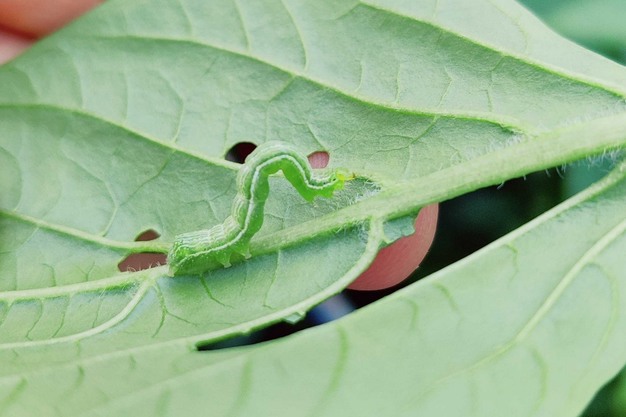 © PATSCaterpillar of the Chrysodeixis chalcites (tomato looper)
Increasing biological control
Biological control is a growing priority at Vink Sion. "We release Trichogramma against tomato looper, we rely mainly on biological solutions against aphids, and we're also successful with biological control of thrips," Albert explains. Thanks to this approach, chemical interventions are less often needed.
One surprising ally against moths is Cotesia, a parasitoid wasp that the growers don't introduce themselves but which shows up spontaneously. "This year we've seen a lot of them flying in. They parasitize caterpillars. I suspect they come over from a neighbor's greenhouse, where cabbage seed is being grown. I also know another pepper grower in a cabbage-growing area who sees Cotesia flying into his greenhouse naturally. Because we use biological controls like Trichogramma and therefore spray little chemistry, beneficials such as Cotesia and Euplectrus have more opportunity to settle and develop."
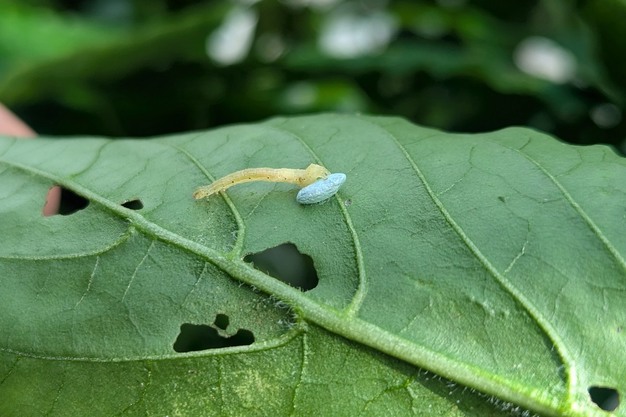 © PATSCotesia versus tomato looper in pepper cultivation
Vink Sion, which supplies peppers to Bakker Barendrecht and is part of Albert Heijn's 'Beter voor Natuur & Boer' program, is also working to boost biodiversity around the greenhouse. Flower mixes have been sown to provide a welcoming environment for beneficial insects.
"Confirmation that we are heading in the right direction"
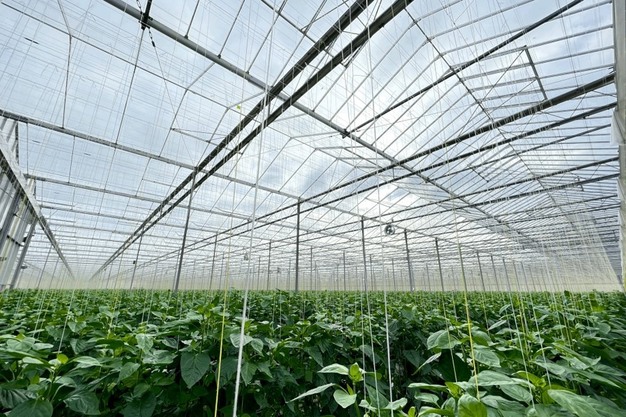
Albert also takes part in a study group with other pepper growers, most of whom are not yet using PATS-C. "But I do notice interest, for example when we recently had a demo at another grower's site." In the future, drones may even be used to directly eliminate moths detected by the system. "That's not possible yet in pepper crops—we have seven wires per square meter, which makes flying too difficult. But I've seen it working in other crops where the setup is less dense," Albert explains.
Harvest in Friesland runs until week 44, after which it's time for a crop change. Next year, Albert is determined to keep working with PATS-C and to release Trichogramma again. "The PATS-C data shows us we're heading in the right direction. It's reassuring to have that confirmation."
 © PATS
For more information:
PATS
[email protected]
www.pats-drones.com
Vink Sion
[email protected]
www.vink-sion.nl