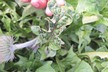
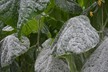
In Almería's autumn pepper cycle, the Regional Agricultural Information Network (RAIF) has raised the alarm over a high presence of red spider mite across many fields. The pest typically starts in small hotspots, visible as yellowish spots on the upper side of leaves. Where detection comes too late, these spots spread into large yellow patches, often followed by leaf drying and even defoliation.
Current weather conditions are playing directly in the pest's favor: temperatures around 30°C combined with dry air allow it to complete its full development cycle in just a week. According to RAIF, climate change, coupled with the shrinking number of available active substances, is making this pest an increasingly serious issue.
Preventive measures include eliminating weeds and crop residues, which can serve as reservoirs. In areas with a history of red spider mite, it is recommended to treat structures and soil before replanting, and to solarize for at least 30 days.
At the same time, Thrips parvispinus has also shown renewed growth since its first detection in 2020. In the current 2025/26 season, both the number of affected greenhouses and the severity of the outbreaks have increased compared to 2024/25. In some cases, growers have even had to pull out entire crops before harvest.
In previous seasons, parvispinus was mainly localized in the Poniente area of Almería (Adra, Balanegra, El Ejido, and Roquetas de Mar), particularly concentrated in Tierras de Almería. This season, however, the pest has spread to most areas of both Poniente and Levante Almeriense, though RAIF notes that incidence in Levante remains lower.
For thrips management, biological control remains the first line of defense, with beneficials deployed from the start to the end of the crop cycle. Where chemical interventions are needed, RAIF emphasizes that products must be highly specific to the pest and have minimal impact on beneficial organisms.
Additional strategies include the use of chromotropic traps for monitoring and vector capture, greenhouse nets to block insect entry, and maintaining field margins and hedges that support natural enemy populations.
Source: juntadeandalucia.es