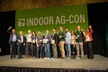
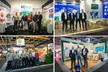
The 12th edition of the International Propagation Seminar (IPS) recently brought together over 100 high-tech propagators, researchers, and stakeholders from more than a dozen countries including the Netherlands, Italy, Canada, Mexico, and Finland. Organized by Grodan, this annual event has become a central platform for sharing cutting-edge insights and collaboration within the global horticultural community.
According to Andrew Lee, Knowledge Manager at Grodan, the seminar aimed to "elevate your business" this year, by covering a broad range of topics relevant to propagation and modern greenhouse cultivation. "Each year, we try to select a theme that not only reflects where we are as an industry, but also where we need to go," he explains. "This year, that meant focusing on light recipes, microbiomes, water treatment, and automation, topics growers can't afford to ignore."
The event featured a mix of expert presentations, breakout sessions, panel discussions, and new product announcements, all designed to stimulate both technical and practical conversations.
 © Grodan
Light as a steering tool
The morning sessions opened with a keynote from Professor Leo Marcelis of Wageningen University and Research, who highlighted how LED lighting technologies can now be used not only for illumination but also as an agronomic steering tool.
"With LED lighting becoming more dynamic and spectrum-controllable, we can now adjust blue and far-red light ratios to influence plant morphology during propagation," Andrew says. "It's about height and tailoring the entire plant structure: leaf area, volume, and generative potential."
This topic was carried forward by representatives from Signify (Gert-Jan Goes and Hedzer de Boer, Philips Horticulture LED Solutions), who discussed their GrowWise system and its ability to create light "recipes" integrated directly with climate computers.
Watch the aftermovie below:
Matching plant needs to market demands
A recurring theme throughout the event was customisation. Whether it was light spectrum trials to produce cucumber plants with specific characteristics or discussions about plant compactness for improved transport, it was clear that propagation must increasingly align with downstream logistics and market expectations.
"Growers are asking, 'how compact is too compact?' They want generative plants that travel well, but still develop optimally in production. That's where data-driven propagation comes into play."
Breakout sessions: Dehumidification, automation, and cultivation strategy
The IPS featured parallel breakout sessions allowing participants to tailor their learning. One focused on dehumidification in propagation, delivered by Rob van Hulzen from Van der Ende, while another explored new technologies for optimal cultivation environments, led by Jakob Boxhoorn of Bosman Van Zaal.
"One area where we see a shift is in active dehumidification," Andrew elaborates. "Growers are moving away from simply opening vents and towards technologies that retain energy while promoting plant activity. This becomes critical with the transition from SON-T to LED lighting, which naturally reduces radiant heat."
In a later session, Julia Erftemeijer of Artechno discussed the balance between automation and human expertise, while Jasper Verhoeven of Royal Brinkman explored early strategies for crop resilience.
Microbiome: Understanding the root zone ecosystem
One of the most thought-provoking sessions was delivered by Dr. Marta Streminska, a microbial ecologist at WUR Bleiswijk. She provided a clear, science-based overview of the root zone microbiome, dispelling common misconceptions and emphasizing that not all microbial activity is harmful.
"Many growers receive water analysis reports showing high bacterial loads and immediately assume that's a problem," Andrew mentions. "But those loads might include beneficial organisms. The problem isn't the presence, it's the lack of interpretation. That was a key takeaway."
Dr. Stremska also highlighted differences between organic substrates and stone wool: while organic materials typically host more fungi due to complex carbons, stone wool substrates tend to support more bacterial communities fed by root exudates. Importantly, both substrate types possess unique microbiomes that are neither inherently better nor worse.
Expert panel: Hygiene, water quality, and responsible practices
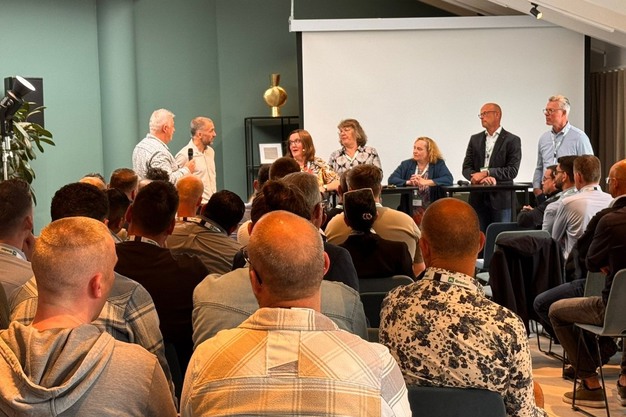
A new feature at this year's seminar was a panel discussion on nursery hygiene and root zone management. Experts, including Dr. Streminska, Werner van Mullekom (Agrozone), Claudia den Braver (Plantum), Adriaan Vermunt (Groen Agro Control), and Petra van der Goes (Plant Quality Solutions) tackled topics such as water treatment and the misuse of disinfection chemicals.
"We heard strong concerns from the panel about growers using water treatments like chlorine peroxide at concentrations far above what's recommended," Andrew says. "It often comes from a good place as they want clean systems, but it can actually damage root development and disturb the microbiome."
The panel agreed that passive water treatment systems (such as UV and ozone) are effective for general disinfection. Still, it emphasized the need for data interpretation and balance, rather than reactionary chemical use.
 © Grodan
Innovation at Grodan: Vermiculite-free solutions
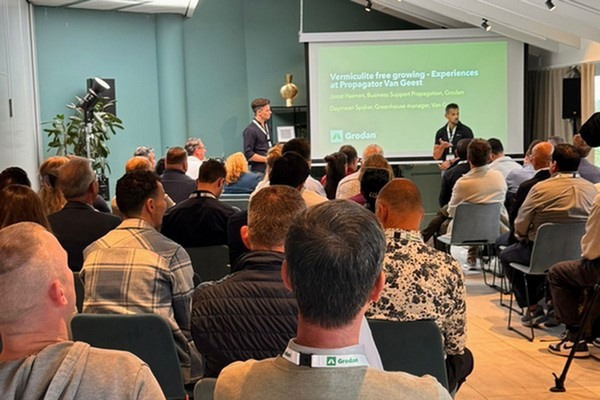
Grodan also used the occasion to launch a new propagation solution: the vermiculite-free plug and block. The product addresses a persistent pain point for growers using automation systems.
"Vermiculite has always played a critical role in seed germination, but it's a nightmare for automation. It clogs transplanting machines, slows down processing, and increases maintenance."
Developed in collaboration with Van Geest and supported by field input from Joost Haenen at Grodan, the new plugs and blocks eliminate vermiculite while maintaining or improving germination performance. "It took us several years to perfect," he shares, "but this is a real, tangible innovation based on grower feedback."
 © Grodan
Company visit at HilverdaFlorist
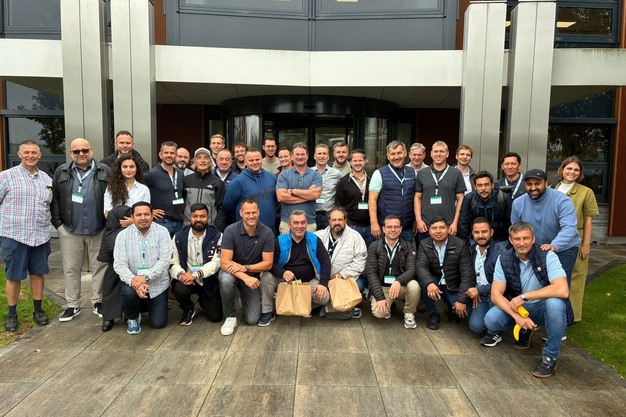
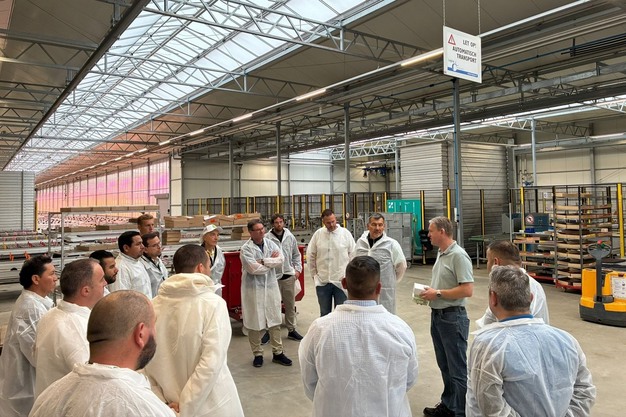
As part of the International Propagation Seminar 2025, a group of IPS attendees participated in a company visit to HilverdaFlorist. During the visit, participants had the opportunity to explore the company's state-of-the-art facilities and witness firsthand the latest technologies and innovative practices being implemented. The experience offered valuable insights into modern horticultural advancements and initiated meaningful discussions on the future of the industry.
 © Grodan
Looking ahead
The seminar wrapped up with some light-hearted team-building activities, including archery, mini-golf, and air gun shooting, before concluding with a barbecue dinner, allowing for continued networking and informal exchange.
But the momentum doesn't stop here.
"After 12 years, we're seeing familiar faces returning, and new ones joining," he concludes. "That's how real progress happens: in conversation, in collaboration, with repetition and in shared ambition."
For more information:
Grodan
www.grodan.com