At Hydroponic Systems, the team has spent years developing solutions that help growers protect the roots of their crops and optimise water management in greenhouses. One of the main threats to productivity is root disease, which can cause significant losses if not detected early.
The hydroponics experts at Hydroponic Systems have proven that early diagnosis is the most effective tool for preventing irreversible root damage and reducing dependence on corrective fungicides.
This guide offers a practical overview of how to recognize the initial symptoms, differentiate between problems caused by pathogens and abiotic factors, and learn about the most effective methods of diagnosis and prevention.
By the end, readers will have a clear understanding of how to identify, diagnose, and manage root diseases in greenhouses, with technical solutions adapted to different crops and production systems.
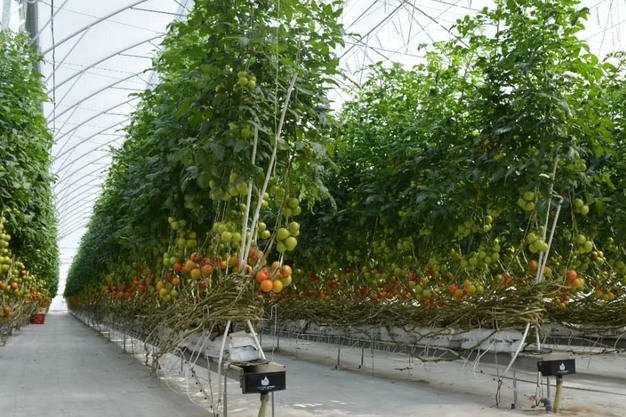 © JH Hydroponic Systems S.L.
Why is early diagnosis of root diseases so important?
Experience shows that early diagnosis makes the difference between a healthy crop and a loss that is difficult to recover from. Root diseases progress silently: by the time symptoms are visible above ground, the roots are usually already severely compromised. For this reason, early detection remains the best strategy for protecting the production system and ensuring the profitability of the season.
Economic impact of late diagnosis
When diagnosis is delayed, the economic effects are immediate. An attack by Pythium, Fusarium or Phytophthora can drastically reduce plant vigour, limit water and nutrient uptake and, as a result, decrease crop quality and volume.
In many cases, growers are forced to invest in expensive fungicides, replace substrates, or even replant, resulting in a cumulative economic impact that is difficult to recover in a single cycle. Conversely, identifying root symptoms in the early stages allows for quick action, reducing corrective treatments and avoiding millions in losses.
Differentiating pathogens from abiotic problems (pH, salts, excessive irrigation)
One of the great challenges for agricultural technicians is distinguishing between root disease and an abiotic problem. Excessive salts, inadequate pH, or excessive irrigation can cause symptoms very similar to those of a pathogen: yellowing leaves, wilting, or loss of vigor.
Hydroponic Systems has often observed that this confusion leads to incorrect treatments being applied, increasing costs without solving the real cause of the problem. For this reason, the company emphasizes the importance of combining field observation with diagnostic tools that differentiate between an environmental factor and a fungal or bacterial attack. Only in this way can an effective response be achieved that is adapted to the real needs of the crop.
Visible symptoms and hidden signs in the roots
Detecting root disease early requires observing both the above-ground and underground parts of the plant. In many cases, the first signs appear on the leaves and stems, but the real source of the problem is in the roots. That is why Hydroponic Systems always recommends a complete inspection that includes the substrate and root system.
Initial symptoms on leaves and stems
The first signs usually appear on the above-ground part of the plant, even though the real problem is underground. Some of the most common are: sudden wilting despite sufficient moisture in the substrate, yellowing of lower leaves, slowed growth and loss of vigour, and thinner, weaker stems than normal.
These symptoms are an early warning sign but should not be confused with nutritional deficiencies. To confirm, it is essential to check the condition of the roots.
Specific damage to roots: rot, color and texture
When roots are examined directly, clearer signs of disease become visible. Among the most common are: soft, dark roots indicating rot, color changes from healthy white to brown or black, unpleasant odors in the substrate caused by decomposition, and the absence of fine roots or capillaries essential for nutrient absorption.
Confusing signs: nutritional deficiencies vs pathogens
Root symptoms are often confused with nutritional deficiencies. For example, yellowing may appear to be nitrogen deficiency, necrosis in young leaves may resemble calcium deficiency, and wilting may be mistaken for insufficient watering.
Hydroponic Systems stresses that this type of confusion delays response and increases management costs. For this reason, the company recommends combining visual observation with substrate, water, and root analysis to confirm whether the problem is nutritional imbalance or an active pathogen.
Main root pathogens in greenhouse crops
In protected crops, root problems are usually dominated by a small group of pathogens that recur across production systems. Knowing what they are and how to identify them is key to taking timely action and avoiding losses. Hydroponic Systems has worked closely with growers facing these challenges, and the following represent the most common cases.
Pythium: the most common pathogen in hydroponic systems
Pythium is the most frequent root pathogen in hydroponic and water recirculation systems. Its presence is favored by high humidity and moderate temperatures.
Symptoms observed in the field include root rot of fine roots, plants with sudden wilting despite water availability, and delayed growth with reduced crop uniformity. A key characteristic is its ease of spreading through irrigation water, making soilless systems particularly vulnerable.
Fusarium: symptoms and differential diagnosis
Fusarium oxysporum is a vascular pathogen affecting both roots and the plant's conduction system. Its symptoms are more progressive: yellowing of lower leaves that advances upwards, necrosis in stems with blocked sap flow, and partial or total wilting that is difficult to reverse.
Differentiating Fusarium from abiotic problems such as excess salts requires internal observation of the stem. A cut reveals brown discoloration in conducting vessels, a definitive sign of infection.
Phytophthora and Rhizoctonia: risks and detection
Phytophthora spp. causes root and collar rot, leading to progressive darkening and collapse of the plant. Early detection is challenging because initial symptoms resemble wilting due to water stress.
Rhizoctonia solani produces brown lesions at the stem base and necrosis in young roots. It is particularly dangerous in seedbeds and seedlings, where it can wipe out entire trays.
Hydroponic Systems stresses that these pathogens should not be managed with corrective treatments alone. The priority must be prevention, monitoring, and early diagnosis as part of a broader greenhouse health management plan.
For more information:
Hydroponic Systems
www.hydroponicsystems.eu