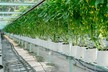
This summer, KUBO reached an important milestone in its mission for sustainable and future-proof greenhouse horticulture. The company received an ISO-based statement confirming that growing tomatoes in the Ultra-Clima® greenhouse leads to a significant reduction in CO2 emissions. This means that CO2-efficient cultivation is no longer a dot on the horizon, but something that is already happening today.
A reduced CO2 footprint
The Ultra-Clima greenhouse demonstrably contributes to more sustainable cultivation. This is evident from an independent and ISO-validated comparative study of tomato cultivation in an Ultra-Clima greenhouse and a traditional Venlo greenhouse, conducted at one of the best tomato growers in the Netherlands. Measurements show that the CO2 footprint of tomatoes in the Ultra-Clima greenhouse is 25.4% lower: 0.949 kg CO2e per kilogram of tomatoes compared to 1.272 kg CO2e in the reference greenhouse.
This significant reduction is due to the advanced technology of the Ultra-Clima greenhouse, in which efficient climate systems and a smart CO2 fertilization strategy play a key role. By using renewable energy sources, reusing captured CO2 and CO2 from the outside air as fertilisation, emissions are significantly reduced. Because this CO2 is always available, residual heat can even be used to grow crops with a CO2-neutral footprint.
In addition to the significant reduction in CO2 emissions, the Ultra-Clima greenhouse offers growers a wide range of benefits. Energy consumption is up to 18.5% lower, which directly contributes to a smaller ecological footprint. Thanks to the semi-closed design and innovative ventilation technology, climate control is optimal, ensuring a homogeneous climate and enabling cultivation in extreme weather conditions. The greenhouse is also fully screened, without any loss of light or reduced air exchange, as far fewer air vents are needed on the roof and ventilation is mechanical. This results in higher yields and improved product quality, while also significantly reducing water consumption and the use of crop protection products, which is good for both food safety and the environment. The use of modern technologies enables growers to work more efficiently and respond more quickly to changing market demands. In addition, this technology reduces power consumption, which is becoming increasingly important, and helps the agri-food chain and retail sector achieve their climate goals.
The results of this study have been validated by Anthesis, an internationally recognized consulting firm in the field of sustainability, including climate, nature, and environmental impact analyses. They then prepared the official verification by an auditor for ISO-14067. The ISO verification received confirms the reliability of the calculations and the impact of the cultivation method used.
A broader impact
In addition to the verified research conducted at KUBO's BlueLab test center, Anthesis conducted a second, independent desktop study. This study compared Ultra-Clima tomato cultivation with the average CO2 footprint of various tomato varieties in the Netherlands, as reported in the KWIN report by Wageningen University & Research. This also shows that growing with Ultra-Clima technology structurally leads to a substantially lower environmental impact, especially compared to the Dutch average.
Potential for other crops
The results presented relate to tomato cultivation, but the technology and principles behind Ultra-Clima are widely applicable. KUBO therefore expects a similar positive impact on the cultivation of other crops such as peppers, cucumbers, strawberries, and leafy vegetables. Further studies are being initiated to substantiate this potential.
For more information:
KUBO Group
Email: [email protected]
kubogroup.nl/