The University of the Free State (UFS), in collaboration with Rijk Zwaan South Africa, is conducting a trial to evaluate pepper cultivars grafted onto different rootstocks planted in a coir substrate with drip irrigation. At the helm is Dr. Gesine Coetzer, whose passion for plants and hands-on approach is driving real-world insights for commercial greenhouse growers.
"We're evaluating three different pepper cultivars grafted onto different rootstocks planted in a coir substrate with drip irrigation. Growers want answers on the necessity of planting grafted plants, which are more expensive than seedlings, and they want data that's robust," says Dr. Coetzer. She explains that while breeders often conduct cultivar trials with growers, these trials do not always produce statistically robust data. Collaborating with universities allows for properly designed scientific trials to be carried out.
 © UFS
© UFS
The collaboration with Rijk Zwaan
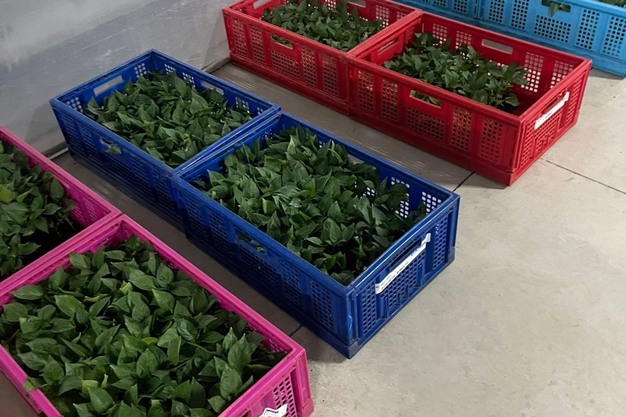
The pepper cultivars were sourced through Rijk Zwaan, facilitated by Gerhard Smit, their South African representative. Dr. Coetzer praises the collaboration: "Gerhard and his colleague Ruan de Bruyn came in with real support. He arranged the plant material and made sure we started with high-quality plant material. It's a blessing to work with people who are passionate and knowledgeable."
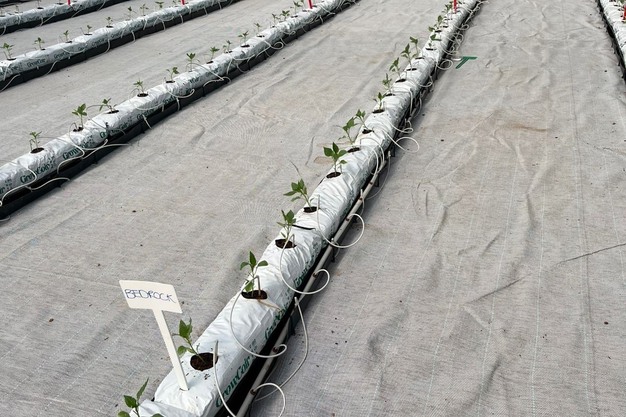
The trial includes red (Discofox), yellow (Zumba), and orange (Prosperity) sweet pepper cultivars. The plants are being tested on Robusto and Bedrock rootstocks as well as on their own roots (non-grafted control), allowing the team to study root development, plant vigor, and resistance to diseases. Dr Coetzer adds that they can already see differences in plant growth based on whether they're grafted or not. "In the initial stages just after transplanting, the plants on their own roots are growing more vigorously, while the grafted plants appear slightly set back- likely due to the grafting process. However, we can already see after only two weeks that the grafted plants are catching up, and they may even prove stronger by the end of the season. Let's see how it unfolds," she says.
 © UFS
© UFS
Substrates and disease resistance
One of the most exciting aspects of the study is the comparative analysis of how different rootstocks perform, not just in terms of disease resistance but also in terms of the influence on growth, yield, and fruit quality.
"Growers often underestimate the role rootstocks may play in root health and overall plant resilience," she explains. "We're seeing how the choice of rootstocks influences the development of the plant and its disease resistance. The rootstock isn't just passive; it can be a real driver of performance."
 © UFS
© UFS
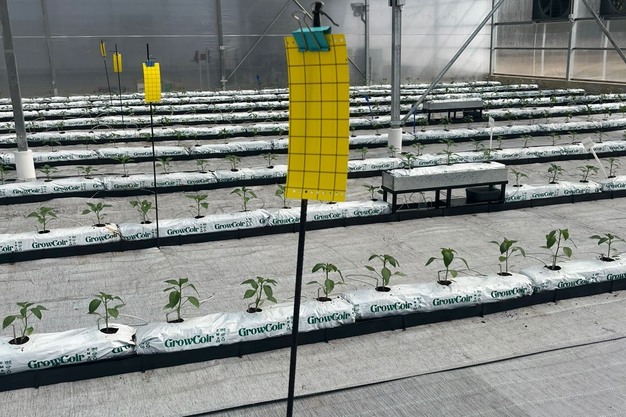
She acknowledges that working with pure coir substrate presents challenges, particularly the need for frequent irrigation and additional nutrients. Even so, coir remains an excellent medium, encouraging strong root development while offering good drainage. With the advanced Priva system in place linking climate control and irrigation, the team can manage these challenges more easily and with far greater precision.
A Dutch hydroponic expert, Wim Voogt of PUM, will also be visiting for two weeks to consult on nutrient solutions and provide training to staff and students," says Dr. Coetzer. She explains that the trials require constant monitoring. "We started with a fixed nutrient recipe, but in practice, adjustments are often necessary—especially when it comes to nutrients and irrigation."
The trials are being monitored for pest and disease pressure with support from the university's entomology and plant pathology departments. Weekly scouting and the use of insect traps help the team manage challenges as they arise, though Dr. Coetzer admits they're still in the early stages of implementing full integrated pest management.
 © UFS
© UFS
A learning experience for all
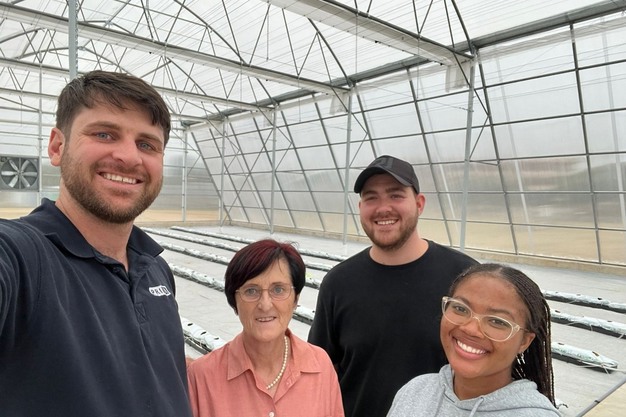
The project isn't just about data—it's a living classroom and a real-world training ground. Two postgraduate students are hands-on every week, collecting data and building skills they'll use in their careers, while undergraduates get a first look at high-tech hydroponic production in a climate-controlled greenhouse with a cutting-edge Priva system. In the future, the project will also offer short courses for industry professionals, providing practical insights that can be applied directly in commercial greenhouse operations.
As the season progresses, early indications are promising. The coir substrate is performing well, the plant material is strong, and the data is flowing in. The next steps will involve detailed analysis of yield, fruit quality, plant vigor, and pest resistance, with a strong statistical foundation to support the findings.
The team is excited to document all steps taken, with the paired results. Ultimately, Dr. Coetzer hopes the results will offer practical guidance for greenhouse growers, both in South Africa and beyond.
For more information:
University of the Free State
Dr. Gesine Coetzer
[email protected]
www.ufs.ac.za
Rijk Zwaan South Africa
www.rijkzwaan.co.za