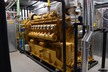
Turkish engineering company Enorpa has developed a hybrid heating system aimed at addressing the limitations associated with geothermal energy in greenhouse production. The system is designed to support more flexible scaling of greenhouse operations, particularly in regions where geothermal resources are available but not sufficient to meet peak heating demands on their own.
Turkey's geothermal potential has long offered opportunities for more sustainable and cost-effective greenhouse heating. However, the limited thermal capacity of individual wells, especially during the coldest periods, has often required growers to compromise on the size of their projects or invest in large, capital-intensive buffer systems to manage fluctuations in energy supply.
Enorpa's hybrid approach integrates geothermal energy with a supplementary LNG-based system, coordinated by an automation platform that adjusts output based on real-time heating requirements. The system aims to balance energy use efficiently while ensuring that heating demand is consistently met.
"Instead of designing greenhouses around the limitations of geothermal wells, our system adapts dynamically, delivering heat exactly where and when it's needed," explains Bulut Gunes, Founding Partner of Enorpa.
The engineering behind the advantage
The system contains a dual-loop heating design that maximizes both geothermal efficiency and LNG performance. Under normal conditions, the greenhouse is heated entirely by geothermal energy. However, when the system detects that the geothermal well cannot meet the full thermal load, typically during very cold periods, a high-efficiency LNG heating unit is activated.
The first loop, known as the High-Temperature Loop or Peak Power Circuit, is dedicated to delivering maximum heat precisely where it's most needed. In this circuit, water is heated directly by LNG boilers and circulated through specific high-demand heating zones within the greenhouse. Once the heat is delivered, the water returns directly to the boilers, enabling rapid reheating and continuous performance during peak demand.
The second loop, the Mid-Temperature Loop or Geothermal Circuit with Heat Recovery, demonstrates the system's most innovative engineering feature. Here, geothermal energy is still the primary source, transferred via a plate-type heat exchanger. But before the return water reaches this exchanger, it is routed through a flue gas condenser that captures residual heat from the LNG boiler's exhaust gases. With exhaust temperatures typically around 150°C, the return water absorbs significant waste heat, often cooling the flue gases to as low as 30–40°C before they are vented. This preheating process dramatically boosts the geothermal loop's output and overall system efficiency.
"Our approach turns waste into value," Bulut says. "We recover heat that would otherwise be lost and recycle it to amplify the geothermal system. It's about using two energy sources and making them work together intelligently."
The investor's bottom line
According to him, Enorpa's solution enables developers to build greenhouses based on business models and market demand, rather than being limited by the capacity of a geothermal well. This marks a significant shift in how projects can be planned and executed.
"One of the most immediate benefits is the elimination of large capital expenditures on buffer tanks and similar infrastructure, which are no longer required to ensure thermal reliability. By relying on intelligent automation and an integrated energy approach, we offer a more agile and cost-effective alternative to traditional systems."
Operational expenses are also optimized. The system always prioritizes the use of geothermal energy, which is the lowest-cost and most sustainable option, and supplements it with LNG only when necessary. Even then, waste heat recovery ensures that energy is used as efficiently as possible, maintaining the lowest feasible cost per kilowatt-hour.
Most importantly for growers, the system guarantees 24/7 thermal stability. This ensures that optimal growing conditions are maintained consistently, reducing the risk of crop damage from cold stress and helping to maximize overall yield. "Investors no longer have to choose between sustainability and scale."
"We've proven that with the right engineering, geothermal can be the foundation of large-scale, high-yield greenhouse projects. It's a more intelligent and economically sound way to build the future of agriculture."
For more information:
Enorpa
Bulut Gunes, Founding Partner
[email protected]
enorpa.com