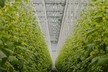
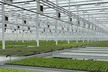
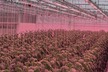
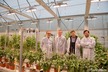
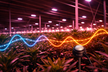
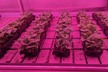
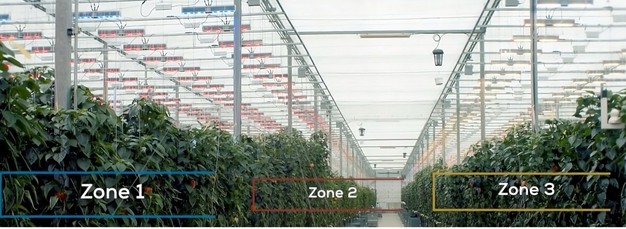
Within the same greenhouse there are differences between sections. The crops' requirements change based on factors such as the cultivar, the season and even the angle at which the sunlight enters the greenhouse.
Multi-zone lighting lets you apply a different lighting treatment in each area, so you can grow what you want, when you want, without compromise.
What is multi-zone greenhouse lighting?
When a greenhouse is divided into zones, each area can operate with its own recipe instead of applying the same one to all plants. This allows light conditions to be matched to crop physiology and market timing. The approach includes fine-tuning the spectrum by adjusting the ratios of red, blue, green, and far-red light, setting intensity levels through PPFD or DLI targets, controlling the photoperiod with start and stop times and ramping schedules, and applying seasonal strategies that differ between winter and summer. In practice, it functions like having multiple greenhouses under one roof, coordinated through a single platform.
Why single-zone systems fall short
If you've ever had to sacrifice one crop to keep another healthy, then you've experienced the limitations of a single lighting setup. Over time, these trade-offs can result in wasted energy, uneven growth, and reduced production. A single setting cannot serve different cultivars or growth stages effectively, which leads to some areas being over-lit while others are under-lit. This not only wastes energy but also affects yield. Such a system restricts growers to crops with similar light requirements and lacks the ability to adapt to seasonal variability.
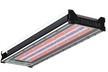
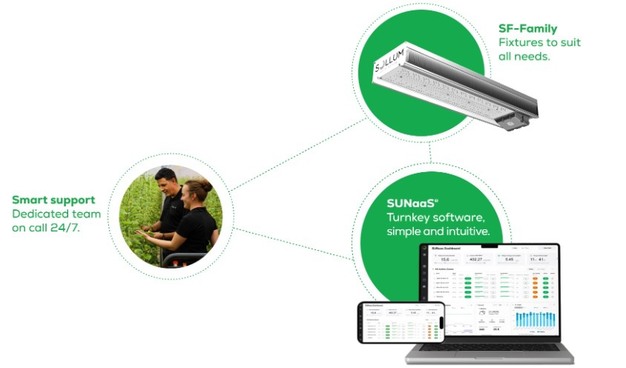
Zone-by-zone control is enabled with Sollum's advanced dynamic solution, which combines three elements to simplify operations. The system uses smart fixtures with dynamic LEDs that provide per-channel control to fine-tune the full spectrum. It is paired with SUN as a Service®, an AI-based cloud platform that automates schedules, adjusts output according to ambient light, and stores recipes tailored to crops, growth stages, and regions. In addition, the 360 Support service ensures continuous monitoring of the LED lighting platform and notifies Sollum of any changes in the system. Agronomic and technical experts are also available by phone, email, or on site, from planning through harvest.
 © Sollum Technologies
Sollum's advanced dynamic LEDs provide full spectrum control by adjusting every color in the light spectrum independently. This capability allows growers to trigger specific plant responses, such as blue light for structure and vegetative growth, red light for flowering and fruit load, green light for canopy penetration and visibility, and far-red light for morphology responses. The technology also supports smooth light transitions throughout the day, including sunrise, midday, and sunset ramps. It enables parallel schedules with different photoperiods across zones and offers a single dashboard for monitoring energy use and performance data zone by zone.
Multi-zone design strategies help maximize the benefits of greenhouse lighting. Zones can be organized by crop type to create optimal growing conditions for plants with similar light requirements, or by growth stage to match lighting to plant physiology at each step. Zoning can also align with production schedules to stage crops for year-round markets. For example, zones can be dedicated to peak production for high output, to winter support for extending short days, or to research and development for testing cultivars or recipes without risking the main production.
 © Sollum Technologies
Successful implementation begins with careful planning. Infrastructure should include independent circuits for each zone, networked control for fixtures and sensors, and accurate placement of light, temperature, humidity, and CO₂ sensors. Proper mounting heights and spacing for each bay or crop are also important. Zone boundaries can be established with walls, curtains, or distance to limit light spill, while keeping access corridors clear and allowing for reconfiguration. Climate integration is necessary because LEDs produce less heat than legacy lighting, which affects heating requirements. Changes in intensity can also influence transpiration and humidity, making airflow and dehumidification critical. High-intensity zones may require additional CO₂ to maintain balance.
Zoning provides energy and operational advantages by directing light where it is needed and reducing it where it is not. This targeted delivery prevents over-lighting of low-value areas. Demand-based operation allows empty zones to be dimmed or turned off while active ones are optimized. Staggered schedules can soften peak demand and reduce charges, while seasonal optimization balances artificial and natural light. Actionable data from the dashboard supports continuous refinement of energy use and performance.
When lighting matches plant physiology, growth becomes more predictable, and crop management improves. Stage-specific spectrum and intensity targets lead to consistent development, while appropriate intensity reduces plant stress and supports strong structure. Predictable daily lighting also results in tighter harvest windows, which simplifies scheduling and market planning. Quality becomes more consistent across batches, with reproducible traits such as color, flavor, and uniformity.
Getting started with multi-zone lighting management begins with an assessment of crops and sales schedules. From there, growers can design a few zones that make the most impact and expand as needed. The process includes mapping bays, crops, and goals; selecting initial zones based on crop type, stage, or schedule; validating electrical and network capacity; and choosing light recipes from the SUNaaS® library. Guardrails such as minimum and maximum PPFD, ramps, and photoperiods are set to ensure control. Continuous monitoring, learning, and iteration across zones complete the cycle of improvement.
For more information: Sollum Technologies
sollumtechnologies.com