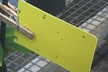
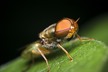
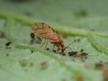
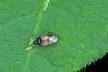
On 15 August 2025, the Netherlands confirmed its first finding of Hishimonus sellatus in a greenhouse in the province of Utrecht. The insect was detected during surveillance for another pest, Scirtothrips dorsalis, which had been discovered earlier in the same compartment. Yellow sticky traps placed to monitor thrips activity instead revealed a new issue: adults of H. sellatus were present in significant numbers.
The first record came on 12 August, when 40 adults were collected from six of ten traps, with one heavily infested trap holding 29 individuals. Further inspections showed declining numbers: nine adults on 19 August, four a week later, and a single adult on 2 September. By 9 September, no specimens were found.
A visual inspection on 26 August linked the insects to sucking damage on bonsai plants of Rhododendron indicum, situated beneath the most infested trap. These plants had been imported from China earlier in the year. In total, 661 R. indicum plants were present in the compartment, alongside other bonsai species including Buxus harlandii, Camellia japonica, Ginkgo biloba, Ilex microphylla, Ilex crenata, Loropetalum chinense, Metasequoia glyptostroboides, Pseudolarix amabilis, Podocarpus macrophyllus, Syzygium buxifolium, and Zelkova parvifolia.
Although H. sellatus is not listed in EU Regulation 2016/2031 and does not appear on the EPPO A1 or A2 lists, the Dutch NPPO declared it a pest qualifying as a quarantine organism on 1 September 2025, following a preliminary risk analysis. The likely source of the outbreak is the imported Rhododendron indicum.
Specimens were identified morphologically, using references by Linnavuori (1960), Kim et al. (2014), and Du & Dai (2019). The NIVIP laboratory confirmed the identity on 15 August 2025.
On 29 August, official eradication measures were launched. These included a 35-day treatment program with plant protection products, strict waste disposal in sealed containers, and hygiene protocols to prevent spread. Some treatments already applied against S. dorsalis were also effective against leafhoppers. Monitoring continues with yellow sticky traps, which are replaced weekly and will remain until at least 15 days after treatments end. Before release, plants will undergo visual inspection to confirm pest absence.
The outbreak is classified as "transient, under eradication." While the numbers detected declined rapidly, the Dutch NPPO is maintaining strict control to ensure the pest does not establish. The case highlights the risks posed by imported bonsai plants and the importance of surveillance in safeguarding plant health.
You can read the full report at the link here.
Source: Netherlands Food and Consumer Product Safety Authority