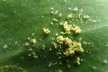
On 31 July 2025, Scirtothrips dorsalis was officially detected on bonsai plants of Podocarpus macrophyllus in a greenhouse in the province of Utrecht. The pest was found during a post-import monitoring inspection and confirmed the same day by the Netherlands Food and Consumer Product Safety Authority (NVWA), acting as the National Plant Protection Organization (NPPO).
Scirtothrips dorsalis Hood, 1919, is a quarantine pest listed in Annex II-A of EU Regulation 2019/2072. It attacks a wide range of crops and ornamentals, damaging leaves and buds. Although it is a weak flyer, the insect spreads effectively through infested plants, making international trade a major risk pathway.
The outbreak was confined to one greenhouse compartment of 0.2 hectares containing 1,721 Podocarpus macrophyllus plants. Other bonsai species were also present, including Buxus harlandii, Camellia japonica, Ginkgo biloba, Ilex microphylla, Ilex crenata, Loropetalum chinense, Metasequoia glyptostroboides, Pseudolarix amabilis, Rhododendron indicum, Syzygium buxifolium, and Zelkova parvifolia. While thrips were only observed on Podocarpus, eradication measures cover all plants in the compartment. Adjacent compartments were inspected and showed no signs of infestation.
The affected plants had been imported from China, identified as the likely source of the outbreak. Forward tracing is under way to check for other consignments that may pose risks. The detection highlights the importance of monitoring systems in preventing the establishment of invasive species linked to plant trade.
Identification of the pest involved both morphological and molecular methods. Specimens were preserved in ethanol, mounted on slides, and compared against reference works and NVWA's own collection. One specimen was analyzed through CO1 sequencing. Both approaches confirmed the identity as Scirtothrips dorsalis.
On 1 August 2025, official phytosanitary measures were introduced. All plants in the affected compartment were blocked, and a 35-day treatment program with plant protection products began. Waste is being disposed of in sealed containers, and strict hygiene measures are in place. Yellow sticky traps are used to monitor populations, checked weekly until at least 15 days after treatments end. Before any release, plants will undergo a final inspection to ensure the pest's absence.
The Netherlands currently classifies the pest status as "transient, under eradication." The case demonstrates how rapid detection and official action are essential to protect plant health and maintain pest-free status.
The full report is available at the link here.