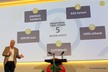
The governments of Germany and Nigeria, together with the European Union (EU), have launched the Agriculture Value Chain Facility (EU-VACE) Transformative Agricultural Systems for Rural Economic Development (TARED) project. The €18.3 million (US$19.7 million) initiative will target tomato and ginger value chains in Nigeria.
The program will be implemented by the Deutsche Gesellschaft für Internationale Zusammenarbeit (GIZ) in collaboration with Nigeria's Federal Ministry of Budget and National Planning and the Federal Ministry of Agriculture and Food Security. The project will run from October 2024 to September 2028 in Cross River, Kano, Kaduna, Kebbi, Ondo, Oyo, and Plateau States.
Andrea Ruediger, a GIZ representative, said the initiative aims to create or enhance 10,000 new jobs and provide €2 million (US$2.15 million) in access to finance. "We are aiming to work with 25,000 beneficiaries, mainly women and youth. We'll be working with key value chain stakeholders to ensure that they understand the principles of value chain promotion," she said.
The project targets a 15 percent reduction in post-harvest losses across the selected value chains. It also seeks to increase farmer incomes and business turnover by 15 percent. Ruediger added that the project plans to develop at least 25 investment proposals, with 15 expected to be supported, and aims for 15,000 beneficiaries to adopt climate-smart or inclusive practices.
Oladoyin Olawaiye, deputy country director of GIZ Nigeria and the Economic Community of West African States, said the program applies an inclusive value chain approach to address challenges such as climate change, weak agro-processing frameworks, environmental degradation, and insecurity.
EU Ambassador to Nigeria Gautier Mignot said agriculture remains central to Nigeria's economic development. "Nigeria's agricultural sector is rich in potential, and yet we know that it faces persistent challenges like infrastructure deficits, limited storage and processing capacity, and weak access to finance. Solving these is not only critical for food security, it is critical for security as a whole," he said.
Johannes Lehne, deputy head of mission at the German Embassy, described the initiative as part of longstanding cooperation between Germany, the EU, and Nigeria. Nigeria's Minister of State for Agriculture, Aliyu Abdullahi, thanked the EU for funding and GIZ for technical support, noting that agriculture continues to employ millions of Nigerians across rural and urban communities.
Source: Business Day