Seed storage chambers are pivotal to thriving harvests, dependable research, and a steady seed pipeline. Properly designed and constructed seed storage chambers provide the right balance of moisture, temperature and cleanliness – keeping seeds poised for germination without tipping into sprouting or decay.
Achieving this balance isn't as simple as setting a thermostat and walking away. Seeds breathe, adapt and sometimes rebel against static conditions, making humidity control and thermal precision essential. Even slight drifts can undermine genetic integrity or skew experimental results.
In the following overview, we unpack some of the science behind seed storage chambers, touching on moisture equilibrium, the ideal environmental parameters for short-, medium- and long-term storage, and practical strategies to avoid common missteps – enabling you to preserve viability from the lab bench to the field.
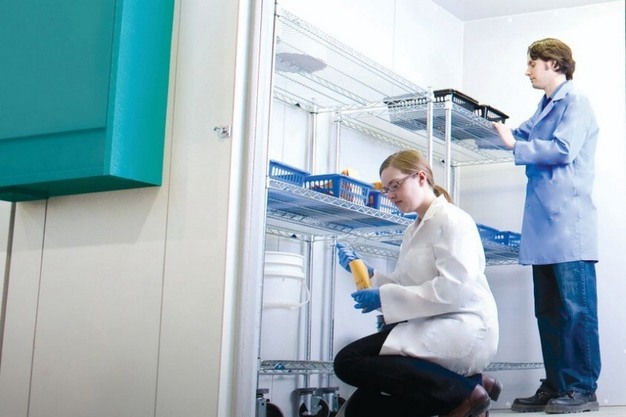 © Conviron
What is seed storage?
Seed storage is the science of keeping seeds dormant and healthy over time by controlling their surrounding environment. The objective is to halt metabolic activity without damaging seed structure, ensuring seeds remain ready for germination when needed. Key factors influencing seed viability include the following:
Moisture Level: Seeds exchange water vapor with the air until equilibrium. Targeting a moisture content of 5–10 % by weight minimizes the risk of premature sprouting or fungal growth.
Temperature: Cooler conditions slow biochemical reactions. Short- to medium-term storage often uses +2 to +10 °C, while long-term conservation may require –18 °C or lower.
Depending on the end goal, seed storage requirements vary. A week-long staging for a typical agbiotech company for example demands rapid access and precision, while long-term university or national seed germplasm collections may require multi-year stability, with some gene banks operating at ultra-low temperatures for decades.
By keeping both moisture and temperature within precise limits, seeds can retain viability for days, months, and even decades, supporting research reproducibility, biodiversity conservation and reliable planting schedules.
Why seed storage matters
Maintaining rigorous control over storage conditions is essential to safeguarding seeds' genetic value, ensuring experimental validity and supporting uninterrupted production cycles. When seeds experience stable environments, their unique traits remain intact, germination rates stay predictable and operational timelines stay on track. The cost associated with personnel, materials and equipment usage, not to mention delayed timelines in plant growth chambers and rooms can be significant. This applies to R&D departments at agbiotech companies or large scale trials at universities and research institutes.
Fluctuations in temperature or humidity can erode biodiversity reserves, introduce variability into research outcomes, and trigger costly delays in seed-dependent processes. Proper seed storage is critical for several reasons.
Genetic diversity preservation depends on it. National and global seed banks rely on ultra-stable environments to protect against environmental volatility and crop failure. Without such safeguards, the integrity of these collections—and the future of many crops—would be at risk.
It also underpins research reproducibility. Uniform seed lots help eliminate or reduce variability in plant science studies, ensuring that experimental results are valid and repeatable. Without consistency in seed storage, research outcomes can become unreliable.
Commercial continuity relies on proper storage. Seed producers and agbiotech firms need staging buffers to align with production schedules. A single compromised batch caused by storage drift can lead to significant financial and operational setbacks.
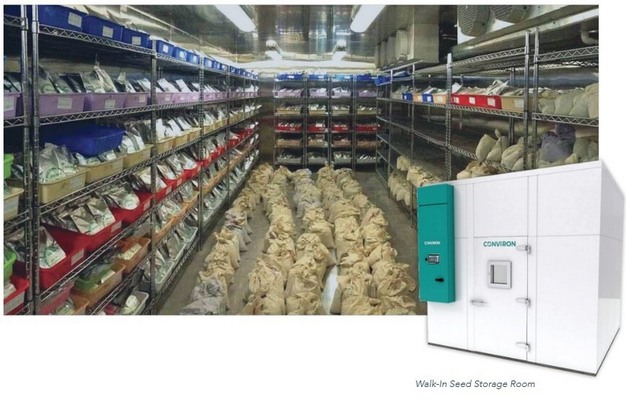 © Conviron
Recommended conditions and time frames
Seeds face distinct physiological stresses depending on their length of storage. Short-term storage prioritizes quick access and moderate environmental control. Medium- and long-term conservation aims to arrest metabolic activity and prevent age-related declines. To meet these diverse needs, seed storage environments should be configured with specific temperature and humidity ranges aligned to each timeframe.
Short-term storage, typically lasting from days to weeks, requires temperatures between 2–25 °C and relative humidity (RH) levels of 30–60%. This approach is common in research labs where seed cycling is frequent. Standard plant growth chambers, such as the Conviron GEN1000, can meet these parameters without additional hardware.
Medium-term storage, spanning months to years, is best maintained at 2–10 °C with RH between 30–50%. This method supports university collections and greenhouse staging. To achieve these conditions, integration of discrete mechanical dryers using desiccant wheels is often necessary, as they can lower dew points beyond what traditional dehumidification methodologies allow.
Long-term storage, which extends from years to decades, requires much stricter conditions: temperatures at –18 °C or lower and RH at or below 30%. These conditions are used in national gene banks and commercial seed vaults. Walk-in rooms equipped with chemical rotor dryers, such as the HC-300, and redundant refrigeration loops ensure stable operation over decades.
Several useful rules of thumb help guide seed storage practices. James' Rule states that ideal storage conditions require the temperature in degrees Fahrenheit plus the ambient RH percentage to remain below 100. For example, at 50% RH, the storage temperature should be below 50 °F (10 °C) to achieve medium-term storage. Harrington's Rule notes that within temperature ranges of 0–40 °C and moisture content ranges of 5–14%, seed longevity approximately doubles for every 10 °F (5.6 °C) reduction in temperature and every 1% reduction in seed moisture content.
Key environmental control components
Effective seed storage depends on temperature stability, moisture regulation and environmental hygiene. Control over these elements ensures seeds remain in a suspended state, protected from premature aging, microbial threats and structural damage.
Temperature precision
Maintaining a tightly controlled thermal profile is the single most important factor in slowing seed metabolism. Seed storage chambers should control to within ±0.5 °C of setpoint to avoid circumstances that can trigger uneven aging or dormancy loss.
Multi-stage refrigeration circuits and zoned sensors work together to drive consistency, even under heavy load or fluctuating ambient temperatures.
Humidity management
Water vapor is the enemy of dormant seeds; yet desiccation must be balanced to prevent structural harm. Low-dew point dehumidification achieved via desiccant modules and continuous relative-humidity monitoring keeps moisture content within ideal prescribed ranges.
Real-time feedback loops adjust airflow and regeneration cycles to maintain target dew points without over-drying. While desiccant wheels deliver the lowest dew points, mechanical bypass dehumidifiers can suffice when target RH stays above ≈30%.
Containment control
Seeds stored for months or years are more vulnerable to pests, mold and particulate intrusion. High-integrity seals, positive-pressure airlocks and HEPA-grade filtration can help create an exclusion barrier against insects, spores and dust. When combined with periodic environmental audits, these measures uphold a clean atmosphere that preserves seed health over time.
Avoiding common seed storage pitfalls
Proper design, manufacture and commissioning, along with vigilant operation and ongoing preventative maintenance are essential to ensure high-performance seed storage chambers and rooms yield the kind of stability and reliability you need for your particular program. Addressing common technical and procedural issues early prevents costly failures and preserves seed viability over time
Pre-Drying Accuracy: Verify seed moisture levels with inline analyzers before storage. Under-dried seeds invite mold and rot; over-dried seeds suffer cellular damage and reduced germination.
Condensate Management: Removing effluent from the chamber area in a positive manner is essential to managing in-chamber conditions. Other elements such as well designed venting of ancillary components used in the chamber is essential to long-term, reliable performance. reactivation exhaust with sloped ductwork, traps and pumps to direct condensate away from equipment. This prevents water backflow that can impair desiccant performance and chamber integrity.
Power Assurance and Component Redundancy: Depending on the design intent of the environment, the incorporation of redundant components may be desirable to ensure continuous operation in the event of a single component failure. The Incorporation of UPS or similar power backup methodologies can also serve to maintain equipment performance through power failures. These measures all help to ensure continuous control of temperature and humidity thereby safeguarding seeds from environmental excursions.
By systematically addressing these pitfalls—moisture control, condensate removal and power resilience—seed storage systems achieve the reliability required for short- and long-term preservation. Proactive maintenance and monitoring help further ensure robust seed storage chamber and room designs are reliable equipment for your program.
Takeaways
Thoughtfully designed seed storage chambers and rooms combine biological insight with engineering rigor. By balancing moisture equilibrium, thermal precision and environmental hygiene, facilities and researchers can create storage environments that halt metabolic activity without compromising seed integrity. Robust monitoring and redundancy safeguards against unforeseen failures so conditions remain within target ranges over days, months, and years.
Effective seed storage ultimately contributes to solving important challenges such as protecting biodiversity, enhancing research reproducibility, and underpinning reliable production cycles. A proactive approach to design, commissioning, and ongoing maintenance allows those responsible for seed storage to navigate challenges for short- and long-term initiatives with confidence.
For more information:
Conviron
www.conviron.com