"Propagation is the foundation of every successful crop cycle. At this stage, seedlings are extremely sensitive — even small fluctuations in humidity or temperature can compromise rooting, trigger disease outbreaks, and reduce uniformity. These early stresses often follow plants throughout their life cycle, reducing yields and marketable quality", says Justin van der Putten, Regional Director with DryGair. "In recent years, grafting has become a widely adopted tool to combat soilborne diseases and improve plant vigor. Studies confirm its effectiveness against fusarium wilt, bacterial wilt, and nematodes. Yet, working closely with growers across North America and Europe, I've learned that grafting alone is not enough. The propagation environment itself — particularly humidity — often determines whether grafting succeeds or fails."
 © DryGair
The fragility of young plants
Justin explains seedlings and grafted plants require highly stable conditions to thrive. "Excess humidity creates perfect conditions for damping-off and Botrytis", he gives as an example. "Uneven rooting leads to non-uniform plants that never fully recover. Stress in the first few weeks costs growers in both survival rates and future yield. Research highlights the same reality: propagation is the most vulnerable stage of production, and humidity is the decisive factor in plant health and survival."
Grafting: Benefits and boundaries
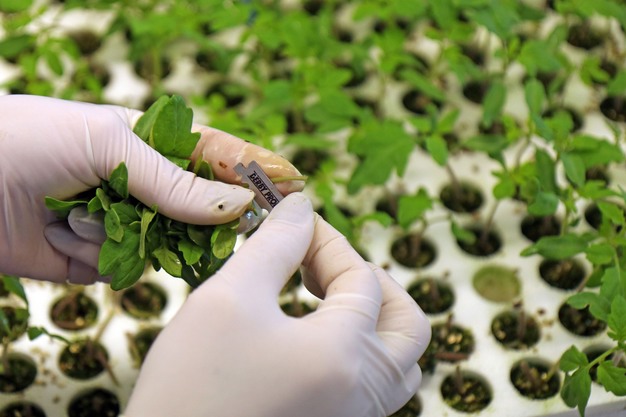
Grafting is a powerful innovation. "Resistant rootstocks such as Maxifort, Robusta, CRA 66, and Hawaii 7996 protect against devastating pathogens like Fusarium and bacterial wilt. Grafting also improves nutrient uptake and tolerance to salinity, flooding, and temperature stress." However, resistance is not immunity. "Even grafted plants can fail when environmental conditions — especially humidity — are unstable. Studies show that the effectiveness of resistant rootstocks is strongly influenced by soil moisture, temperature, and relative humidity. This means the environment, not just genetics, determines grafting success."
 © DryGair
Traditional climate methods aren't enough
Many propagators still depend on traditional methods to control humidity, but Justin explains these are insufficient. "Ventilation reduces humidity but wastes CO₂ and energy, and introduces pests. Heating increases air temperature, but does little to reduce relative humidity, while stressing young plants."
Chemical fumigation is increasingly restricted, costly, and not aligned with sustainable or organic production. "So, for precision propagation, none of these methods provide the stable control required."
Active dehumidification: The missing link
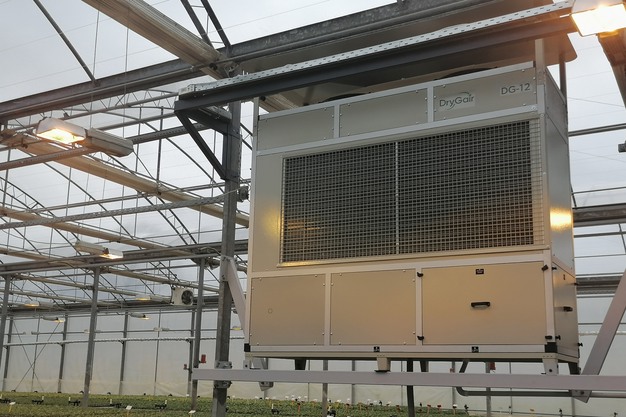
"Active dehumidification allows direct, independent control of relative humidity — unaffected by external weather or heating cycles", Justin continues. "For propagation, it delivers higher graft survival rates through stable healing conditions, and reduced disease outbreaks, especially Botrytis and damping-off." He explains uniform rooting and growth, improving transplant quality. "And lower energy consumption, by reducing the need for ventilation and heating." Cutting dependence on chemical interventions result in sustainability benefits. "By ensuring a steady, healthy environment, active dehumidification unlocks the full potential of grafting."
 © DryGair
Building strong foundations
"Grafting has revolutionized horticulture by giving growers tools to fight soilborne diseases. But grafting alone is not enough. Without stable humidity control in propagation, young plants remain at risk", Justin concludes. "Active dehumidification closes this gap. It ensures that propagation — the most fragile stage of production — becomes reliable, predictable, and profitable. Behind every strong crop is a strong start. And behind every strong start is smarter climate control."
Justin will participate at PROPAGATE! taking place next week in Netherlands.
For more information:
DryGair
www.drygair.com
https://drygair.com/drygair-for-propagation-success-lp/
References
Rivero, R.M., Ruiz, J.M., & Romero, L. (2003). Role of grafting in horticultural plants under stress conditions. Journal of Food, Agriculture & Environment, 1(1), 70–74.
Lee, J.M. (2003). Advances in vegetable grafting. Chronica Horticulturae, 43(2), 13–19.
Colla, G., Rouphael, Y., Cardarelli, M., et al. (2010). Grafting to improve root system functioning under abiotic stress. Scientia Horticulturae, 127, 147–155.
Rivard, C.L. & Louws, F.J. (2008). Grafting to Manage Soilborne Diseases in Heirloom Tomato Production. HortScience, 43(7), 2104–2111.
Black, L.L., Oda, M., & others (2003). Grafting tomatoes for production in the hot-wet season. AVRDC Bulletin 03–551.