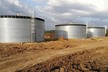
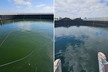
Water is scarce and expensive in Morocco. After six consecutive years of severe drought, dam levels nationwide are critically low. Reuters reported that rainfall was 53% lower this year compared with the 30-year average, and by early 2025 reservoir filling rates had dropped to just 26%, with key agricultural regions like Souss-Massa at only 15% capacity.
As a result, growers are increasingly reliant on desalinated water, which costs around $0.56 per cubic meter — more than five times the price of conventional supply. To cope, Morocco is accelerating investments in desalination plants, water transfer projects and new dams to meet rising demand from agriculture and cities.
 © WayBeyond
The goal
This research with a leading Moroccan berry grower aimed to improve the precision of berry irrigation in substrate conditions. The objective was to develop a proactive irrigation model that adjusts based on predicted climate parameters, while also tracking the impacts on plant growth, fruit quality, and yield. A key part of the study was comparing water and nutrient efficiency with standard grower practices.
The method
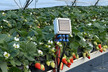
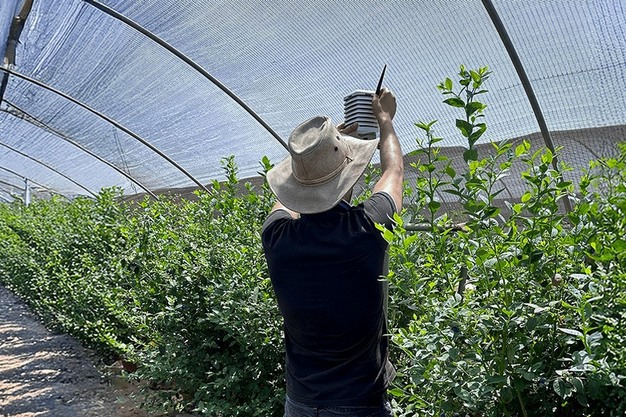
Two greenhouses were monitored over a five-week period. In Greenhouse 10, the FarmRoad strategy was used, where irrigation events were informed by FarmRoad's climate and root zone sensors, combined with forecasts for ETo, VPD, and radiation. Drip and drain data were collected daily via the FarmRoad app. In Greenhouse 11, the traditional grower strategy was maintained for comparison. Measurements included water and fertilizer consumption, fruit size, EC, firmness, pH, brix, acidity, dry matter, and water content.
The results
The trial showed an average water savings of 15.8 percent, with the range of savings spanning from 8.6 to 27.3 percent. This translated into a cost impact of US $225 per hectare saved in five weeks, which would be equivalent to $2,167 per hectare annually based on an 11-month cycle. Fruit quality was maintained throughout the trial, with a slight improvement in firmness. The nutrient solution also demonstrated greater stability in EC and drainage, reducing the risk of salt build-up and supporting long-term root health.
Why it matters
For growers using irrigation systems to manage fertigation, water efficiency is a direct path to lowering input costs. Even small percentage gains compound into thousands of dollars saved per hectare. Importantly, this can be achieved without compromising fruit quality or yield.
This trial extends earlier research with a Mexican tomato grower, where FarmRoad-based irrigation strategies achieved a 14–16% water saving. Despite different crops, climates and research timeframes, the outcome in Morocco was remarkably similar: consistent reductions in water and fertilizer use while maintaining crop quality.
The evidence is clear: with FarmRoad, growers can make proactive, data-driven irrigation decisions that cut costs and safeguard long-term crop health.
For more information:
WayBeyond
waybeyond.io/