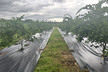
The search for more efficient and sustainable solutions for managing solar radiation in greenhouses has led to the creation of the Thermoactive Operational Group. The project focuses on developing thermo-sensitive plastic materials with an optimal activation point, capable of automatically adapting to the climatic conditions typical of greenhouses in southeastern Spain. "The goal was to develop an intelligent greenhouse cover material that, depending on its temperature, can change its optical properties to reduce solar radiation transmission and increase light diffusion," says Esteban José Baeza Romero, participant in the project on behalf of Coexphal.
 © GO Thermoactive
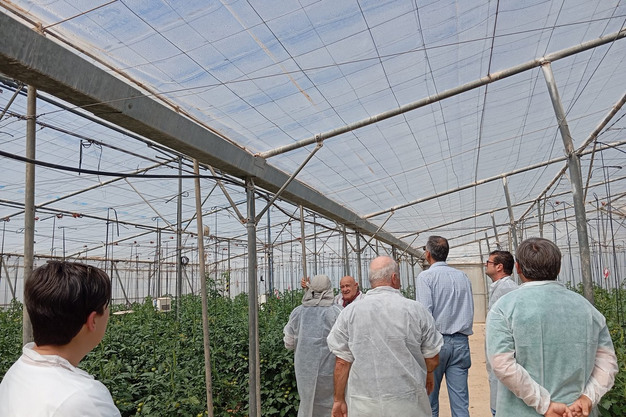
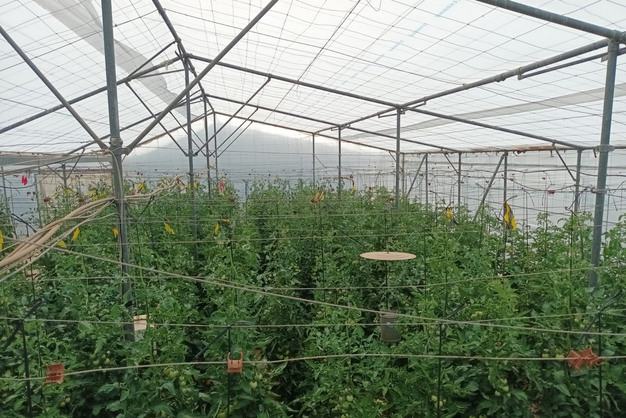
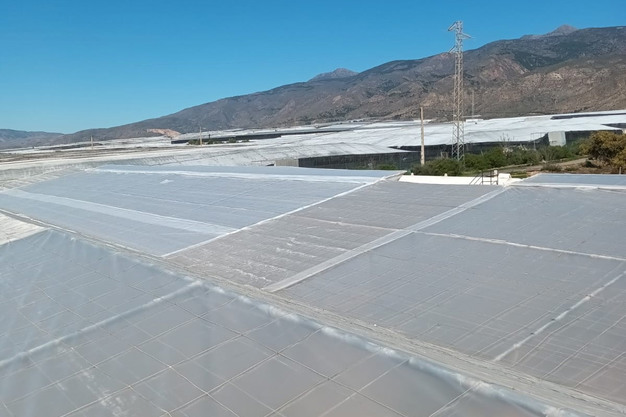
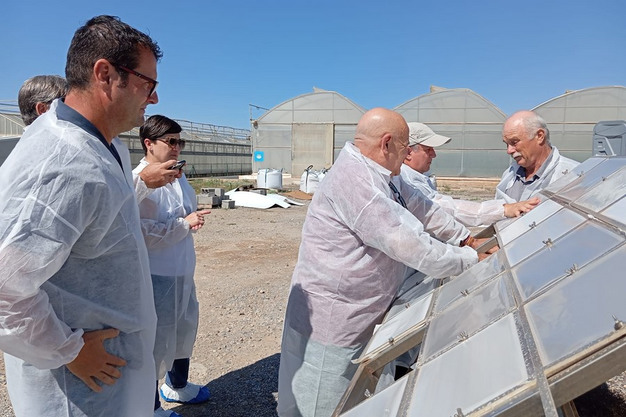
"The technical challenge was to formulate additives that react to heat while also withstanding the extrusion process and maintaining the stability of the polymer. For this, the first large-scale samples of the material have been produced at Sotrafa and tested both in an experimental greenhouse at the Las Palmerillas station in Almería and in a commercial farm. In addition to evaluating its properties, we were able to monitor plant growth, production, and the climate generated inside the greenhouse, and compare it with the results achieved through the traditional whitening technique."
Until now, whitening treatments have been the most widespread method to regulate light and temperature inside greenhouses. However, it reduces light for plants throughout the entire day, limiting their productive potential, whereas the thermo-sensitive plastic only modulates the amount of light when necessary.
 © GO Thermoactive
Another benefit observed is the improvement in climate uniformity under cover thanks to greater light diffusion. Polyethylene is already diffusive by nature, but with this material the effect is even more pronounced. "We saw this clearly in trials with tomato and zucchini crops, where production improvements were recorded compared to the whitening technique," Esteban adds.
 © GO Thermoactive
Initial results are very promising, and work is now underway to fine-tune the technical aspects needed to move forward with the production phase and development of the thermo-sensitive additive, as well as to explore its potential for market scaling. Interest in this technology is growing as climate change intensifies episodes of heat and high radiation.
"Whitening treatments are applied earlier each year because heatwaves are coming sooner than usual. But it doesn't always make sense to whitewash for just a few days, as this exposes crops to unnecessary stress. Having an intelligent material that activates at the precise moment will give growers a more flexible tool to face increasingly frequent heat episodes in southern Spain," he emphasizes.
 © GO Thermoactive
These kinds of solutions could also prevent problems linked to traditional whitening treatments, such as water consumption and the release of calcium carbonate into the environment. "If in the future we can move greenhouse management towards smarter systems, we will be cutting costs and making production more sustainable. Just as electrochromic glass already exists, I believe materials like this will eventually be used across all types of greenhouses, particularly in high-value crops and more sensitive plants that require constant shading, such as Anthurium, orchids, and others," Esteban concludes.
 For more information:
GO Thermoactive
[email protected]
https://gothermoactive.com/