This month, the Plan Estatal Marco de Gestión de Residuos (PEMAR) went into effect. It's a mouthful – but an important one, as this State Waste Management Plan means Spanish growers can no longer send crop waste containing conventional polypropylene twine to recycling plants and must replace it with biodegradable alternatives. "This involves changes from crop trellising to waste management and composting," clarifies Alberto Lizarraga of Grupodesa Fasteners. Together with partners, the company developed a concept to grow completely plastic-free.
The PEMAR is a Spanish framework designed to align national rules with EU goals and adapt waste management strategies. It requires companies to ensure the separate collection of waste at the source. Put simply, this means crop waste should become plastic-free in order to be composted. The first step, which is currently being implemented, is that greenhouse companies are no longer allowed to use polypropylene twine. As the new season begins, this is an important moment for growers.
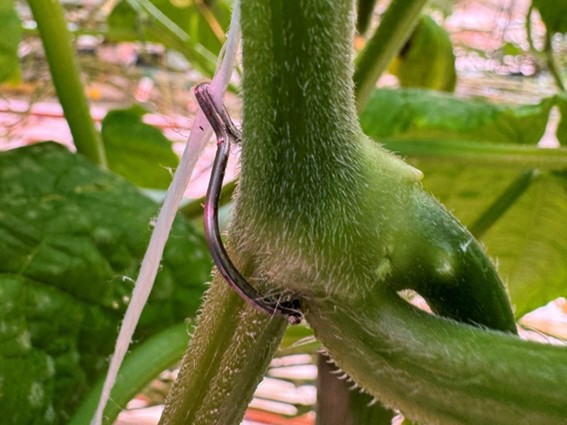

Biodegradable twines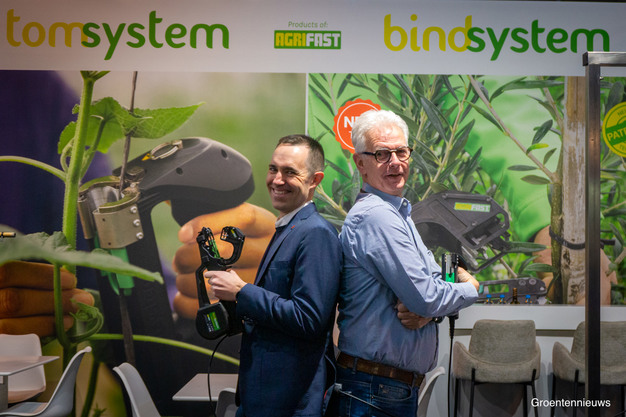 © Arlette Sijmonsma | HortiDaily.com "Although biodegradable alternatives have been available for many years, we still see them used almost exclusively by organic growers," says Alberto of Grupodesa Fasteners. The company conducted extensive trials on biodegradable alternatives, seeing potential to make cultivation completely plastic-free. Growers often show reluctance toward biodegradable twines, having heard – or experienced – stories of them breaking. However, after extensive research, Dirk-Jan Haas of Grupodesa Fasteners' Dutch partner Hortiware is very clear: "There's a suitable biodegradable twine for every grower. But you do have to think upfront about what you'll be using the twine for: what type of tomato, what type of trellising, what hook. With the right combination, there's a suitable biodegradable twine for every grower, including the option to put the twine on tomato hooks automatically."
The companies are highly involved in the market, as these twines play a vital role in the concept they developed to grow plastic-free. This involves their Tom-System, which provides an alternative to trellising with plastic clips by automatically clipping metal clips around the twine and the plant. The system has been adopted by growers around the world, as clipping speed increases tremendously thanks to the electric system that binds the crops. Over the years, the company has expanded its offering for tomato greenhouses to include a metal ring suited for cucumbers and peppers. "The metal rings can be extracted from waste using magnets," Alberto explains, "and research shows it degrades in compost too."
Truss support hook
Another major source of plastic in horticultural waste is the truss support hook. An alternative for this was developed several years ago by Hortiware, when Dirk-Jan created CROP CURV, a tomato truss support made of metal. "Combined with biodegradable rope and metal truss supports, the crop waste is completely plastic-free and fully organic. The story started with the metal rings and comes full circle with the CROP CURV."
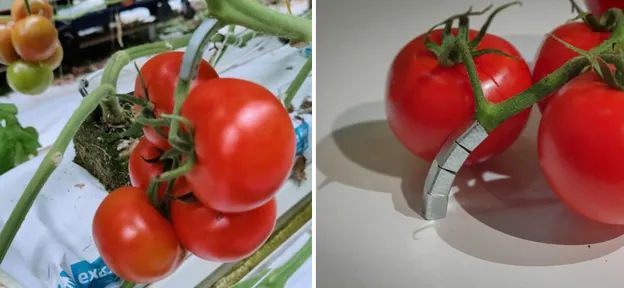
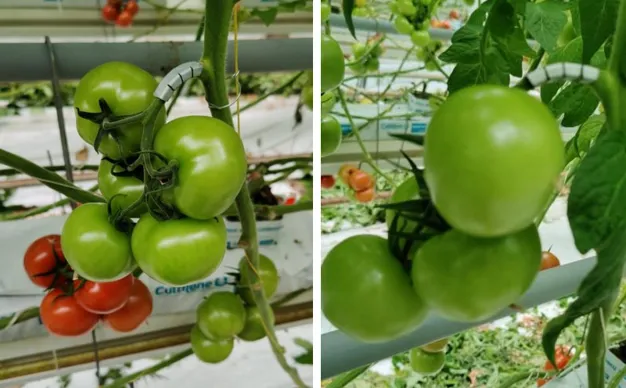
Although current rules still allow the use of plastic tomato clips, it seems counterintuitive to persist with plastic products, Dirk-Jan says. Alberto is more cautious, having seen growers resist switching to less plastic until regulations like this force them to. "The future will be without plastic, but it's not an easy road. The case of Spain is a big step toward a circular economy and sustainable horticulture, and clearly an experiment to follow closely."
For more information:
Agrifast Tomsystem
Alberto Lizarraga
[email protected]
Dirk-Jan Haas
Hortiware
Tel.: +31 (0)6 59695654
[email protected]
www.hortiware.nl