After the tomato harvest, the presence of gall nematodes in the greenhouse of Azienda Agraria Fratelli Rosati Quinto e Angelo in Sperlonga, Lazio, Italy, made it impossible to continue growing crops at risk. The next crop planned was celery, and like tomatoes, celery is susceptible to these pests. A regenerative intervention was necessary to prevent the spread of soil-borne pathogens that could harm future crops, especially when rotating from highly susceptible tomatoes to similarly vulnerable celery. Without regenerative intervention, transitioning from highly susceptible tomatoes to susceptible celery would perpetuate the presence of pathogens in the soil, which would put future crops at risk of damage.
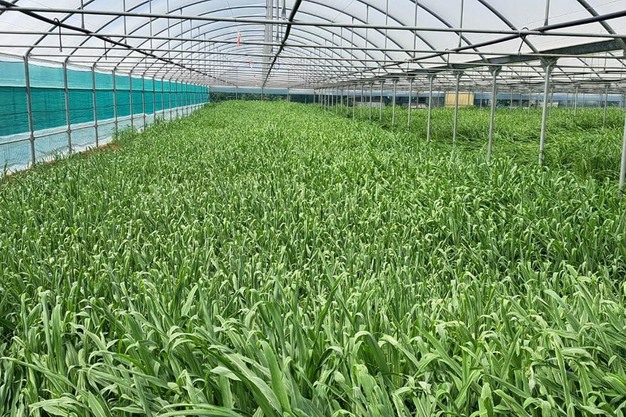
To address this critical issue, the company introduced Summer Fumix, a mixture of Crotalaria juncea and Sorghum sudanense formulated to regenerate vegetable soil and facilitate natural biofumigation.
 © Seminart Srl
The technical strategy
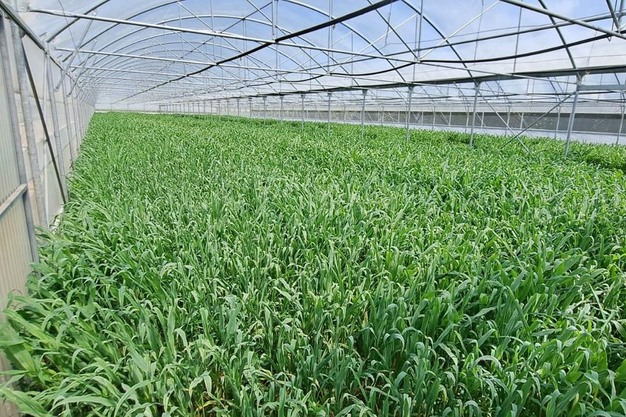
The mixture was sown in the summer, immediately after the tomatoes, and exhibited its typically accelerated growth. In just a few weeks, it exceeded one meter in height. According to the instructions, it is now time to cut it up and bury it in the top 20 centimeters of soil to activate its maximum biofumigant potential.
Guaranteed results
- Control of soil-borne nematodes (Meloidogyne spp., Heterodera): Crotalaria juncea acts as a trap crop during development and carries out biofumigation after burial, which helps significantly reduce parasite pressure.
- Complementary biofumigant action of sorghum: The Sudanese hybrid Sorghum released dourine. Dourine is a cyanogenic glycoside. It will exert its action as early as 6 to 8 weeks after burial. This ensures a prolonged effect.
- Formation of stable humus: The high biomass production combined with the high C/N ratio of the Sorghum will favor the accumulation of stable organic matter and improve soil fertility.
- Recovery of structure and biodiversity: Sorghum's deep roots improve porosity, and its taxonomic difference from horticultural crops contributes to breaking disease cycles.
- Active summer cover: In addition to limiting weeds and reducing evaporation, the mixture functions as a "catch crop," retaining nutrients during a critical period for leaching.
 © Seminart Srl
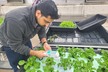
A reusable model Thanks to Summer Fumix, Azienda Agraria dei Fratelli Rosati was able to successfully navigate the transition phase between two intensive crops. The soil was regenerated and the celery was transplanted to a healthier, more fertile substrate that was free of the initial nematode infestation.
Summer Fumix is suitable for both organic and conventional use and is a viable solution for farms with greenhouse or open-field rotations in a continuous cycle where soil pathogens and declining organic matter are frequent issues.
With its combination of water stress resistance, high biomass production, integrated biofumigant action, and stable humus supply, Summer Fumix is a valuable technical tool for maintaining production efficiency and soil health in the most intensive systems.
For more information:
Seminart s.r.l.
Via S. Antonio, 60
35019 Tombolo (Padua) - Italy
+39 049 94 71 316
[email protected]
www.seminart.it