The start of Almeria's pepper season is marked by a concerning development: the rapid spread of Thrips parvispinus, a pest that is small in size but large in its impact. What began as an isolated presence in 2020 has now become a serious threat to the continuation of the province's most iconic crop, with an unprecedented level of infestation happening earlier than usual.
The 2025 season is experiencing the largest surge of this pest, especially in western Almeria, where its presence is rapidly increasing. The damage is clear and severe: deformed shoots, silvery leaves, discolored flowers, and fruits with stings that greatly decrease their value. In the worst cases, the pest causes early crop destruction, resulting in millions of dollars in losses and an increasing risk of farmers abandoning the crop, which opens the door to competition from other countries.
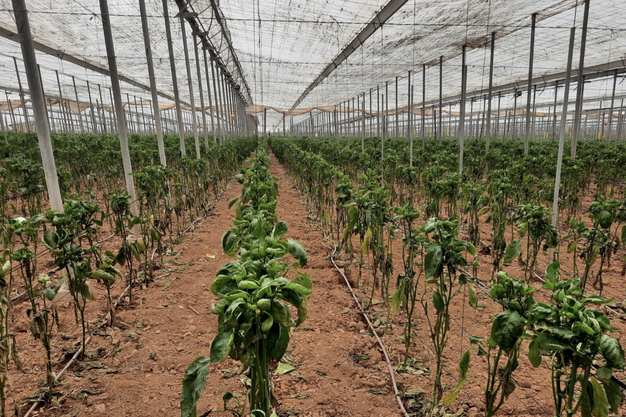 © Coitaal
The problem is exacerbated by the ineffectiveness of authorized plant protection products, which fail to control the insect, leaving the sector extremely vulnerable. Thus, farmers face a resilient enemy with no clear tool to contain it.
The Official Association of Agricultural Technical Engineers of Almeria (Coitaal) emphasizes the urgency of reviewing prevention and control protocols at every stage of the crop: from the seedbed—using nets on tray carts and thorough inspections of plant material—to the farm, where regular monitoring and the development of integrated management plans, in close collaboration with trusted agricultural engineers, are essential.
"We are dealing with a dangerous, resistant pest with alarming behavior. There are no shortcuts or miracle solutions. We cannot go back or start over; the only way forward is through integrated control, which combines biological control, cultural measures, and approved phytosanitary products, always with professional and responsible advice. Farmers must be cautious: listening to siren songs and trusting false promises will only make the problem worse. The key is shared responsibility and the application of science to the field. If we don't do this, we'll face a major agricultural catastrophe," stated Fernando Paniagua, president of Coitaal.
To strengthen the response to this threat, Coitaal has published a downloadable guide on its website, Ingenierosagricolas.org, with practical tips to identify, prevent, and control Thrips parvispinus in peppers.
The situation demands immediate and collective effort. The survival of the pepper crop in Almeria—the economic, social, and cultural backbone of the region—depends on our ability to respond to this pest, which has already demonstrated its destructive potential.
For more information:
Colegio Oficial de Ingenieros Técnicos Agrícolas de Almería (Coitaal)
Ribera de las Almadrabillas, 5 Entlo.4
04004 Almeria
Tel.: +34 950 62 10 86
Email: [email protected]
www.ingenierosagricolas.org