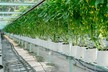
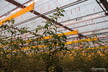
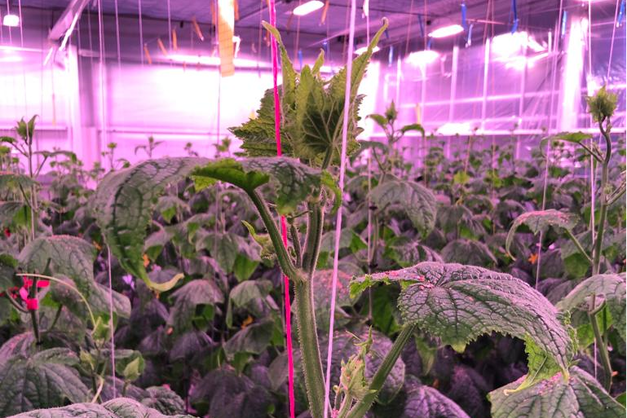
This April, Botany launched a trial aimed at developing an energy and light-efficient, resilient, and chemical-free summer cucumber crop. The trial is being carried out in a high-wire cucumber system. During cultivation, active dehumidification is combined with an intensive screening strategy, particularly in spring and autumn, to save as much natural gas as possible.
The goal is to achieve more than 80% savings compared to standard practice, with a total gas input of just 2 m³ per square meter. To improve light use efficiency, the target is a steady daily light sum of 23 mol/m²/day and an average 24-hour temperature of 22–23°C.
 © Kas als Energiebron
Climate stability reduces plant stress
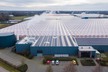
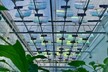
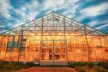
To prevent greenhouse temperatures and light levels from climbing too high, a coating (ReduFuse IR) has been applied to the greenhouse roof. When radiation exceeds 2100 joules and outside temperatures reach around 30°C, additional chalk shading is used to keep conditions under control. On darker days, supplemental red LED lighting helps maintain the target light sum of 23 mol/m²/day. This consistent light input allows for steady production and a uniform thinning strategy. The expectation is that with fewer climate fluctuations, the crop will be more resilient and less stressed.
Comparing different substrates
The trial is also studying how different substrates affect plant development and resilience. New stone wool slabs, reused stone wool slabs, and an organic substrate from Lensli are being tested. With intensive scouting and the use of preventive biological control, the aim is a 100% green, chemical-free crop. So far, only minor differences have been observed: plants in the organic substrate show slightly more vegetative growth.
Mid-trial results
Halfway through the trial, production figures are meeting expectations. Average light use efficiency across the production weeks is currently 22.4 g/mol, compared to the more typical 17 g/mol for summer cucumbers. Crop health remains good, with only minor powdery mildew spots and some aphid pressure observed. The trial runs until week 40.
Funding
This project is being carried out by Botany and funded by Hagelunie Innovation Fund, Interpolis, and Kennis in je Kas, under the umbrella of the Kas als Energiebron (Greenhouse as an Energy Source) program. This innovation program is led by the Dutch Ministry of Agriculture (LNV) and Glastuinbouw Nederland. The trial is supported by growers and further contributions come from the cucumber growers' cooperative, Mertens, Wireless Value, Ridder, Eurofins, Grodan, Enza Zaden, Koppert, Gardin, Yookr, Lumiforte, Lensli, and ProJoules.
Source: Kas als Energiebron