The balance of water and air in growing media is still far too often underestimated in commercial crop production, whether in inorganic or organic systems. That's the conclusion of recently retired cultivation advisor Simon Voogt, who shares his thoughts in this piece. Voogt was one of the founders of the horticultural consultancy Vortus, spent many years working in North America and Mexico, and has only recently returned to the Netherlands.
In this article, he shares his experiences and advice, urging growers to pay closer attention to oxygen levels in irrigation water, the root environment, and drain water. "By now, I know very well what works, what doesn't, and what works extremely well. I don't want all the knowledge I've gained over the years to be lost," he explains.
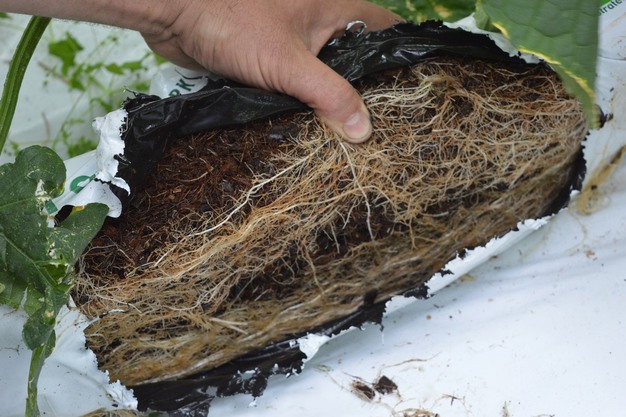 © Simon VoogtRoot system at a tomato grower in Arizona. "Very strong and healthy white roots, which ensure excellent uptake of nutrient ions and water transport, so the plant can cool itself very well under extreme conditions through optimal evaporation. In this location, it can easily be 30.0 - 35.0 Celsius outside in the summer."
The oxygen content (mg/l) of water
The amount of dissolved oxygen in water isn't fixed, it changes depending on the water temperature. In simpler terms, the warmer the water gets, the less oxygen it can hold.
This becomes a real challenge in summer when the temperature in above-ground water basins rises, and as the water level drops and the layer gets shallower, the temperature goes up even more. At the same time, the oxygen (O₂) levels in the water go down. Water that contains a lot of biological material, such as rainwater mixed with organic matter or polluted residues at the bottom of basins, often has very low oxygen levels. "That's why it's absolutely essential to keep these basins clean," advises Simon. "Start every new growing season with a thorough disinfection, and make sure your irrigation tanks are spotless."
Groundwater can also pose a challenge. It often has a naturally high EC value, due to elevated levels of sodium (Na⁺), chloride (Cl⁻), and/or bicarbonates (like HCO₃⁻). Despite this, it usually contains too little dissolved oxygen (measured in ppm or mg/L).
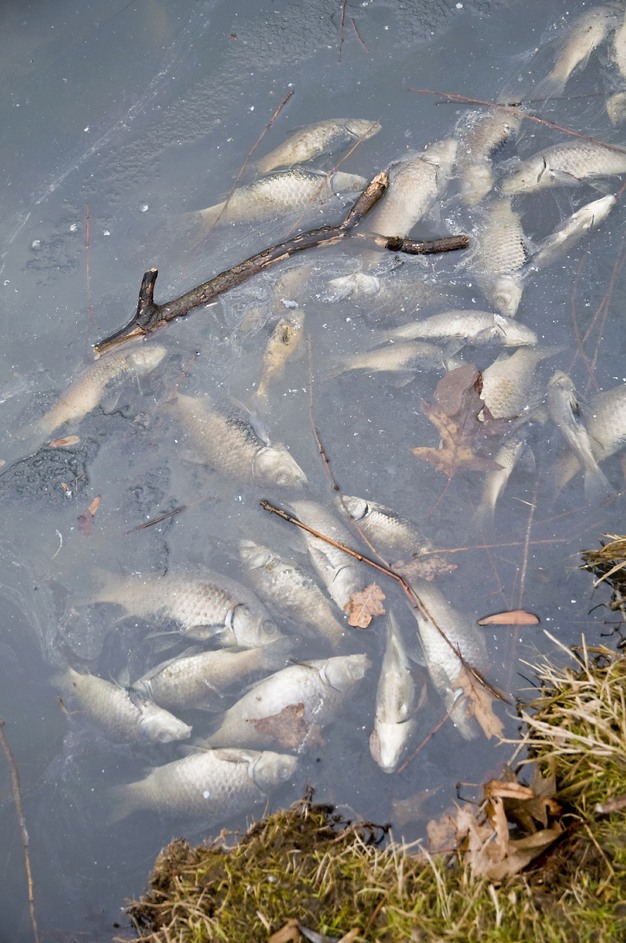 © - | DreamstimeAccording to experienced crop advisors, healthy water should contain at least 4 mg/L (4.0 ppm) of dissolved oxygen. "If oxygen levels drop below 5.0 ppm, fish will start to die," Simon explains. "In practice, I've found that when you supply water with about 7.0 ppm oxygen, the drain water will typically end up at around 4.0 ppm. In cucumber crops grown on coconut substrate, where growers struggled with root dieback from fungi such as pythium and also battled mildew problems, we found that the oxygen level in the drain water was only 1.0 ppm. That's far too low!"
Photo right: Fish mortality occurs at an oxygen level lower than 5.0 ppm.
The optimal functioning of the root system
A plant's root system is its foundation, and it ultimately determines both yield and product quality. Healthy roots make sure water is transported efficiently to the aboveground parts of the plant. This water transport doesn't just hydrate the plant, it also fuels transpiration, which acts as a natural cooling system and directly influences plant temperature.
When roots are supplied with water that contains a sufficiently high oxygen level (at least 7.0 ppm), the plant's cooling process works at its best. If transpiration doesn't run smoothly, the plant will show signs of stress, especially when outdoor light intensity is high. The growing tip may turn too dark in color, and the leaf tips will clearly reveal symptoms of lost turgor as they start to wilt.
Plants that repeatedly face stress show it in their growth pattern. Leaves grow with less vigor, stems and shoots develop more slowly, and the formation of buds and clusters becomes weaker. Aboveground tissues contain chlorophyll, which drives photosynthesis and creates assimilates, the sugars and building blocks produced in what we call the assimilation process.
But growers also have to deal with the flip side: dissimilation. As Simon explains, the net balance between assimilation and dissimilation determines the final yield and the quality of the commercial crop.
Is dosing extra oxygen (O2) to the irrigation water meaningful?
For Simon, the answer is a wholehearted "Yes!" "Throughout my career I've seen very clear positive effects of adding oxygen to irrigation water," he explains. "Especially in the southern states of the United States, such as California, Arizona, and Texas, but also in Ontario, Canada, and in Mexico. In these regions, growers often rely on groundwater. In California this water is frequently too salty, with high sodium, chloride, and bicarbonate levels. In Arizona, Texas, and Mexico, the problem is usually temperature, groundwater there is often too warm, sometimes over 25°C and in extreme cases close to 40°C."
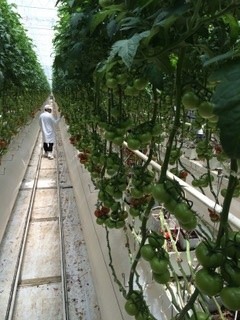 © Simon VoogtWhen growers used this type of water but enriched it with extra oxygen (O₂) before it entered the drip lines, Simon noticed a clear improvement in tomato fruit set and development in the greenhouse. "This was especially striking during the low-light period from November through March. Even though light levels in these southern regions were still sufficient for production, the plants receiving oxygen-enriched water showed a much stronger and more consistent fruit set. The effect was most obvious at the ends of the trusses, where the last two or three tomatoes developed far better. Fruit quality and size were always superior."
Photo right: Tomato crop in Amado, Arizona. This crop is grown organically, and extra oxygen is dosed. "The grower starts with the extra oxygen as soon as the second cluster sets after planting. The crop shows very strong and regular clusters. The fruit setting is very uniform and regular. The color of the crop is very good; there are no signs of chlorosis or deficiencies visible. A very beautiful and healthy crop."
In truss tomato crops, especially in varieties like Campari and cherry tomatoes, Simon observed that the trusses grew longer and fruit set was noticeably better at the end of the trusses. "Quality and shelf life were always improved when extra oxygen was added to the irrigation water," he notes.
In peppers, Simon saw stronger flowers and buds, which meant fewer flower drops during the darker months of the season. This led to better fruit set overall. "I also noticed far less blossom end rot in peppers," he adds. Blossom end rot occurs when calcium uptake in the plant is not sufficient.
Cucumber crops also showed clear benefits. Not only did the fruits develop more vigorously, they were fuller and less prone to becoming pointy at the ends.
Simon's observations weren't limited to greenhouse crops. "In field-grown strawberries, raspberries, and blackberries, I consistently saw fewer misshapen fruits and much better fruit development," he explains.
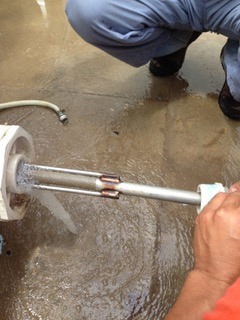 © Simon VoogtThe positive effect of adding oxygen to irrigation water was even stronger in organic production systems, whether it was tomatoes, cucumbers, peppers, or soft fruit. "That's because in organic growing, there is always greater competition for oxygen in the root zone," Simon explains. "Microbiological processes like nitrification and denitrification of nitrogen require higher oxygen levels, so the plants benefit even more when extra oxygen is supplied."
Photo right: Maintenance person shows how the extruder for dosing extra oxygen is placed at the beginning of the main inlet of the drip system.
Analysis results of leaves, drain and nutrition during growing seasons
During the growing seasons of the crops that Simon was an advisor on, he regularly reviewed chemical analyses of leaves, drain water, and feed water, sometimes almost monthly. These samples came from projects where extra oxygen was injected into the irrigation water. "I also had the opportunity to study analyses from projects where no additional oxygen was used," he explains. "The results were very clear. In the crops where oxygen was added, the calcium levels in the leaves were consistently easier to maintain compared to those without oxygen enrichment."
Calcium (Ca++ ) is notoriously difficult for plants to transport. This is because it is a divalent cation, and unlike potassium (K+), which moves through the xylem, calcium is mainly transported through the phloem along with water. "In the many crops I monitored that received extra oxygen in their irrigation water, I consistently saw fewer problems with burnt leaf tips, which was often caused by calcium deficiency in those tissues," Simon says.
One large project Simon supervised involved lettuce grown in an NFT system in Edmonton, Alberta, Canada. After oxygen was added to the irrigation water, the symptoms of tip burn in lettuce clearly decreased. "It was obvious that calcium transport in the plants improved," he recalls. "Throughout this project I could see the positive effects of enriching the irrigation water with oxygen (O₂)."
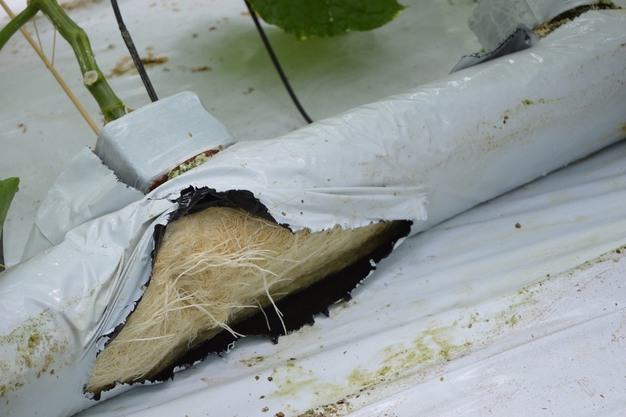 © Simon VoogtRoot system after dosing extra oxygen
Learning from abroad
Based on his international experience, Simon concludes that dosing irrigation water with extra oxygen is "definitely worthwhile." What strikes him is that, in Dutch greenhouse horticulture, the importance of this practice in substrate cultivation is still "heavily underestimated." "In my opinion, this topic deserves far more attention," he stresses. "An additional benefit of adding oxygen to irrigation water is that drip systems stay much cleaner and show far fewer blockages."
So how do you increase oxygen levels in drip water?
The large-scale operations Simon has worked with, growing in substrates such as peat and perlite, used pure oxygen injected directly into the irrigation water. The oxygen was supplied in liquid form by Air Liquide tanks. "The pure O₂ was forced under high pressure into the main feed line of the drip system via an extruder, before the water entered the greenhouse," Simon explains. "Right at the outlet of the drip system, the oxygen content measured 7.0 ppm. That level was always more than sufficient to achieve the desired results."
In practice, Simon consistently saw that this oxygen level prevented chlorosis, the yellowing typically caused by iron or manganese deficiency. "When plants stay fully green and healthy, they can reach the optimal net result of photosynthesis," he says. Combined with the right greenhouse climate and sufficient PAR light, this created the best possible crop production.
Read more about Simon's career here (link in Dutch), when he looked back on his career on the occasion of 40 years of Vortus. A special anniversary magazine was also published about that anniversary.