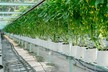
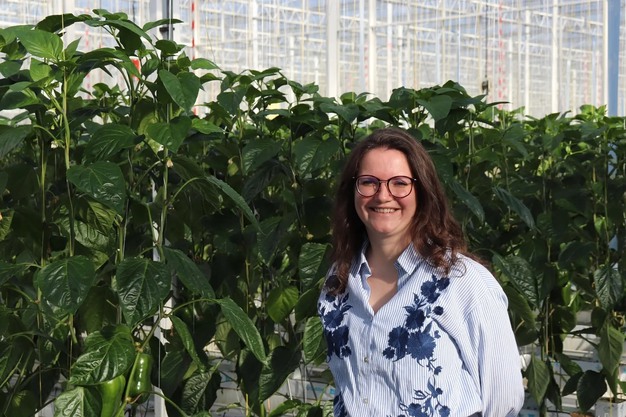
At the Hoogstraten Research Center (PCH), a sweet pepper demo trial is underway with the goal of reducing energy use as much as possible without sacrificing yield or quality. Recently, the Belgian broadcaster VRT visited the greenhouse and produced a video feature (link in Dutch) on the project.
 © Interreg Vlaanderen-Nederland
Remarkably positive results in pepper trial
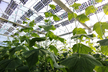
The trial began on December 3, 2024, using the variety Mathieu. In the test greenhouse, researchers are combining a new energy-balancing screen system with an active dehumidification unit. The screen system consists of two day screens, a woven fabric and a PVDF film, and one night screen.
Researchers also apply a tailored climate and screening strategy, with more intensive screen use compared to the reference greenhouse. This resulted in significantly more screen hours: 2,673 hours for the PVDF film, 1,236 for the day screen, and 2,718 for the night screen. By contrast, the reference greenhouse recorded 1,940 and 1,189 hours for its two screens.
The climate approach was also different. In the trial greenhouse, researchers used a flatter temperature profile and allowed higher humidity levels—an average of 84% RH compared to 75% RH in the reference section. The reference setup relied on two Svensson day screens (Luxous 1147 FR Eco and Luxous 1547 D FR), without active dehumidification and with a standard climate and screening strategy.
 © Interreg Vlaanderen-Nederland
More energy savings, more revenue
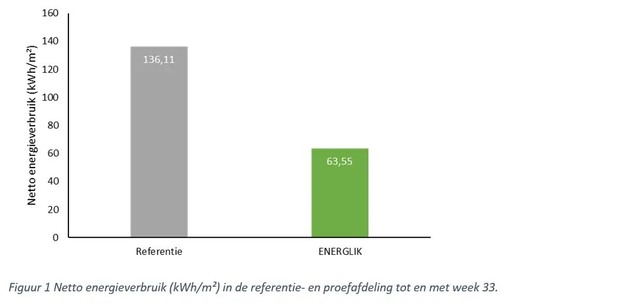
Up to week 33, the researchers observed striking results. Energy use in the trial greenhouse was reduced by 53 percent, with 63.6 kWh per square meter compared to 136.1 kWh per square meter in the reference setup. Despite this sharp reduction, there was no significant difference in production between the two greenhouses, as both fruit numbers and average fruit weight remained at the same level. The trial greenhouse even achieved a slightly higher turnover, with €1.51 per square meter compared to €1.39 in the reference. Crop development also showed no differences, whether in stem thickness, plant height, leaf length, or overall vigor.
The trial continues until the end of October and will be monitored until the end of the cultivation, with researchers curious to see if the current positive results will continue.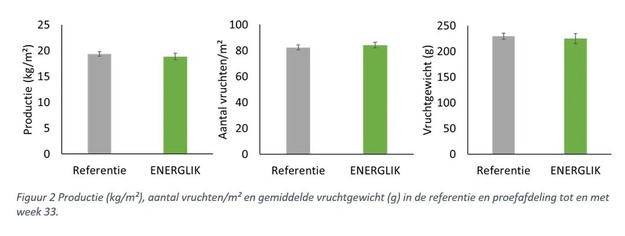 © Interreg Vlaanderen-Nederland
Source: Interreg Vlaanderen-Nederland