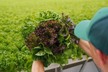
In Kuwait, fruit growing is practiced on a small scale and is generally more of a hobby than a commercial activity. However, growers spare no expense, adopting sophisticated greenhouses and importing plants. They enjoy great peace of mind, as losses are simply impossible thanks to government support. Hamad Aljuwaisri, a Kuwaiti strawberry grower, explains how cultivation takes place and how he decided to step up and move into commercial production.
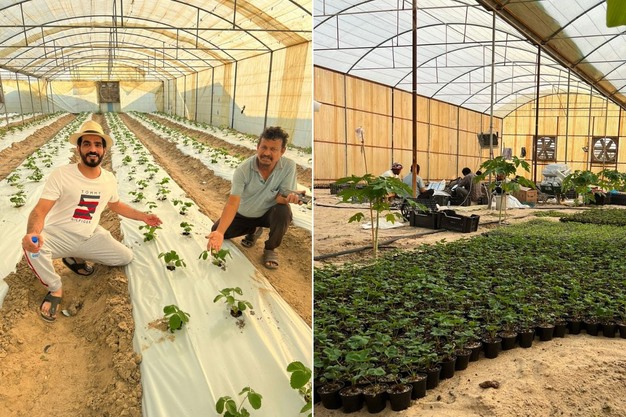 © Hamad Aljuwaisri
The main obstacle to agricultural production in the country is the harsh climate. Aljuwaisri says, "During strawberry cultivation, the temperature in Kuwait reaches 45 degrees during the day and 5 degrees or less at night! All cultivation is therefore done in greenhouses. Our country relies on imports, but there are agriculture enthusiasts who like to grow strawberries for their own consumption and that of their families and friends. We therefore depend entirely on air-conditioned greenhouses. Sometimes, when the weather is relatively cool, we turn off the air conditioning."
The Kuwaiti government offers producers guarantees of a commercially flawless season. Aljuwaisri explains, "All stages of production are subsidized: energy, greenhouses, irrigation, treatments, substrates, plants, etc. And after the harvest, the fruits are sold at auction on the local market, and even then, we are covered in terms of margins if the price is not sufficient."
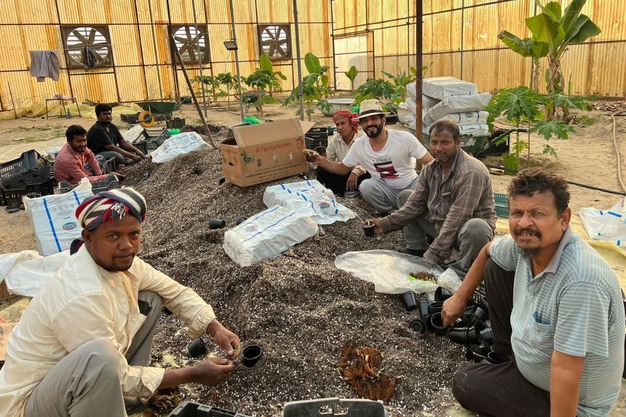 © Hamad Aljuwaisri
Agricultural land in this country is entirely publicly owned and leased to producers at symbolic prices. The government, therefore, dedicates the entire production to the local market and prohibits exports. Aljuwaisri continues, "Kuwaiti citizens, who are used to imported fruit, like to taste local strawberries and prioritize them."
A grower by passion rather than vocation, Aljuwaisri decided to move to more professional operations and commercial-scale production. He recounts, "It was after a visit to Egypt where I met growers and got to know my friend Emad Mahdy, owner of Al Fayruz nurseries, who supplies plants in Egypt and the international market. He encouraged me to broaden my scope, and that's how it started."
"I imported plants of the Festival, Fortuna, and Sweet Sensation varieties from Egypt, selling some to fellow growers and planting the rest. I then decided on the Fortuna variety, which is easier to work with, has higher yields, and an earlier harvest. It was a successful experience from an agronomic standpoint," says the grower.
 © Hamad Aljuwaisri
In the country of 1.5 million nationals and limited arable land, agriculture is not widespread. The economy relies on exports of energy, chemicals, and industrial products. However, growing is encouraged and benefits from advanced means, using greenhouses and hydroponics, with a focus on tomatoes, cucumbers, strawberries, and dates.
For more information:
Hamad Aljuwaisri
Strawberry Roots
Tel: +96599994710