The False Codling Moth (FCM) has become an established pest in Kenya's horticultural export sector. Historically, many growers relied on chemical sprays for control, but under pressure from EU regulations, Kenya was required to implement a Systems Approach for roses. Hamish Ker, CEO of biological control company Andermatt Kenya, explains that the company created a three-step biological approach specifically for FCM in roses. The Swiss biological pests, diseases and plant nutrition products manufacturer in Europe opened in Kenya five years ago as Andermatt Kenya Limited to serve the country and the Eastern Africa region with natural inputs for safe management of plant problems. "The adoption of sustainable, compliant FCM control is essential to protecting Kenya's global market share."
 © Andermatt
Small but destructive
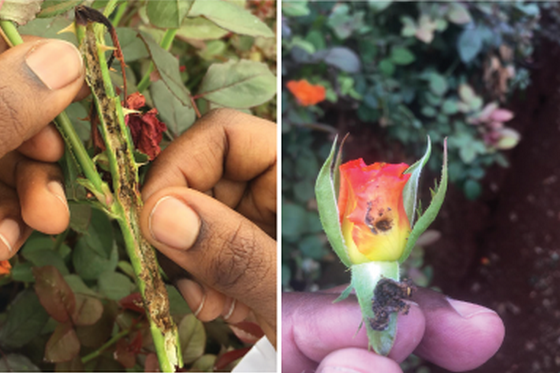
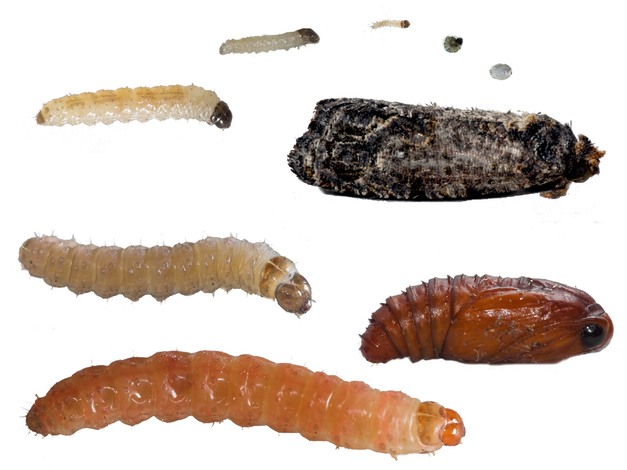
The False Codling Moth (FCM), Thaumatotibia leucotreta, is a small but destructive lepidopteran pest native to sub-Saharan Africa, Hamish explains. "First detected in Kenya in 2007, it has become one of the most persistent threats to horticultural exports. The moth's larvae burrow into flower buds and fruit, causing direct damage and making produce unacceptable for export. In the cut flower sector, roses are particularly vulnerable, but other crops such as avocado and capsicum are also at risk."
FCM's significance is amplified by its status as a quarantine pest in the European Union (EU), Kenya's main market for roses. "Even a single detection in a shipment can trigger interceptions, resulting in financial losses and jeopardizing Kenya's reputation as a reliable exporter."
 © Andermatt Susceptible roses
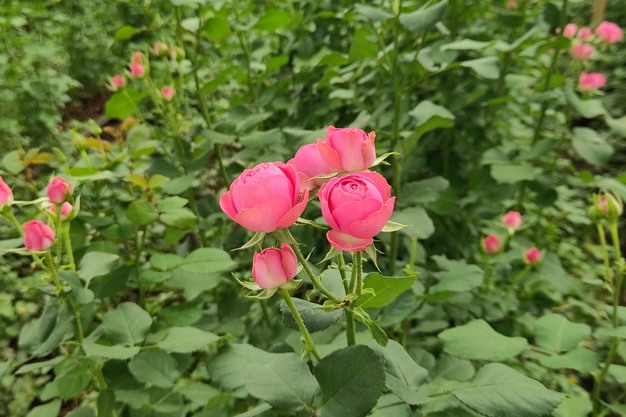
Among cut flowers, roses have proven especially susceptible. "Since FCM was detected in flowers around 2018, interceptions have increased, with some farms experiencing repeated compliance challenges. The pest's ability to complete multiple life cycles per year and hide inside buds makes it hard to detect and control through visual inspection alone."
Before recent regulatory changes, FCM control in roses often relied on conventional chemical sprays. While these provided some immediate knock-down effect, they faced limitations. "Resistance build-up in pest populations, MRL restrictions for export markets, and the negative impact on beneficial insects and the environment," Hamish sums up. "Some farms adopted elements of Integrated Pest Management (IPM), including pheromone trapping and sanitation, but the lack of a coordinated national approach meant results varied."
 © Andermatt
EU phytosanitary requirements
That has changed now. In response to persistent FCM interceptions, the EU introduced stricter phytosanitary requirements. Kenya was given until 26 April 2025 to implement an FCM Systems Approach guaranteeing that roses exported to the EU are free from the pest. This involves documented monitoring, consistent control measures, and verification by the Kenya Plant Health Inspectorate Service (KEPHIS). "Kenya met the deadline, and the system has already led to a marked reduction in interceptions. However, the regulation means farms must now maintain ongoing compliance — occasional reactive measures will no longer suffice."
Anticipating the regulatory shift, Andermatt Kenya positioned itself as a partner for growers seeking sustainable, effective solutions. Drawing on the Andermatt Group's global expertise in biological control, the company developed a three-step biological approach specifically for FCM in roses. It combines application of a baculovirus — the product at the heart and start of Andermatt's history in organic crop protection — with a Bacillus thuringiensis product and a more recently introduced and approved Beauveria bassiana.
Combination of products
"Cryptex® SC (PCPB (CR) 1969) is a baculovirus (Cryptophlebia leucotreta granulovirus) that specifically targets FCM larvae. Once ingested, the virus infects and kills the larvae, while also providing longer-term population suppression through horizontal, vertical, and fitness effects," Hamish explains. "Then there's Thuricide® HP (PCPB (CR) 0105), a Bacillus thuringiensis (Bt) product producing protein endotoxins lethal to many lepidopteran larvae, including FCM. Finally, there is Eco-Bb® WP (PCPB (CR) 2308), a Beauveria bassiana fungal bioinsecticide with broad-spectrum activity against multiple rose pests, including thrips, red spider mites, and mealybugs, alongside FCM."
Applied in a weekly cocktail spray, these three products deliver a triple mode of action (viral, bacterial, and fungal), improving efficacy and reducing the risk of resistance. This integrated biological solution not only controls FCM but also addresses other common rose pests, offering cost-effective "three-in-one" protection.
More than pest management
Hamish sees growers adopting the combined strategy. "Trials and commercial use in Kenya have demonstrated strong results, with farms reporting reduced pest pressure and fewer export rejections. Many growers are incorporating the three-step programme into their wider IPM strategies, recognizing its ability to meet both the strict EU compliance requirements and market demand for greener, residue-free production."
According to Hamish, the adoption of sustainable, compliant FCM control is more than a pest management issue. "It is essential to protect Kenya's global market share. Roses are a major export earner, and continued access to the EU market depends on maintaining a zero-tolerance standard for FCM."
He adds that biological control offers an added marketing advantage. "Residue-free flowers align with the growing preference for environmentally responsible products among European buyers. The approach also safeguards beneficial insects, supports biodiversity, and reduces chemical reliance, all priorities in modern horticulture."
The FCM challenge cannot be solved by individual farms alone. As Hamish Ker, CEO of Andermatt Kenya, notes, "The key challenge is a joint approach from all sectors in the industry. Coordinated control across flowers, avocados, and capsicum will be vital to keeping FCM populations low. With the new systems in place and biological tools available, Kenya is positioned to protect its exports and maintain access to key markets."
For more information:
Hamish Ker 
Andermatt Kenya
[email protected]
www.andermatt.com