Water and nutrition are inseparably linked in crop production, and soil is increasingly recognized as the foundation of that relationship. Healthy, vigorous plants are only possible in soils that provide water, nutrients, and biological activity. A "living" soil, with a balanced microbiology, can nourish crops while maintaining the suppressive qualities that prevent the spread of root pathogens such as fungi and nematodes.
That awareness is now giving rise to a new generation of technologies that are reshaping what is possible for growers. One example is the joint project launched by Raymond Lescrauwaet, Ecoferti, and Green Legacy, who have combined their innovations into a complete solution for multiple types of crops.
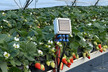
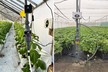
"One of the technological pillars of this project is Aqua4D and UO2, developed by Raymond Lescrauwaet," explains Manuel López, CEO of Ecoferti. "This technology structures water into much smaller molecular clusters through electromagnetic fields, increasing its hydration and nutrient-solubilization capacity. As a result, growers can save around 25% on water use. With UO2, nanobubbles are injected into the water, delivering oxygen directly to the roots, which supports processes such as photosynthesis and improves soil health. Oxygen is key for root activity," he adds, "which is why soil should never be compacted."
 © Ecoferti
According to López, "vitalized and structured" water also helps reduce lime problems, eliminates biofilm in fertigation systems, and even mitigates nematode issues in soil without pesticides.
To that, Green Legacy adds its moisture-retaining hydrogel, designed to keep water in the root zone longer and improve uptake efficiency.
Polymers capable of retaining up to 350 times their weight in water
From Spain, Ferrán Cabiol, who leads Green Legacy's commercial strategy in Southern Europe and Latin America, explains: "We developed a potassium-based superabsorbent polymer that can retain up to 350 times its weight in water, acting as an intelligent reservoir in the soil. This enables irrigation savings of up to 50% and fertilizer savings of around 20%."
PolyGrain, he adds, is "much more than a polymer. It improves soil structure, optimizes water use, and reduces fertilizer inputs without compromising yield or quality." Alongside PolySorb, designed for horticulture and broader agricultural applications, both solutions enhance water availability, root aeration, and reduce plant stress during critical establishment phases. They can be applied directly in soil, mixed with traditional substrates, or even used as a sole substrate in high-tech systems such as hydroponics.
Active microbiology and fermented biofertilizers for regenerative agroecology
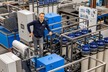
Ecoferti, meanwhile, has developed a radically different approach to plant nutrition. Using fermentations in aerobic and anaerobic bioreactors, the company activates microbial consortia including PGPR bacteria, PGFR fungi, actinobacteria, and microalgae. These transform minerals into fully bioavailable nutrients while generating enzymes, vitamins, phytohormones, and amino acids that support plant metabolism.
"It's a process similar to what happens in fertile soil, where microorganisms transform minerals from parent rock into bioassimilable nutrients," López explains. "During fermentation, microbiology also produces biochemical compounds that benefit the plant, improving not only nutritional value but also flavor and aroma in the fruits."
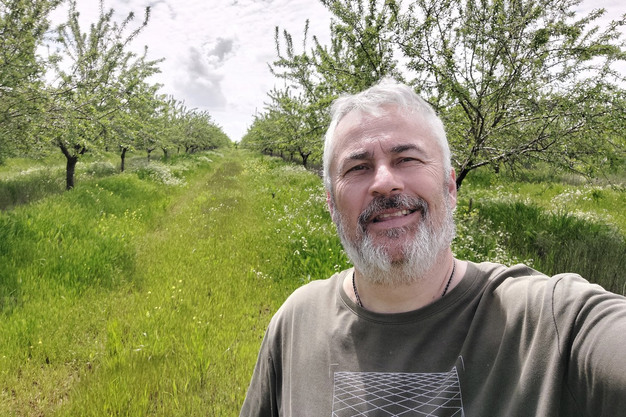 © Ecoferti
"The Ecoferti approach is agroecological and regenerative," López stresses. "Our products are designed to increase soil fertility through microbiology and organic matter, rather than depleting it as conventional intensive models do. Every crop should leave the soil in better condition than before cultivation. That is what true regeneration means."
According to him, more growers are moving in that direction. "Farmers are increasingly aware of the health and fertility of their soils. They see the exhaustion caused by conventional cycles and the damage left by decades of agrochemicals, in the fields, in ecosystems, and in the food we eat."
"With Aqua4D, Green Legacy, and Ecoferti, we can achieve abundant, profitable crops even in adverse conditions such as high temperatures, drought, or saline soils. And we do it without chemical inputs or pesticides: a well-nourished plant, in fertile, suppressive soil, activates its own immune system and defends itself from biotic and abiotic stress," he concludes.
"We believe in food sovereignty, in recovering soil fertility as the farmer's true patrimony, and in producing fruit that is healthy, energetic, and vital. That is our fight."
For more information:
Raymond Lescrauwaet
Tel: +31 035-8872683
[email protected]
https://www.lescrauwaet.com/
Green Legacy
Tel.: +34 627 711 708
[email protected]
https://www.greenlegacy.at/es/
Ecoferti
Tel: +34 960 223 716
[email protected]
https://ecoferti.es/