The interview with Philippe Appeltans and David Markowski, CEOs of BelOrta and The Greenery, respectively, takes place at a meeting location in Brecht (B), centrally situated between Barendrecht and Sint-Katelijne-Waver. The two are no strangers to the area, having met there in recent months to explore the establishment of a Transnational Union of Producer Organizations (TUPO). And successfully so, as the founding deed was signed at the notary's office yesterday. Once recognition is approved, FreshAlliance can officially begin.
At the beginning of 2023, the first exploratory talks took place between BelOrta and The Greenery. Two years later, both CEOs look back with satisfaction on the process. The TUPO is not a merger, they emphasize. However, the collaboration, which sees both cooperatives as equal shareholders, offers everything a producer organization (PO) can provide, but with the freedom to make independent choices. "This structure makes it possible to decide what to tackle together and what remains with the individual sales organizations. This way, we can gradually shape the collaboration," explains Appeltans.
 © Izak Heijboer | HortiDaily.com
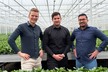
David Markowski (The Greenery) and Philippe Appeltans (BelOrta)
Determining cooperation per theme
"This way, we can calmly explore the cooperation possibilities. It doesn't have to apply to all activities or products immediately, but we can decide per theme where we see a win-win for both parties. That makes us an even more attractive partner for our growers and customers," continues Markowski. "This route gives us flexibility, and we can collaborate in areas such as sustainability, S&OP, or the introduction of new varieties and technologies. For example, with licenses, you become an interesting party for breeders."
When asked what specific actions we can expect at the start of FreshAlliance, Appeltans replies: "Because the recognition is not yet finalized, we cannot name specific actions. But we have clearly defined the domains. These can be product-related, market-segment-related, or involve licenses of varieties and packaging materials. Recently, we have done a lot of preparatory work to get to know each other well, sometimes literally to understand each other, because I think I now understand many Dutch expressions better."
Careful process
For the Belgian cooperatives, the UPO is not a new form. Collaboration has existed in the LAVA context since 1998. "We also previously explored establishing a TUPO with French colleagues, but that is on hold. The reason was that we started too hastily with a top-down approach, which didn't work. First, you need to build trust. That may be slower, but I see it as running a marathon. If you start too fast, you might not reach the finish, whereas with good preparation and phasing, you can set a strong time. By taking it step by step, we can build success cases together."
Markowski also stresses the importance of a careful process. "First, you need to clarify your goals together. Then you determine your ambition and how to achieve it. But trust is key. Only by being transparent can you truly collaborate. And you have to work on that trust. Once your goals are clear, you can look at how to get your members on board. You mainly do that by showing them the benefits. Because we took a careful approach, it required time. Meanwhile, the operation also had to continue during the busy cultivation and sales season."
Bundling the supply side as a logical step
When asked how members reacted to the decision, the BelOrta director says: "Predominantly positive. Of course, there were critical questions, but there is an awareness that collaboration on the production side is necessary to remain a relevant and attractive partner for the demand side. The question is not how we see the market tomorrow, but where we want to be in five to ten years. With the consolidation and internationalization on the demand side, bundling the supply side is a logical step. This collaboration offers better sales opportunities and cost advantages. It is our task to quickly prove that one plus one is more than two. We are now prioritizing the opportunities and associated actions that can demonstrate in the short term that collaboration creates benefits."
"Large retail players are interested in suppliers who can handle breadth, depth, diversity, and quality," adds Markowski. "With the combination of our Dutch and Belgian growers, we have a stronger geographic spread and therefore a favorable risk profile for product availability."
Primary reactions from growers
In the past, several Dutch growers switched to the Belgian cooperative. After the announcement of the TUPO discussions with The Greenery, some growers voiced concerns to AGF. According to Appeltans, these concerns are unfounded. "First of all, our growers remain members of us. Both cooperatives have their own way of working, and we will only collaborate where there is a win-win. At the same time, I understand growers' initial reactions. Often, these concerns are based on experiences from long ago, even before our time. We saw the same with the integration of Veilingen Haspengouw and BFV among hard fruit growers. But because it is going well now, no one talks about it anymore."
"Nothing changes in the current relationship between members and cooperatives. We remain two separate cooperatives. Growers remain members of their respective cooperatives, but we will learn from each other's best practices and collaborate on certain themes while retaining flexibility and identity. And we will only propose positive actions, because otherwise we shouldn't start," continues Markowski.
Admiration from both sides
Both CEOs have come to know each other's organizations in detail. What stood out the most? Markowski: "I looked with great admiration at the Belgian cooperative model. I also find it impressive how they built the BelOrta brand; it's very strong. And I noticed the many collaborations in Belgium. I think our southern neighbors, for example, in the LAVA context, manage cooperation among competitors within legal frameworks better."
Appeltans: "I have a lot of respect for the transition The Greenery has undergone in a relatively short time with the Focus 2025 strategy, from the 'old' Greenery to the new style. I also find it impressive how they took bold steps in a highly competitive market in the past year. I also learned from your cooperative approach. Your market approach gave us new insights in a positive way. That convinced us that this TUPO model is the right step for collaboration."
Cultural Differences
"Of course, there are cultural differences, but we shouldn't exaggerate them. It's not like we're establishing a TUPO with a Spanish sales organization. Among all cultures, I think the Netherlands and Belgium are most closely aligned. With a few exceptions, we share the same growing areas and conditions. It's not like in southern Europe, where you first need to know the entire family before doing business; we are somewhere in between," says Appeltans. Markowski adds, "Of course, we know all the stereotypes about cultural differences. But look at the Dutch agricultural landscape, it also differs whether you talk to someone from Zeeland, Westland, Limburg, or the north of North Holland. And there are also differences between soft fruit growers, hard fruit growers, and greenhouse or open-field growers."
Appeltans continues: "We invest a lot in content, but also in the relationship. That is why I think a TUPO is a good form, because the collaboration grows from strength and opportunity, not from necessity. We focus on the domains where joint progress makes sense and act independently elsewhere. That's the beauty of the TUPO. To give an example from the beer industry: you have the Heineken Group, and we have AB InBev. They benefit from economies of scale but still support local breweries and employees. In other words, think global, act local."
Open to partners with the same vision
FreshAlliance will be a cooperative company under Belgian law, since BelOrta currently contributes the largest member volume. Members do not need to vote on the TUPO. Three directors from each cooperative will participate in management. The formation of the TUPO does not affect the SIG&F recognition of both cooperatives. Both cooperatives maintain their operational programs. Can other cooperatives join? "We are open to other partners, provided it strengthens the collective and aligns with the shared goals we have defined," says Markowski. Appeltans adds: "The statutes can be consulted in Belgium, so other cooperatives can see if they share our goals and long-term vision. There is, therefore, a possibility for other organizations to join."
When asked if the TUPO could be a stepping stone to a future merger, Markowski replies: "A merger is not on the agenda today, and we have not discussed it with each other. We deliberately chose this form to explore collaboration opportunities gradually. We maintain a wealth of diversity in market approaches. It is not intended to become a uniform entity, but to elevate matters across the board. If, in the long term, advantages arise that justify a merger, we can always discuss it, but that is not the case now, and it is not on the table."
Creating more value together where it counts
FreshAlliance does not stand for one big leap, but for many deliberate steps in the right direction. "We are building a collaboration based on trust and mutual respect," says Appeltans. "It's not about doing everything together at once, but about creating more value where it matters." Markowski also emphasizes the gradual approach: "We maintain our identity, but deliberately seek cooperation to strengthen our offer for customers and growers. FreshAlliance shows that differences don't have to be a barrier, but an opportunity to complement each other."