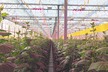
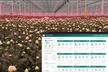
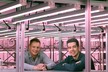
The visible light spectrum represents only a small part of the electromagnetic spectrum, but it is vitally important for living beings. It is the spectrum of light that humans can perceive, but it also includes the range relevant to photosynthesis and plant growth. Therefore, having control over the specific radiation for each crop and each phenological phase can optimize both the productivity and quality of flowers, fruits, and vegetables.
"Thanks to adequate lighting, greenhouse and indoor crop growers can also benefit from higher yields and a better return on investment," notes Michel Hacken, Farming Business Development Manager at the Spanish company Zalux, "and with LED luminaires, they can also achieve greater efficiency due to their lower energy consumption, higher light output, and greater specificity in the emitted spectrum."
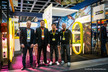
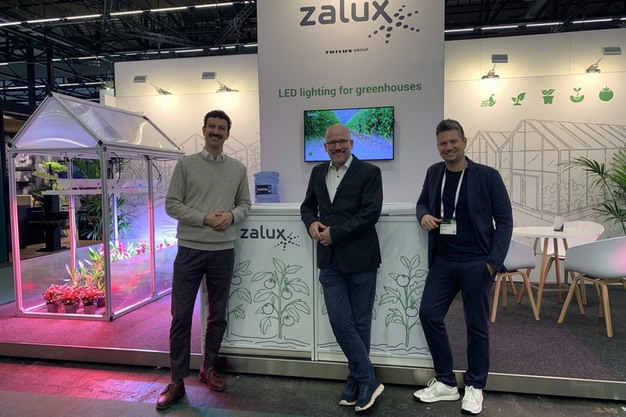 © ZaluxZalux team at Green Tech Amsterdam 2025
Zalux, a Spanish company with production headquarters in Alhama de Aragón and headquarters in Zaragoza, is part of the German group Trilux, one of the largest European manufacturers in the lighting sector.
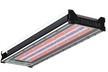
"Each plant is different, and each greenhouse has unique needs not only depending on the crop but also on its growth phase, because the optimal light spectrum is not the same, for example, for a crop at the time of leaf formation as it is for flowering. For us, the key is flexibility in the design and production of our luminaires, and to provide the best solution for growers, we have developed multi-channel luminaires, which can operate with up to four different channels to modify the light composition at different vegetative stages."
"Furthermore, the ability to vary the spectra allows the same greenhouse or protected structure to be used to grow plants of different species, or at different growth stages," Michel emphasizes.
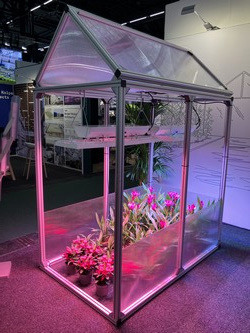 © ZaluxProtected agriculture provides a guarantee against increasingly volatile weather conditions and a climate that has become highly unpredictable—remember the months of low light that have dramatically affected growing regions such as southern Spain and Morocco this year—the use of LED lighting allows for maintaining the pace of cultivation and ensuring production profitability.
"Although in areas like Spain, with high sunlight exposure, the use of artificial light in low-tech greenhouses is not yet widespread, Zalux is seeing growing interest. In March, for example, strawberry production was halted in Huelva due to a lack of light; and that's where our luminaires can make a difference," the company points out.
From top-lighting interlighting
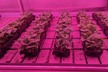
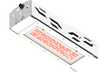
Zalux covers a wide range of solutions, including top-lighting systems for large areas, as well as interlighting applications, which allow luminaires to be placed between rows of plants. Further, ZALUX offers various solutions for shelf lighting, indoor farming or climate chambers.
"The company relies on high-end components—such as Osram LEDs—and completely in-house development of its solutions, including the design of the panels and the layout of the LED groups – all produced in Spain. This allows us to develop customized lighting recipes based on the type of crop, combining red/blue, broadband white or other color spectrums as required," says Michel. "Now it's possible to grow under the right lighting, increasing your efficiency while saving energy."
 © ZaluxFor more information:
Zalux
Avenida Manuel Rodríguez Ayuso, 114
Centro Empresarial Miralbueno Planta 1a, Local P-2
50012, Zaragoza, España
www.zalux.com