Thrips is a well-known pepper-crop pest in Almeria and Murcia. Each year, its impact worsens, leading to significant economic damage. IMIDA researchers in Murcia remain optimistic about the future due to the results of their biological control studies.
"The advances in our biological control research are very important. We went from losing money in the 90s with chemical applications to making money and saving the crop in the following decade. The results are spectacular, and the sector is a winner all around," stated Michelangelo La Spina, a researcher at the Murcian Institute for Agricultural and Environmental Research and Development (IMIDA).
 © IMIDA
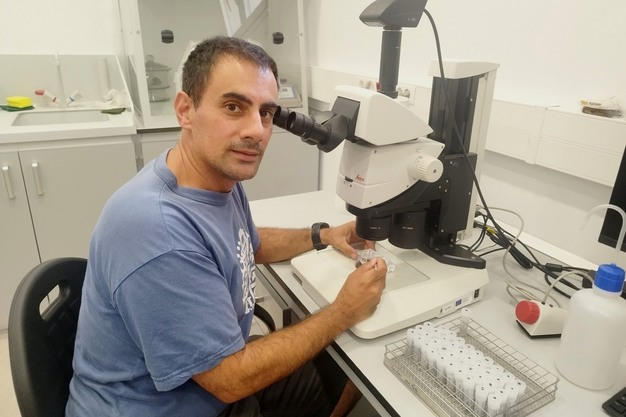
"The cooperatives told us about the problems they faced with the Thrips parvispinus pest, and with joint funding, we began sampling to identify natural enemies that could help control it. After examining how the farmers work and the plant structures around the plantations, we noticed that they hosted insects that may assist growers in controlling the pest," the researcher stated.
"Thrips entered the pepper plantations in the Region of Murcia in 2017. It originates from Southeast Asia and is very small, which has allowed it to establish itself effectively, causing many problems. It can deform the plant's leaves, causing it to lose the potential for photosynthesis; it also causes aesthetic damage to the pepper's skin, bringing down its price," La Spina stated.
Sustainable and long-lasting biological control
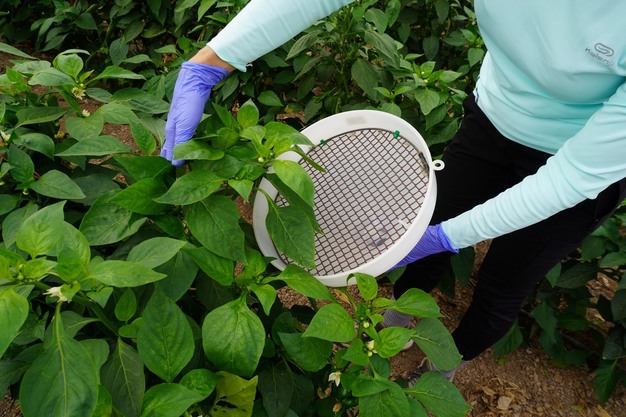
"There are different pest control methods. One uses chemicals and requires weekly treatments; another involves introducing insects; and a third is biological control through conservation, which is what we do. In this approach, we observe what is present in the agricultural ecosystem and, if we find something interesting, we try to promote its presence."
 © IMIDA
"This is a more natural method with longer-lasting effects that relies solely on the ecosystem's own action. We can control pests while minimizing damage. Additionally, it is sustainable because it depends on the area's biodiversity, which can even help native species defend themselves against invasive insects. Local species have significant power in biological pest control," he stressed.
"There are more trained biological control technicians in Campo de Cartagena than anywhere else in Spain. They are very talented and a global reference because of their many success stories," he added.
"People think the Campo de Cartagena's agriculture is intensive, but it is not so intensive because there is a variety of crops and, consequently, a diversity of insects that can be used to your advantage. The region has melons, lettuces, brassicas, citrus, aromatic herbs, and potatoes, among other products. Even the hedges that are being planted serve as refuges for pollinators and insects that can help control pests. Most of the time, they are more beneficial than harmful," he said.
"Our biodiversity is one of the treasures of the Mediterranean. It's like the oil of other countries. We have sun and biodiversity that help us produce and protect ourselves. We need to broaden our perspective on the countryside and understand that the pests' natural enemies can help us control them. It is about improving the agrosystem so that it remains balanced and sustainable," the researcher stated.
For more information:
Michelangelo La Spina
Researcher
Instituto Murciano de Investigación y Desarrollo Agrario y Medioambiental (IMIDA)
Email: [email protected]