On September 1, 2025, Spain will mark a turning point in agricultural waste management: treatment plants will no longer accept plant residues containing conventional polypropylene raffia. The measure, framed under the State Waste Management Plan (PEMAR), forces the fruit and vegetable sector to take a decisive step toward a circular economy by replacing synthetic materials with biodegradable or biocompostable alternatives.
 © Servicios Ambientales Las Chozas
A structural challenge for intensive horticulture
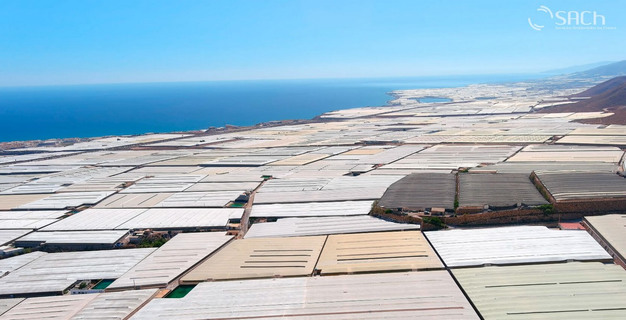
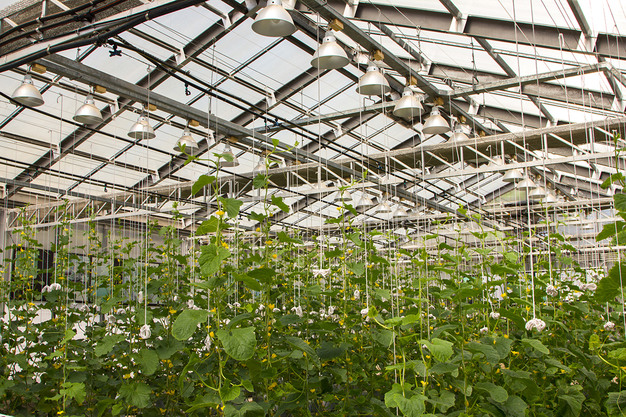
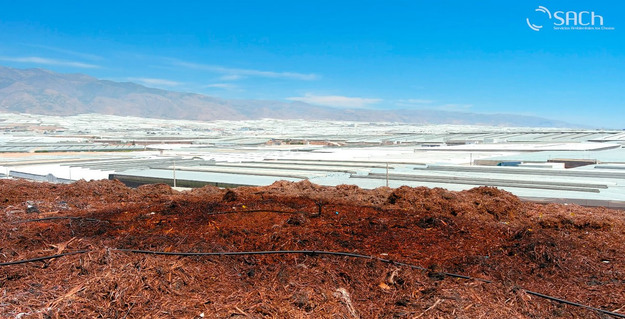
In provinces like Almería, the epicenter of Europe's plastic greenhouse horticulture—the scale of the challenge is hard to overstate. Crop trellising relies almost entirely on non-biodegradable polypropylene raffia, and in massive quantities.
Back in 2016, the Andalusian regional government estimated that greenhouse tomato crops used an average of 40–45 kg of polypropylene raffia per hectare, while peppers required around 50 kg.
That translates into roughly 40,000 linear meters of raffia per hectare in these crops, across a province with more than 32,000 hectares under cultivation. A quick calculation shows the staggering volume of raffia that will now have to be removed or replaced, waste that until now was largely mixed in with the more than 2 million tons of fresh plant residues generated annually by Almería's intensive horticulture (including watermelon, melon, and green beans).
 © Jatuphon Buraphan | Dreamstime
"Why now?"
That's the question being asked across Almería in recent weeks, especially in areas like El Ejido, home to the agricultural waste management company Servicios Ambientales Las Chozas. But the decision isn't the result of a new law, it comes from updated environmental permits for composting facilities. "The Administration gave us time to try to recycle this plastic, but it's simply not feasible, technically or economically. In the end, to comply with regulations, we had no choice but to stop accepting it," explains Juan Bartolomé Escobar, general manager and technical director of the company.
It's worth recalling that as far back as 2016, the Andalusian Department of Agriculture proposed separating non-biodegradable raffia and other plastic elements from crop trellising as part of its agricultural waste management strategy.
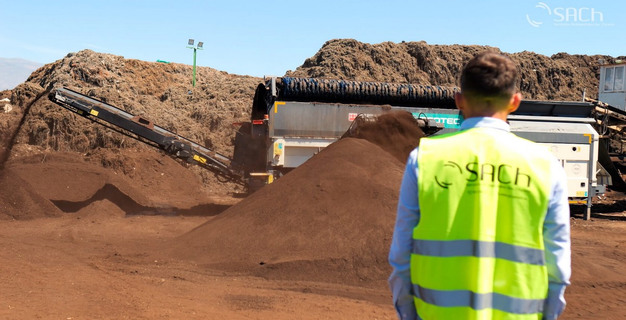
The problem, however, isn't only regulatory but also technical. "Working with plastic makes the process far more expensive and drags out composting times. A normal composting cycle takes four to five months. With raffia, it stretches to more than a year, drastically reducing our processing capacity. On top of that, microplastics and chemical traces remain in the organic amendment, preventing us from certifying the compost as organic."
 © Servicios Ambientales Las Chozas
Alternatives already on the table
To address the issue, the sector has been testing biodegradable and biocompostable raffias. "We've worked with these materials and the results are positive. Bayer, for example, tested compostable raffia at its facilities, and after six months it was fully degraded, as confirmed by compost analyses," Juan notes.
Natural or organic raffia, while somewhat less resistant, poses no environmental risks. Still, producers remain cautious, particularly pepper growers who rely on strong trellising. "Some manufacturers already guarantee durability, but many growers are still hesitant. That's understandable. Over time, though, the change will be unavoidable, because the future lies only in organic or biocompostable trellising materials."
"We know removing conventional raffia is an extra cost and effort for growers. But the reality is that with conventional raffia we can't meet environmental requirements. Removing it at the source, or replacing it with biocompostable materials, makes composting both more economical and more sustainable."
 © Servicios Ambientales Las Chozas
"At the same time, it's important to remember that Almería already faces higher demand for plant waste treatment than current capacity allows," Juan adds. "The volume of waste keeps rising, while the processing plants are limited. That makes reducing plastic contamination in biomass all the more urgent."
For Spain's horticultural sector, and especially for Almería, September 1 won't be the end of raffia, "but the beginning of a structural change toward more sustainable horticulture," he concludes.
 © Servicios Ambientales Las ChozasFor more information:
Las Chozas Environmental Services
Paraje Las Chozas, s/n
04700 El Ejido
Almería - Spain
Tel. +34 950 10 40 40
[email protected]
www.gruposach.es