In precision horticulture, strawberry growers are no longer satisfied with high yields alone. Sweetness has become the true benchmark of quality, driving consumer loyalty, pricing power, and product differentiation. And increasingly, the question growers ask is not "Can I grow strawberries here?" but rather, "Can I grow them sweeter than anyone else?"
Carter Xie, Co-Founder of Grow4Max and a long-time expert in LED lighting and hydroponic cultivation, believes that sugar content in strawberries is no longer just a product of genetics and good weather, but the result of deliberate, data-driven cultivation strategies.
"Strawberry sweetness is the culmination of light, temperature, nutrition, and timing. Every parameter can be tuned if you know what to look for."
 © Grow4Max
What's possible in CEA?
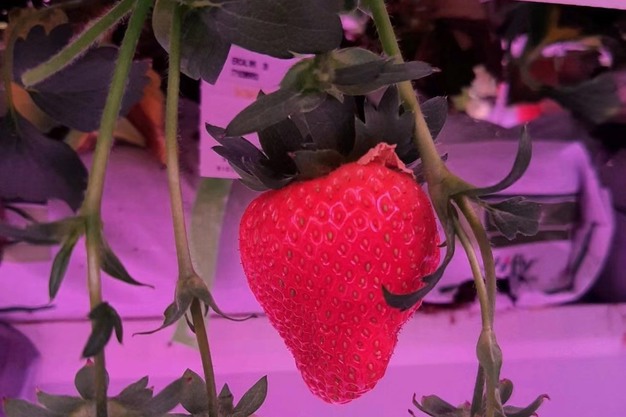
Field-grown strawberries usually range from 6 to 10 degrees Brix, depending on variety and conditions. But in high-tech environments, growers are now consistently achieving levels of 12 to 14 degrees, with premium cultivars like Albion and San Andreas even touching 16 or more. Some niche projects have even reported shocking peaks above 25 Brix, though those are exceptions rooted in very specific environmental and genetic configurations.
This significant gap between field-grown and controlled-environment strawberries shows how deeply environmental factors affect sugar synthesis, transport, and storage.
 © Grow4Max
The genetic ceiling of sweetness
According to Carter, the foundation begins with the cultivar.
"Not all strawberries have the same genetic ceiling for sweetness," he explains. "Some are built for shelf life, some for yield, but the best varieties for controlled environments are the ones bred with flavor in mind, and those that channel energy efficiently into fruit, not leaves."
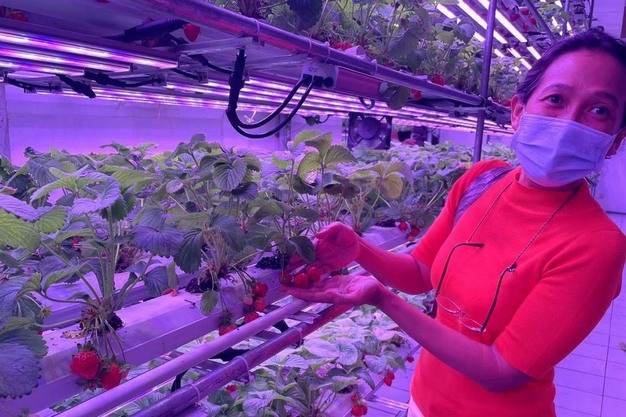
He explains that day-neutral cultivars, in particular, have gained favor in greenhouses because they support more continuous production cycles while maintaining a balance between vegetative and reproductive growth. That balance is key because excessive foliage competes with fruit for carbohydrates.
 © Grow4Max
The role of nutrients
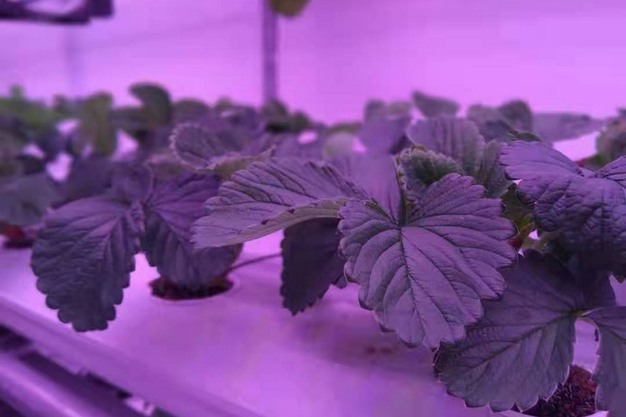
Nutrient management plays an equally pivotal role in determining sweetness. Carbon, primarily sourced from CO₂ through photosynthesis, forms the structural basis of sugars. However, without the right nutrient balance, carbon cannot effectively be transformed or transported. Nitrogen, while essential, often becomes a double-edged sword, as too much leads to lush foliage at the expense of sugar-rich fruit. He advises maintaining moderate nitrogen levels to ensure enzyme activity without overstimulating vegetative growth.
Potassium is another critical player, directly responsible for transporting sugars from the leaves where they are synthesized to the fruit where they are stored.
"I always say potassium is like the postman of the plant. You can produce all the sugar you want, but if you can't deliver it to the fruit, you'll never get the flavor you're after."
Micronutrients like boron and zinc, though needed in small amounts, further support sugar accumulation by maintaining cell wall integrity and promoting the hormonal signals required for proper fruit development. Growers who overlook these subtle players often fall short of their sweetness targets, even with otherwise optimal conditions.
 © Grow4Max
Temperature is a sugar-regulation tool
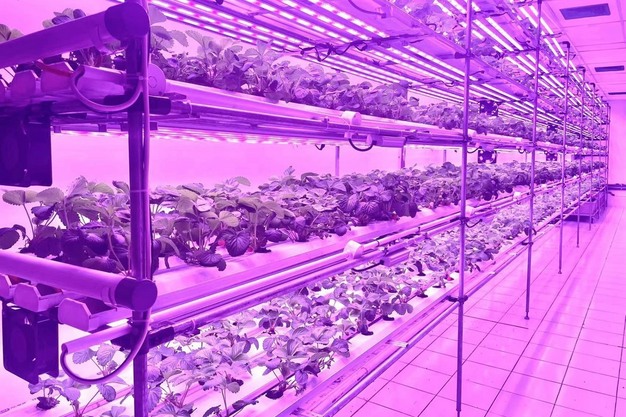
Temperature is a factor that often gets simplified into "too hot" or "too cold," but in reality plays a nuanced role in sugar metabolism. Ideal daytime temperatures for strawberries hover around 18 to 22°C, promoting active photosynthesis and sugar generation. At night, cooler temperatures around 12 to 15°C slow respiration, minimizing sugar loss. The differential between day and night, which is typically 5 to 8°C, acts as a metabolic signal, encouraging net sugar accumulation.
"Temperature management isn't about plant comfort, but about sugar preservation," he states.
 © Grow4Max
Precision LED strategies
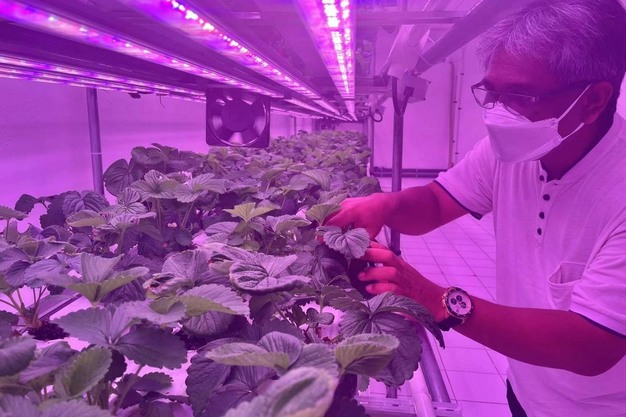
While much of the focus has historically been on nutrition and climate, lighting has become the newest frontier in sugar optimization. Far beyond just keeping plants alive, modern LED systems are now fine-tuned to manipulate how sugars are synthesized, distributed, and stored within the plant.
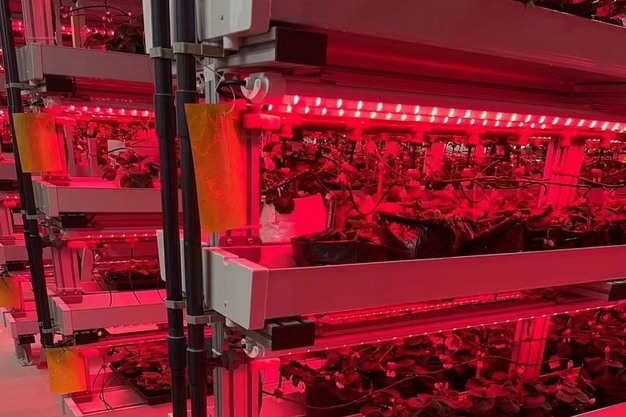
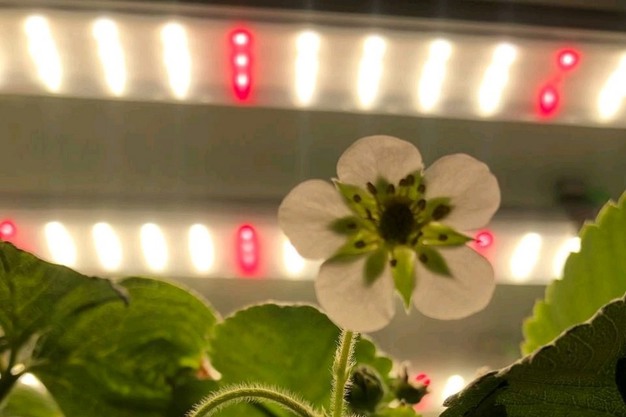
Carter emphasizes that red light, especially at 660 nanometers, is essential for photosynthetic efficiency, driving the glucose-generating Calvin cycle. Blue light, often underutilized, regulates stomatal opening and boosts the activity of key sugar-producing enzymes. A well-balanced spectrum, often with a red-to-blue ratio around 7:3 or 8:2, creates the physiological conditions needed for high Brix fruit.
 © Grow4Max
More than just light hours
Photoperiod control also plays a significant role. Day-neutral strawberries thrive under 12 to 14-hour light cycles, which allow for consistent carbohydrate production without triggering stress. Importantly, the transitions into and out of the photoperiod (sunrise and sunset in nature) can be mimicked with gradual dimming to reduce plant shock and stabilize sugar flow.
"We've seen big improvements just from adding a 30-minute sunrise and sunset to the lighting schedule," he says. "Plants aren't clocks; they're organisms, and they respond better to natural rhythms."
Intensity matters, too. While it might seem intuitive to blast plants with high PPFD levels to push sugar production, excessive light can backfire. Levels above 600 μmol/m²/s risk photoinhibition, where the plant starts burning its own sugars to repair light-induced damage. Conversely, too little light slows photosynthesis and limits sugar availability. Finding the sweet spot, often between 300 and 450 μmol/m²/s depending on growth stage, is essential.
 © Grow4Max
The overlooked boosters
One of the most exciting tools in the light spectrum is far-red light, which until recently was largely ignored. It turns out that wavelengths between 700 and 800 nm enhance sugar translocation by encouraging phloem development and modulating the plant hormone auxin, which redirects energy toward fruit rather than vegetative growth.
"Adding 5 to 10% far-red into the spectrum has consistently bumped Brix levels by 1 to 2 degrees in our trials," Carter shares. "But go beyond that and you risk sending the plant into stretch mode, which compromises fruit quality. It's a delicate balance."
The most advanced lighting recipes now incorporate a blend of red, blue, far-red, and even UV-A to stimulate both sugar production and anthocyanin accumulation, which are the compounds responsible for rich color that often correlate with flavor.
Ultimately, Carter sees sweetness as a system-level outcome. No single factor makes a strawberry sweet. Rather, it's the orchestration of light, temperature, nutrition, genetics, and timing that unlocks a berry's full potential.
"Sweetness is a deliberate result of design. If growers want to lead in quality, they need to treat sugar like a target, not a bonus."
For more information:
Grow4Max
Carter Xie, Co-Founder
+86 132 6578 6006
www.grow4max.com