The Tomato Leaf Curl New Delhi Virus, better known as ToLCNDV, is once again getting attention in the sector. The Belgian Food Safety Agency (FAVV) is currently carrying out unannounced sampling at tomato companies as part of its annual monitoring program. These inspections are part of a routine procedure, not the result of a suspected outbreak. Still, Inagro wants to keep growers informed about this virus and the potential impact it could have on crops.
 © Inagro
What is ToLCNDV?
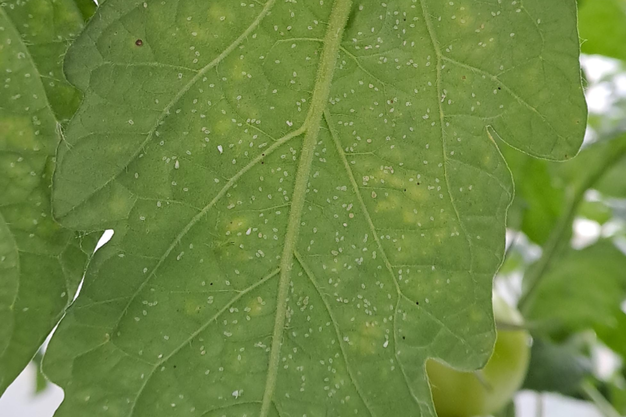
ToLCNDV belongs to the group of Begomoviruses and is spread by the tobacco whitefly (Bemisia tabaci), which is the only known vector. This means that wherever whiteflies are present, the risk of virus transmission is directly linked.
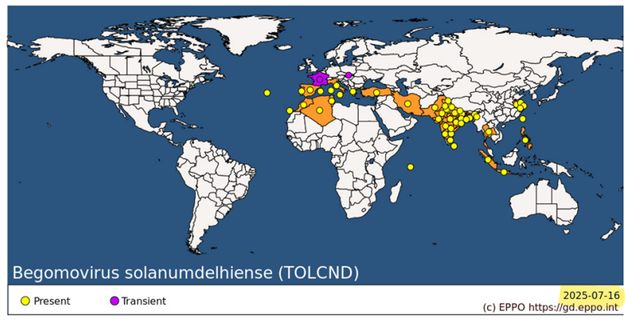
The virus is listed on the European A2 quarantine list. According to the EPPO Global Database, ToLCNDV has not yet been detected in Belgium or the Netherlands. However, it has already been reported in Asia and in Mediterranean parts of Europe. In those regions, it is considered transient, meaning it has been found but is not (yet) regarded as permanently established.
 © Inagro
Symptoms in tomato
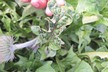
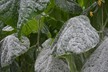
Although tomatoes are not the primary hosts for this virus, which more commonly affects cucumber, melon, and zucchini, they can still exhibit a range of symptoms. These symptoms include leaf curling and deformation at the growing tip, yellowing or chlorosis of leaves, reduced fruit set, and lower fruit weight. Additionally, the fruits themselves may become misshapen or discolored.
Other solanaceous crops like pepper and eggplant are also considered potential hosts.
Control and Monitoring
Managing ToLCNDV primarily involves controlling its vector, the tobacco whitefly, making careful monitoring and effective control strategies against this insect essential. One approach is the use of yellow sticky traps or ribbons, which can help detect population growth early, allowing for a rapid response. Additionally, effective weed management is crucial; it is important to remain vigilant regarding weeds, especially those from the nightshade family, as they can act as host plants for the virus. These weeds should be promptly removed to prevent further spread.
The FAVV emphasizes that these checks are routine inspections. Each year, only a limited number of vegetable growers are sampled, and both healthy-looking and symptomatic plants are tested. If ToLCNDV were to be detected, appropriate measures would follow, although the exact actions are not yet clearly defined.
The virus has not yet been found in Belgium or the Netherlands, but vigilance is key. Keeping whiteflies in check and monitoring potential host plants remains the best defense.
Source: Inagro