"It's no longer just about replacing HPS with LEDs. It's about optimizing the crop cycle. The North American greenhouse market has become more strategic and absolutely data-centric and crop-centric. Today's growers are looking for more precision—whether it's crop-specific lighting recipes, data integration, or environmental synchronization," says Andrew Volpetti. He recently joined RED Horticulture, a European company specializing in smart lighting solutions.
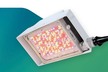
The RED Horticulture solution is based on photobiology and agronomy, with light recipes developed through their own research in these fields. This knowledge is combined with smart technology systems—using sensors, and AI—to create a full-service, custom lighting solution. At the core of this are the RED T dynamic luminaires, designed for maximum system efficiency, and the MyRED software platform, which allows growers to design, monitor, and optimize their lighting strategies in real time. Their products have quickly gained ground in European vegetable, floricultural, and medicinal plant cultivation.
It's this proposition that urged Andrew to make the switch from a horticultural distributor to the lighting industry. He sees RED's products as the answer to many growers' demands for a proven return on investment from installation to harvest. "We're not just selling LEDs—we're helping growers grow smarter. Our RED T systems deliver spectral agility thanks to the smart dimming functionality. Combined with MyRED's integrated software, growers can optimize lighting across growth stages, track KPIs, and align strategies with production goals. This level of control is essential in today's market."
 © Red Horticulture
Energy market
Just like the lighting systems themselves, the North American greenhouse lighting market is dynamic and influenced by many external factors. Energy costs are one of them. "With rising energy costs across North America—especially in states like California, Massachusetts, and New York—the market is prioritizing high-efficiency fixtures, pretty much 3.0 micromoles per joule or better," Andrew says. Growers are also exploring operational strategies to manage costs. "Smart dimming and all other forecasting features through MyRED are incredibly important, as they provide long-term energy savings over short-term fixture costs."
Driven by these developments, tunable, multi-channel, and fully dimmable systems are becoming standard—though this still depends on the grower's goals. "There's a customer for every unique application. If it's a short-term project, the choice may be a more economical fixture. But for long-term operations, growers often invest in higher-performance systems, as an adaptive lighting approach allows them to reduce consumption during peak hours while maintaining crop performance."
Market potential
Switching from HPS to LEDs remains a driver for LED adoption, but Andrew points out that it's not limited to those upgrading from high-pressure sodium. "There are still facilities running HIDs, and some are using CMH or plasma. But we're also seeing early adopters whose LEDs have now aged out and who can benefit from today's systems. With RED T and MyRED, growers gain an adaptive lighting system that reduces consumption during peak hours while maintaining or improving crop performance. The platform optimizes energy spend based on utility schedules, crop needs, and targeted outcomes—something they couldn't do with earlier-generation LED systems."
Government programs, rebates, and utility incentives continue to play a key role in supporting adoption, which also emphasizes the importance of working with certified lights. "You need to know you've got the most advanced technology for the foreseeable five-plus years because that's what DLC is looking at." RED fixtures are designed to meet utility standards and maximize rebate eligibility. "We provide photometric and rebate documentation, agronomic consulting, and project proposals to streamline the incentive application process."
On the topic of tariffs, Andrew notes: "Ongoing tariffs on components, particularly from Asia, have driven demand for reliable, high-performance alternatives with transparent origin and after-sales support. RED's R&D in Europe is part of our approach. China is part of the global economy, and everyone has to deal with aspects of it." He adds that the company's focus in North America will be on reliability, performance, and after-sales support.
Joining RED, Andrew concludes, is part of a broader vision. "It's about bringing a new approach to cultivation—one that combines science, strategy, and sustainability to meet today's market challenges. I've spent over 15 years helping growers across North America navigate the evolution of lighting—from early HID systems to today's advanced LED platforms. I've seen what works, what doesn't, and what growers truly need to succeed. The RED T dynamic luminaires, the MyRED software, and our smart dimming functionality together deliver unmatched control, efficiency, and crop performance. This level of control is essential when margins are tight and inputs must count. Better quality, higher yield, and reduced waste are all outcomes that growers seek. Technology should enable those results."
For more information:
Andrew Volpetti
Director Business Development North America
RED Horticulture
Office: +33 4 87 91 24 00
450 7th AVE STE
1501 NEW YORK NY 10123
[email protected]
www.horticulture.red