Agricultural biostimulants are key biotechnological tools for achieving the sustainability and efficiency goals set by European guidelines such as the Green Pact and the Farm to Fork strategy. Their main function is to optimize plant physiological processes, improving nutrient use efficiency, abiotic stress tolerance, and crop quality.
Within the broad spectrum of these substances, biostimulant products of non-microbial origin, such as humic substances and plant extracts, for example, occupy a prominent position.
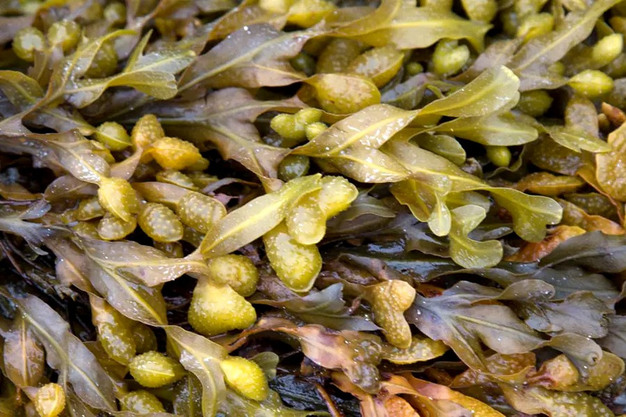 © AEFA
Formulations based on seaweed extracts
In this group, formulations based on seaweed extracts, and in particular those derived from brown algae (Phaeophyceae class), are of technical and commercial relevance due to their complex biochemical composition and their proven efficacy on the crops on which they are applied.
Brown algae are organisms that grow in high-stress environments, such as intertidal areas, where they suffer constant fluctuations in temperature, salinity, UV radiation, and desiccation. To survive in these conditions, they have evolved a metabolic system capable of synthesising complex bioactive compounds. This "phytocomplex" is precisely what makes them an exceptionally valuable raw material for agriculture.
From a botanical point of view, although there are a large number of species of brown algae, the biostimulant industry has focused on those that offer a higher concentration and a more interesting profile of active compounds, specifically those species belonging mainly to the Phaeophyceae class.
Species most commonly used in biostimulant formulation
The selection of the algae species is a determining factor in the final composition and, therefore, in the biostimulant's mode of action. The most commonly used in the industry are:
Ascophyllum nodosum: Possibly the most researched and used species globally. It grows abundantly on the cold coasts of the North Atlantic. Its exposure to the stresses of the tidal cycle induces it to produce high concentrations of mannitol and alginic acid, polysaccharides that play a crucial role in osmoregulation and protection against water and salt stress in treated plants. It is also an important source of betaines and has a balanced hormone profile that supports general physiological processes, from germination to fruit set.
Ecklonia maxima: Native to the coast of South Africa, this giant brown algae is particularly renowned for its phyto-hormonal profile. The extracts obtained from it naturally have a high ratio of auxins to cytokinins. This characteristic makes it an ideal tool for stimulating root development in the main root, secondary roots, and absorbing hairs.
Laminaria spp.: This genus of alga groups several species (such as Laminaria digitata or Laminaria hyperborea) that inhabit deeper waters than A. nodosum. Their composition is rich in carbohydrates, such as laminarin, a polysaccharide known for its ability to induce plant defence responses. They also contain mannitol and a remarkable diversity of minerals and trace elements that, when applied to the crop, can activate metabolic and enzymatic pathways, improving the overall vitality of the plant.
Fucus spp.: Species such as Fucus vesiculosus or Fucus serratus are also common on the Atlantic coasts. They are characterized by their fucoidan content, another sulphated polysaccharide with elicitor activity capable of activating the plant's natural defense mechanisms against certain stresses.
The value of brown algae extracts
The value of brown algae extracts does not lie in the isolated action of a single compound, but in the synergy that occurs between all the components of their phytocomplex.
Alginic acid improves soil structure and nutrient availability; mannitol and betaines confer tolerance to osmotic stress; polyphenols provide antioxidant capacity; and substances with hormonal activity modulate plant growth and development.
Applying these extracts at certain phenological moments allows growers to proactively manage the crop's productive potential. Their use translates into greater fertilization efficiency, a reduction in the negative impact of heat waves or moderate droughts, and a tangible improvement in crop quality parameters, such as size, color, sugar content, and post-harvest shelf life.
Source: aefa-agronutrients.org