Mexico is now a global leader in indoor agriculture. "Mexico, the Netherlands, and Spain are at the forefront of protected agriculture. Much of Mexico's protected agriculture development has been driven by the U.S. market's demands, both in volume and sanitary standards," stated Jesús Salas, Plastextil Mexico's manager.
"All the existing technology has already been installed in Mexico, adapting the developments for cold areas to the warm and tropical regions where intensive greenhouse production centers are located today; a 'tropicalization' that has worked out very well."
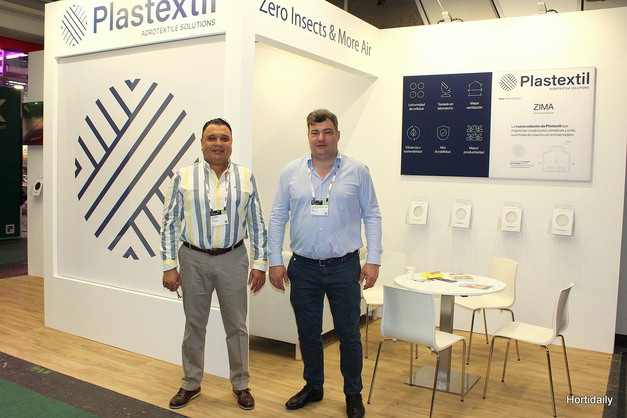 © PlastextilAntonio Boronat López, CEO of Plastextil, and Jesús Salas, the company's manager in Mexico
"In the last 25 years, the country has experienced a boom in the installation of greenhouses and shade houses. It's also moved from open-air cultivation to a massive adoption of protected agriculture." In 2023 (according to the most recent SIAP data), Mexico had more than 32,600 hectares of protected agriculture, including greenhouses, shade nets, and macro-tunnels. That is more than 34 times the 950 hectares SIAP recorded in 2005. "In the last 4-5 years, there has been a slowdown in growth. Despite this, the huge area devoted to protected agriculture in the country requires rigorous maintenance to comply with the standards required by the United States government and North American marketers."
"Plastextil has accompanied the development of protected agriculture in Mexico and its expansion from the northwest and north to the center of the country, where there is a growth in high-tech greenhouses. That's why we decided to be at the forefront of modernizing Mexican agriculture, developing new materials specifically tailored to our climate. The result is ZIMA," Jesús Salas stated.
 © Plastextil
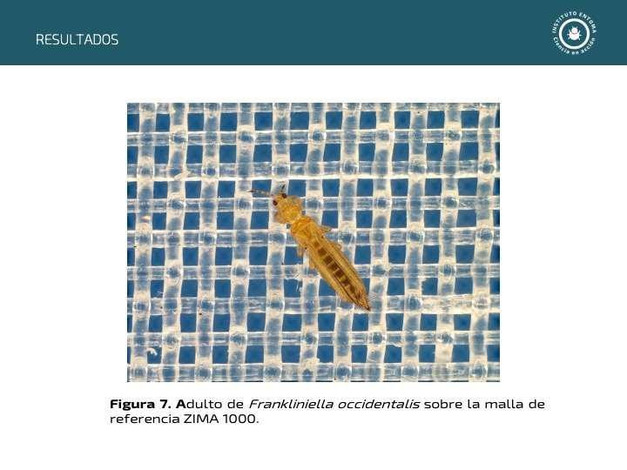
"ZIMA is our new high-porosity mesh. It's made with a finer thread, which allows us to increase the number of openings per square centimeter through which the air circulates and prevents pests, such as Thrips Parvispinus, from entering greenhouses. This guarantees Zero Insects and More Air (ZIMA). We carried out the first tests in 2019-2020, and in 2024, we began to market this mesh with very good results in crops sensitive to this devastating pest, such as pepper."
"Plastextil meshes are made of high-density polyethylene and additives that filter ultraviolet radiation, reducing heat stress on the plant. As a result, not only do they increase ventilation and carry out pest control, they also help create a more stable environment for the crop, which translates into less stress, greater productivity, and also greater health," he stressed.
Expansion from Sinaloa to the center of the country
Plastextil originated in Sinaloa, one of Mexico's epicenters of intensive agriculture. Since its inception, the company has accompanied the growth of the sector, adapting its products to the diverse microclimates of the country, ranging from arid and saline areas to regions with high humidity and a risk of strong winds.
"The company plans to strengthen its presence in the center of the country, installing a new operational base there in the medium term that will allow us to offer producers in the region a closer and more personalized attention," Jesus Salas said.
 © PlastextilFor more information:
Plastextil
Libramento Benito Juárez, 5599
Bodega 4 and 5, Culiacán, Sinaloa (Mexico)
Tel.: +52 667 7602909
www.plastextil.com