Thrips remain a persistent challenge in protected horticulture. Emerging species like Thrips parvispinus, Scirtothrips dorsalis, along with established ones such as Frankliniella occidentalis, Thrips tabaci and Echinothrips americanus, continue to cause damage and spread viruses. As chemical control becomes less viable, biological solutions like predatory mites are taking center stage. One predatory mite is showing exceptional promise: Limonica.
Why Limonica?
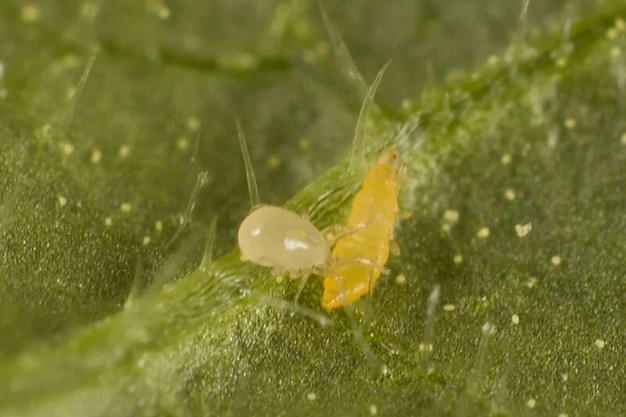
Limonica (Amblydromalus limonicus) is a predatory mite that feeds on a wide range of pests, including thrips (both first and second instar larvae), whitefly eggs and nymphs, and, to some extent, spider mites. Its versatility and high predation rate make it a valuable tool in integrated pest management (IPM) programs.
Field results and performance
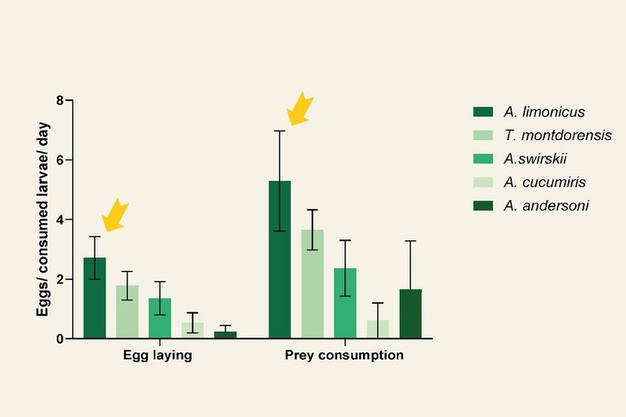
Limonica has demonstrated notable efficacy in controlling pests in ornamentals and vegetables. In particular, it has proven effective against several thrips species. Trials conducted by Koppert Spain indicate that Limonica outperforms other predatory mite species in managing Thrips parvispinus, a notoriously aggressive species. It also targets Scirtothrips dorsalis effectively, especially due to its capacity to feed on second instar larvae, which helps in curbing the rapid spread and damage this species causes to peppers and strawberries. Furthermore, Limonica has been shown to significantly reduce populations of Frankliniella occidentalis, with its effectiveness enhanced through supplemental feeding.
 © Koppert
Limonica offers several key advantages that make it an effective biological control agent. It can operate effectively across a broad temperature range, facilitating its introduction during both winter and summer seasons. This flexibility allows it to be utilized year-round in various climates. Additionally, Limonica possesses a high reproductive capacity, enabling a rapid population build-up which is crucial for maintaining effective pest control. Its strong mobility and adaptability further enhance its utility in covered crop environments, allowing it to navigate and establish itself efficiently. These traits collectively enable Limonica to establish early, exerting pressure on thrips populations before they reach their peak, thereby helping to manage infestations more effectively.
The potential of Limonica against other thrips
While most current data highlights Limonica's effectiveness against T. parvispinus and S. dorsalis, its biological traits suggest potential for controlling other pests as well. These include Dichromothrips corbetti, also known as Vanda thrips, and Chaetanaphothrips orchidii, commonly referred to as anthurium thrips. Limonica may also be effective against other emerging species associated with global trade. However, further trials are necessary to confirm its efficacy across various crops and climates, ensuring its broader applicability in pest management strategies.
 © Koppert
Strengths and considerations
"What makes Limonica stand out is its ability to establish quickly and target both first and second instar thrips larvae, even when temperatures are on the cooler side," explains Sarra Bouagga, Researcher at Koppert Spain. "We've seen it thrive especially well between 20 and 25°C, with increased egg-laying and feeding activity, but what truly sets Limonica apart from other predatory mites is that it continues to be effective even when temperatures fall below or rise above that range. That said, it's important to keep in mind that the hatching rate of Limonica eggs is low in hot, dry conditions or when humidity drops below 65%, so those factors really need to be considered when planning your IPM strategy."
Integration into IPM
For best results, Limonica should be introduced preventively, supported by supplemental feeding (e.g., prey mites) and compatible biocontrol agents like, in case of sweet pepper, Orius laevigatus.
As new thrips species continue to challenge growers worldwide, the need for effective and sustainable control strategies is more urgent than ever. Limonica stands out as a highly performing predatory mite, capable of targeting multiple thrips species and life stages. While further research is needed to expand its use across crops and climates, current evidence supports its first place position in modern IPM programs.
For more information:
Koppert
[email protected]
www.koppert.com