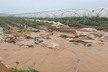
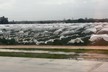
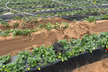
In a country like the Philippines, where extreme weather events are both frequent and devastating, the agricultural sector faces a uniquely urgent challenge. "Filipino smallholder growers are at the frontlines of climate change," says JT Solis, Co-Founder and CEO of Mayani. "They are the most affected by extreme weather events, yet they are the least capable of adapting to them as they don't have the resources, nor are they prepared for this."
This grim reality is precisely why Mayani, an agri-tech social enterprise, has partnered with the Bayan Academy and HSBC Philippines to launch an ambitious initiative that champions climate-smart agriculture, with a focus on greenhouse farming tailored for typhoon-prone regions.
A response rooted in experience
Mayani's roots are firmly planted in the community. As Ochie San Juan, Mayani's Co-Founder and Chief Farmer, shares, "Mayani was born to help our family farm school here in Western Batangas. We were initially supported by the Escuela Familiar Algarria from Spain, part of the international family farm school system, to empower Filipino youth to be involved in agribusiness."
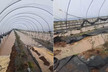
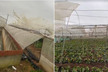
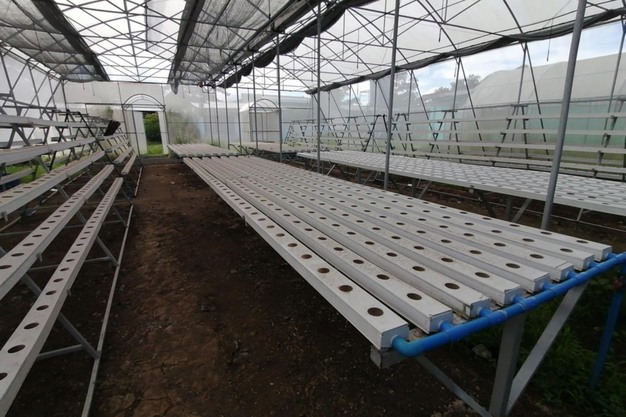
This mission has evolved into a practical, scalable solution to the increasing threats of monsoon rains and typhoons, which include greenhouses that are designed to withstand the local climate while supporting year-round vegetable production.
 © Mayani
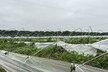
Dagatan Family Farm School Greenhouse
Tailored greenhouses for a typhoon nation
"Our country is the welcoming party to all typhoons," Ochie remarks wryly. "Western Batangas, where we are based, is frequently battered by monsoon rains due to its proximity to the West Philippine Sea. That's why putting up greenhouses is critical for our vegetable growers."
The greenhouses used by Mayani vary in size and function depending on farmers' resources and elevation. For smaller farmers, tunnel-type greenhouses made of UV-resistant plastic, which are typically 1 to 1.5 meters high, and offer an affordable way to protect crops like eggplants from wind and excessive rain. For those with more capital, larger structures (up to 2 meters) accommodate trellised vegetables and leafy greens like lettuce.
"During the summer, there's no need for greenhouses," he explains. "But during the wet season, these greenhouses help extend the growing season and protect valuable crops."
A learning platform and a viable business
Mayani operates as tech-enabled fresh supply chain company, and is also a platform for empowerment. "We work not only with growers, but also with the local government units (LGUs) and the Department of Agriculture," says Ochie. "Our farm school has become a training ground for nearby communities. Some of our growers are regular participants in technical seminars. It's all about capacity building."
This decentralized education model (partnering with government and other NGOs) ensures that Mayani's programs remain accessible and scalable, even in rural and underfunded municipalities.
 © HSBC Philippines
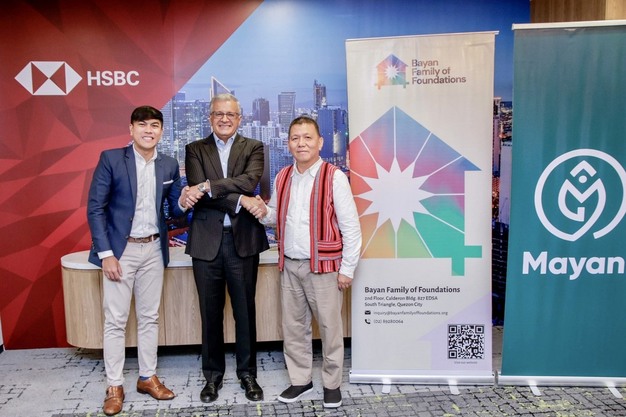
Prof. Carlo Sagun, CEO of Bayan; Sandeep Uppal, CEO of HSBC Philippines; Ochie San Juan, Co-Founder & Chief Farmer of Mayani
Crops that feed and sustain
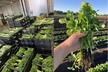
In terms of crop selection, practicality and demand guide decisions. "We always plant lettuces because of the strong demand from Mayani's restaurant clients in Metro Manila," Ochie shares. "We're also now starting to grow tomatoes. While tomatoes are challenging to grow during the rainy season, greenhouses make it possible. And the market demand makes it very profitable."
The ability to calculate production benefits per square meter allows Mayani to show growers tangible proof: there is money in farming, even on small plots. "This is a big deal in areas where most growers can't afford to build greenhouses unless there's a donor or government grant," says Ochie.
Scalable, replicable, sustainable
From pilot groups comprising approximately 30 farmer groups at the outset, the project is designed to be scalable. Each greenhouse acts as a demonstration unit, showing surrounding growers what's possible. "Even if they don't have the capital, seeing the yield and income from a small greenhouse helps them believe in the potential," says Ochie.
And while this specific project is rooted in Western Batangas, Mayani's model is already reaching farther. "We have connections with family farm schools in Kenya, Mozambique, and other African countries. The same principles can work there too."
JT highlights the role of global partnerships in making this initiative possible. "This is why we're thankful for the collaboration with Bayan Group and HSBC. It allows us to bring real solutions to the growers who need them most. We're doing active climate adaptation."
For more information:
Mayani
JT Solis, Co-Founder and CEO
[email protected]
www.mayani.ph