As global demand for sustainable packaging intensifies, compostable fruit labels are reemerging as a small yet powerful innovation in fresh produce. As industry experts point out, while originally designed for branding and product identification, fruit labels have evolved into essential tools for consumer engagement, transparency, and operational efficiency. Today, certified compostable labels offer a solution that aligns with both corporate environmental goals and consumer expectations for sustainable packaging.
"Sustainability starts with the smallest details. Our certified compostable labels prove that even a fruit sticker can help build a circular economy," said Colin Woodward, CEO of Sinclair.
Despite growing availability and consumer preference - 72 percent of global consumers favor compostable packaging - regulatory progress remains uneven. The recent pause of South Australia's non-compostable label ban highlights the challenges of fragmented legislation, echoing France's experience in 2022. A harmonized regulatory approach could avoid operational complexity and ensure a level playing field for producers. Although regulation matters, it does not seem to be the main driver. According to a recent research carried out by global consultancy firm McKinsey, consumers are increasingly looking to businesses—more than governments or regulators—to lead the way in sustainable packaging solutions.
 © Sinclair
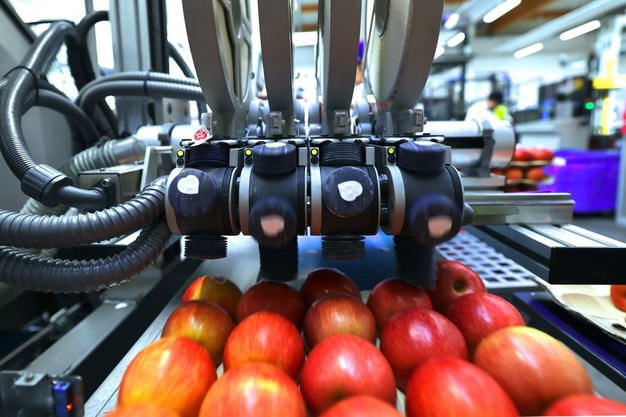
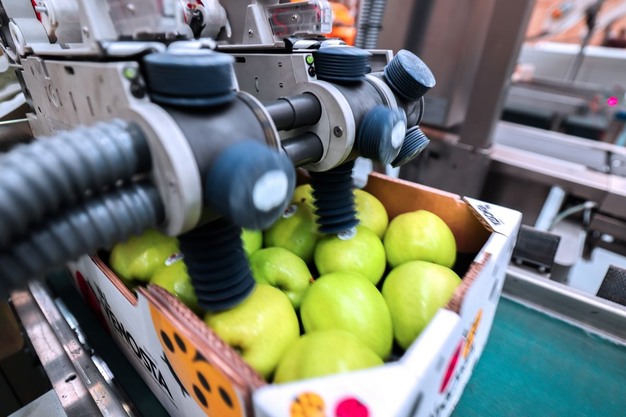
Data shows that compostable labels, particularly those with 'finished product' certification like Sinclair's T55, support the circular economy by fully decomposing in home or industrial composting environments. These labels enable the sale of loose produce, which WRAP UK, a British non-profit organization focused on promoting circular economy, estimates could prevent 100,000 tonnes of food waste and eliminate over 10,000 tonnes of plastic packaging annually.
"Innovation isn't just about what's next—it's about what's necessary," said Duncan Jones, senior marketing manager at Sinclair. "Compostable labels are our commitment to a smarter, cleaner, and more transparent food system. As packaging technologies advance and industry investment grows, compostable fruit labels stand out as a scalable, consumer-friendly solution. They bridge the gap between sustainability and functionality, empowering growers, retailers, and consumers to participate in a more responsible food system—one label at a time."
 © Sinclair
 For more information:
Duncan Jones
Sinclair
Tel: +1 (559) 233-4500
[email protected]
www.sinclair-intl.com