Greenhouse production offers chile growers many advantages: more consistent temperatures, protection from extreme weather events, and extended growing seasons. However, controlled environments come with their own set of disease challenges. Dr. Phillip Lujan, Extension Plant Pathologist and Assistant Professor at New Mexico State University, offers expert guidance for growers navigating plant health in greenhouse systems. From disease prevention to climate-related risk factors, his insights help inform better decision-making for sustained greenhouse success.
"Disease pressure depends on three things: a virulent pathogen, a susceptible host, and a conducive environment," says Dr. Lujan. "Greenhouse environments are more controlled than open fields, so we typically see higher disease pressure in field-grown chile due to factors like heavy rainfall, variable soils, and insect activity."
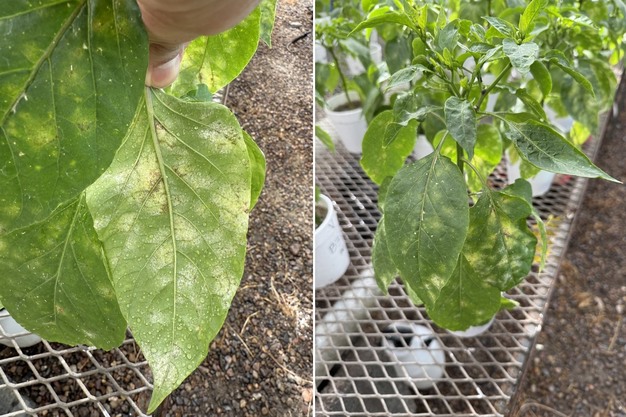
That said, some pathogens thrive particularly well in greenhouses. "On the other hand, powdery mildew, pythium, and bacterial leaf spot are more prevalent in greenhouses than in outdoor systems. These pathogens benefit from the cooler temperatures and elevated humidity that greenhouses can maintain."
 © NMSU
Root rot management: prevention is key
Root rot diseases, including Phytophthora and Fusarium, can devastate chile crops in high-moisture environments. The cornerstone of defense, according to Dr. Lujan, is maintaining overall plant health through proper irrigation and substrate management.
"Don't overwater. That's the number one rule," he advises. "Use drip irrigation where possible, and ensure your media drains well. If you're using a soilless mix, add perlite to improve drainage.
Curly top virus: Less common indoors, but still a risk
Beet curly top virus, commonly spread by beet leafhoppers, is rarely seen in greenhouse operations, but it's not impossible. "We don't typically see curly top virus indoors, but if infected vectors find their way into a greenhouse, they can transmit the virus. It's much more common in field settings where insects move freely."
Managing high humidity and limited airflow
Humidity and airflow are two of the most critical environmental factors in greenhouses, and often the most difficult to manage.
"For growers dealing with high humidity and restricted airflow, I recommend reducing plant density to improve circulation," Dr. Lujan says. "Spacing is key. Also, focus on water management and ensure your media drains efficiently. Poor drainage combined with humidity creates a breeding ground for many greenhouse diseases."
 © NMSU
Variety selection and seed treatments
Choosing the right chile variety can give growers a head start on disease prevention. "Hybrid seeds are improving every year, especially for disease resistance. But pathogens are constantly evolving, so resistance is not a silver bullet."
For additional protection, seed treatments can play a critical role. "Treating seeds with hot water or a 10% bleach solution can reduce surface pathogens. Biologicals like Trichoderma or Bacillus can also help, either by competing with harmful microbes, improving germination, or triggering the plant's own disease resistance pathways."
Climate stress and disease susceptibility
While greenhouses buffer against some environmental extremes, they are not immune to climate-related stressors. "In the Southwest U.S., increased heat and drought have made our plants more susceptible to disease. Any kind of plant stress, whether from heat, lack of water, or excessive humidity, can open the door for pathogens. Even in greenhouses, we're seeing the effects of a changing climate."
Diagnostic support for growers
When disease symptoms emerge, accurate diagnosis is critical. Growers are encouraged to collaborate with New Mexico State University's Plant Diagnostic Clinic for assistance.
"If you think something's wrong with your crop, send me an email with detailed photos, descriptions of symptoms, and information about your growing environment," says Dr. Lujan. "We can also accept physical samples from anywhere in the U.S., but you'll need to request our shipping permit first."
Greenhouse chile production presents a unique balance of control and complexity. As Dr. Lujan emphasizes, success often comes down to foundational practices: proper irrigation, plant spacing, drainage, and regular monitoring. With informed strategies and access to diagnostic support, growers can effectively mitigate disease pressure and maintain healthy, productive crops.
For more information:
New Mexico State University
Dr Phillip Lujan
[email protected]
nmsu.edu