Greenhouses nationwide face a persistent threat from mealybugs.
These sap-sucking insects may be small, but their ability to hide in hard-to-reach places and reproduce rapidly makes them a significant challenge for growers.
To help growers find effective solutions, scientists at Clemson University's Pee Dee Research and Education Center (REC) Turf and Ornamental Entomology Laboratory have developed a guide to combat mealybug infestations.
The guide is a result of collaborative work by doctoral students Powlomee Mondal and Peilin Tan under the mentorship of Zee Ahmed, assistant professor of turf and ornamental entomology. It is available at "Effective mealybug control strategies for greenhouse growers," in the Greenhouse Management, June 24, 2025 edition.
"Mealybugs often go unnoticed until damage begins to appear and infestations become widespread," Ahmed said. "Our goal was to create a practical, research-based resource that growers can use to stay ahead of infestations."
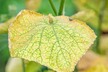
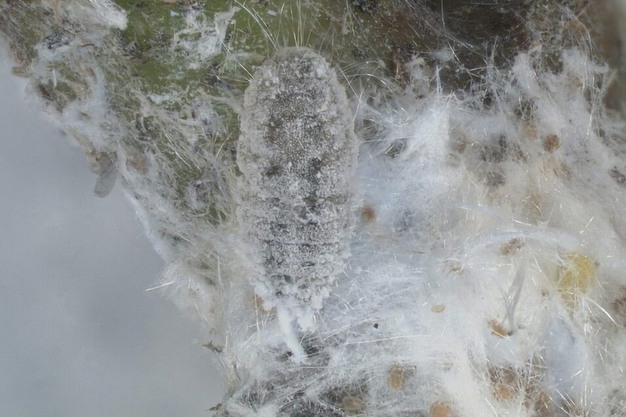
Mealybugs damage greenhouse plants by feeding on sap, leading to stunted growth, yellowing leaves and distorted plant parts. They also excrete a sticky honeydew that promotes sooty mold growth, impacting plant health and aesthetics. Infestations can weaken plants to the point of death.
 © Clemson University
A strategic approach to mealybug management
This guide outlines a comprehensive step-by-step strategy that emphasizes prevention, accurate identification, and targeted treatment of pest infestations. It includes determining control methods based on the specific mealybug species present and applying treatments during the pest's most vulnerable life stages. To prevent resistance, it recommends alternating insecticides and implementing thorough sanitation practices, such as bench washing and debris removal. Additionally, the guide stresses using research-backed data to guide both product selection and application timing, ensuring effective and sustainable pest management.
"This integrated approach reduces pest pressure while minimizing chemical use and preserving plant health," Ahmed said.
Tan is conducting a short, nine-question survey to gather insights from growers about their current challenges with mealybug management. The survey does not collect personal information.
This survey is available on ArcGIS at the link here.
Source: Clemson News