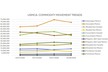
Carrasco has addressed price stability following local production's seasonal end and the influx of goods from northern Argentina. He used tomatoes as an example, highlighting a box price last year reaching $80,000, while this year did not surpass $25,000 to $30,000. "This difference is due to the fact that sales are very negative, which prevents prices from skyrocketing as they would with normal demand," he stated.
Tomatoes, peppers, eggplant, corn, and green beans experienced notable price shifts at month's end. Potato prices have begun to rise, yet remain low. Mendoza producers face financial strain, unable to cover production costs, prompting some to seek loans or sell land. Carrasco expressed concern over the situation, noting, "This situation is worse for those who are unable to change their production model, dedicated to a specific crop for life. The situation is very complex for the entire production and marketing system," he stated.
The UFHA plans to release a report detailing the tomato value chain, displaying costs from harvesting to market entry. "The goal is for consumers to have a rough understanding of how much a kilo of tomatoes costs to produce and how much it ultimately ends up in the producer's pocket," Carrasco emphasized.
Frosts have severely impacted production in Mendoza and other regions, affecting supply with typically expected price hikes offset by declining sales. "The frosts were widespread, affecting not only Mendoza but also areas of Córdoba, Villa Dolores, Salta, and Jujuy, where a significant portion of the potato production was lost," Carrasco relayed. Factors like weather and decreased supply affect consumer prices, though lower demand has moderated price increases.
Source: Argenpapa