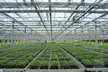
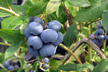
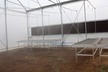
In Ukraine's Zakarpattia region, grower Marina Zan is successfully blending greenhouse and open-field vegetable cultivation to extend her season and reduce market risk. Zan cultivates around 2 hectares of land, including more than 60 acres of greenhouses. Some of them are heated, allowing her to grow early crops. Her farm produces onions, cabbage, tomatoes, cucumbers, zucchini, garlic, and melons.
Zan adopts a crop-diversification strategy to respond to shifting consumer demand and climate unpredictability. "I don't like to stand still. I enjoy trying new things," she says.
Among her key greenhouse crops is yellow melon. Following last year's successful trial, she's again cultivating the Mazin melon variety on 4,000 m². This year, she started seeds in trays, transplanted them in early April, and placed bumblebee hives inside for pollination. Some melons are grown in unheated tunnels, with planting delayed to May.
Tomatoes are also grown in heated greenhouses, primarily pink and yellow large-fruit varieties. Selection varies by season based on market feedback. "Last year we grew many types, but this time I scaled back to focus on fewer varieties with stronger demand."
Zan uses "double cropping" on nearly half of her total area. Early onions or garlic are followed by zucchini or cabbage. Most seedlings are grown in-house. Due to the heavy soils, she favors transplanting over direct seeding, especially after rain, which compacts the topsoil.
This year she is testing spring garlic on 2,000 m² and is expanding trials with watermelon. Her approach often includes growing varieties not traditionally associated with the region, such as Crimean Yalta onions, with surprising success.
To manage pests and diseases, Zan opts for biological tools where possible.
"I haven't used any synthetic chemicals this season. Bio-products are working well so far."
Most produce is sold locally, either from the farm or nearby markets. For now, she's not looking to scale up acreage due to labor shortages but plans to keep improving quality and yield.
Source: agronews.ua