The harvest of red, oblong tomatoes began on 12 July 2025 in the inland areas of the province of Foggia in southern Italy's Apulia region. It was a complex start, though not unexpected. Massimo Cardente, the sales manager of Carden & Leon Corporation, assesses the current campaign, quality, water issues, and market prospects.
 © Carden & Leon Corporation
"July is never an ideal time for eating fresh, red, oblong tomatoes," says Cardente. "The peak demand typically occurs in August, when many families use their vacation days to make preserves and tomato purée."
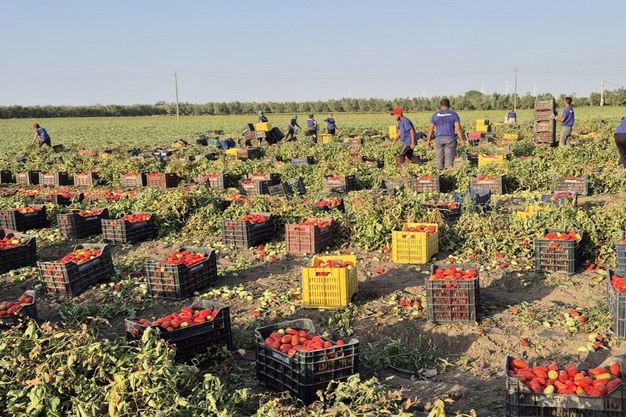
Although the initial pace of orders is similar to that of past years, the water shortage affecting much of Apulia is concerning. "The wells are starting to run dry," Cardente explains. "Many producers have been forced to abandon part of their land in order to continue producing the rest. Some plots of land have already been left unused. It's too difficult to bring these plots up to harvest without enough water, especially considering the costs already spent on planting."
"In the meantime, no significant actions have been taken on a provincial scale except for the closure of some agricultural irrigation pipelines," Cardente explains. The only proposed solution is to increase the water supply from the region of Molise, which currently has abundant water resources. However, no answer has been provided yet."
As for the workforce, the company has not experienced any serious issues. "Our employees have been with us for years and are loyal to our company. In general, however, the fresh tomato harvest continues to rely on migrant laborers, particularly those from Bulgaria, Romania, and Morocco. The regulations on working hours during the hottest part of the day, which receive a lot of attention every year at this time, have not changed our organizational structure. Our company has been following these rules for some time now."
 © Carden & Leon Corporation
Climate impact: increased risk of early ripening and production gaps
From an agronomic perspective, the campaign is showing a dual dynamic in terms of ripening. "An initial peak will arrive in the coming weeks and will likely be followed by a supply gap in 20 to 30 days. High temperatures and significant temperature variations between day and night are accelerating crop cycles. "This complicates marketing planning and could result in a slowdown in supply during the campaign," says Cardente.
Despite this, Carden & Leon aim to maintain last year's volume of around 4,000 tons. "Thanks to our extensive production network and the trust we've built with our longtime farmers, we're confident we can honor all our commercial commitments," Cardente reassures. "Quality has never been compromised. The passion we put into our work every day is what makes our product competitive, even in a difficult market. We still use the same care in the selection and packaging process."
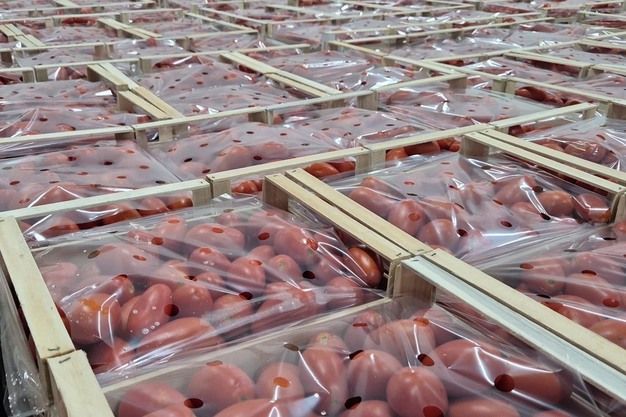
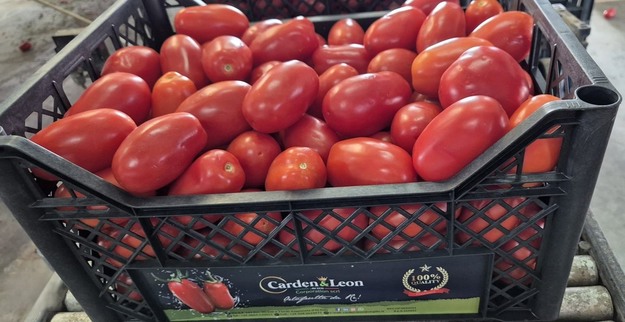
The selected tomato variety is 100% Italian and fresh. It is primarily intended for domestic consumption or home processing into tomato purée or ready-made sauce. It is known for its firm texture and intense flavor. Depending on demand, packaging options include 6-, 8-, or 10-kilogram crates made of plastic or wood.
 © Carden & Leon Corporation
Domestic market and exports: Price and competition challenges
Cardente points out that foreign supermarkets are more interested in commercial developments than domestic ones. "In France, for example, we receive more positive feedback from some chains and local fruit and vegetable markets. The Italian market, on the other hand, is more stagnant, partly because of competition from Spain, which continues to offer low-priced tomatoes."
A message to large-scale retail buyers: "Our tomatoes are ready for your shelves"
"We are looking for stable business partners in Italy and abroad," Cardente concludes. "Our goal is to consolidate partnerships with the large-scale retail distribution sector by offering fresh, well-kept, authentic Italian products. We have quality and dedication. Now, we need buyers who know how to make the most of them."
Photos provided by Massimo Cardente
For more information:
Massimo Cardente - Sales Manager
Carden & Leon Corporation - Italy
+39 328 26 23 971
[email protected]