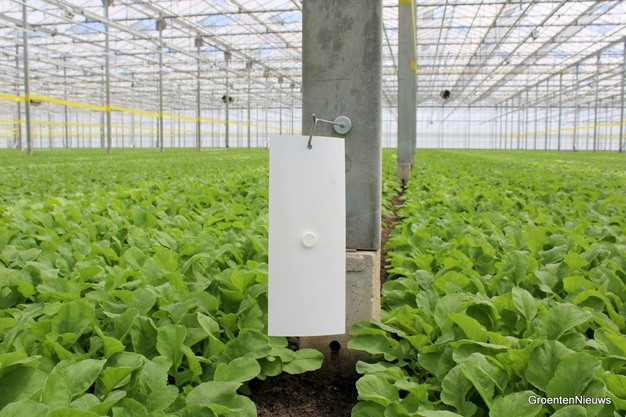
At Yilmaz Radijs, radish crops are grown this season across 11 hectares using not just the familiar yellow sticky traps, but also white sticky cards. These white cards often soon become speckled with tiny black dots—cabbage root flies (Delia radicum) attracted to the pheromone-infused PheroRadicum traps.
The traps, developed by HortiPro and hung low over the crop, are used to closely monitor the development of cabbage root flies. Crop manager Wilfred van den Berg and commercial technical specialist Ron Kleijn from Van Iperen meet weekly to evaluate the monitoring results. Together, they decide if and when chemical intervention is needed. Acting too late—or not at all—risks larvae damaging the radish bulbs. Ideally, growers avoid spraying, but selling damaged radishes isn't an option either.
 © Thijmen Tiersma | HortiDaily.com
White sticky trap with HortiPro's PheorRadicum pheromone in the greenhouses at Yilmaz Radijs in 's-Gravenzande.
Preventive spraying scheme no longer works
To protect their crops, growers rely on plant protection products. But in radish cultivation, only a few chemical options remain available to control cabbage root fly.
"Previously, we used preventive spray schedules with growers," says Ron, who regularly attends meetings of the national radish committee of Glastuinbouw Nederland. "But the number of approved products has declined so much that such schedules are no longer viable." Not all products target every stage of the cabbage root fly's life cycle, and the number of allowed applications is limited. "With a preventive approach, you quickly hit a wall."
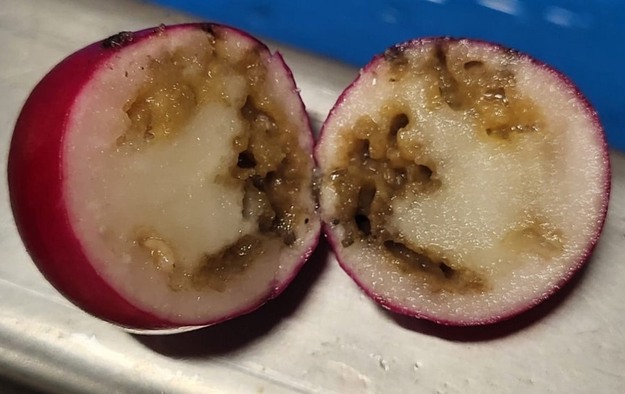 © Ron Kleijn
Infestation in radish by cabbage fly
Monitoring on sticky traps or marker poles
As chemical control options decline, cabbage root flies are gaining ground, developing year-round in greenhouses. Growers are turning increasingly to biological solutions, but often find themselves a step behind. That's why HortiPro developed the PheroRadicum pheromone several years ago, followed by the PheroPole™ monitoring post.
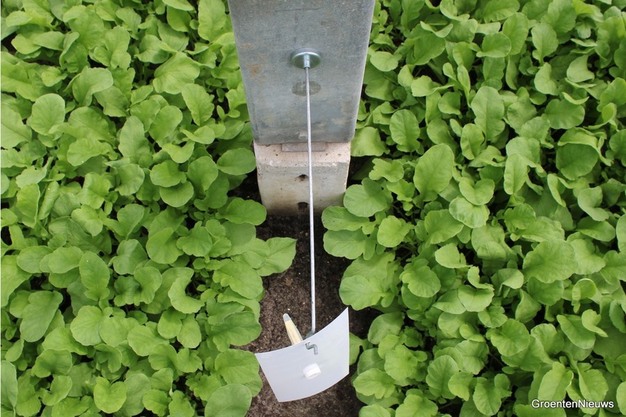
At Yilmaz Radijs, these monitoring poles—resembling roadside markers—aren't used, because they interfere with machinery. "They're not practical for us," Wilfred explains. Instead, the white sticky traps are magnetically attached to greenhouse structures. "More and more radish growers are working this way with PheroRadicum," adds Ron.
 © Thijmen Tiersma | HortiDaily.com
A magnetic hook is used to attach the trapping plate with PheroRadicum to the greenhouse leg.
Preventive deployment before the first flight
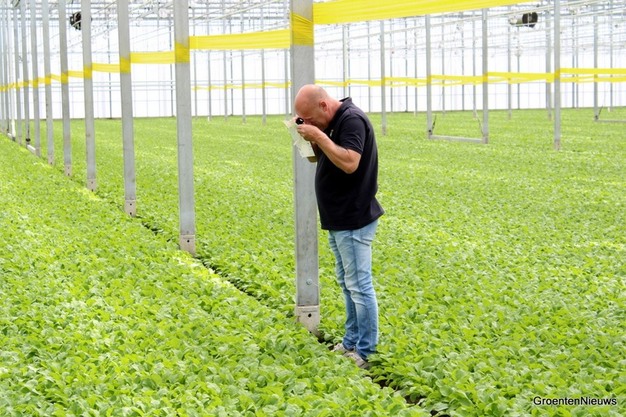
At Yilmaz Radijs, 30 pheromone traps are installed per hectare. Wilfred and his team regularly inspect and count the trapped flies. "It takes time," he admits, "but it gives us a clear picture of pest pressure. One week, you might find only one or two flies per card, and the next wee,k there could be twenty. The fly spreads quickly and unpredictably."
Lennart Simonse of HortiPro agrees. He monitors traps and poles in outdoor crops weekly and sometimes sees activity surprisingly early in the season. "Outdoors, cabbage root fly typically has three flights per year. Indoors, it can be more." The first flight occurs in spring. "Then the flies lay eggs, which become larvae, then pupae, and then more flies. That's the second flight—and the cycle repeats."
 © Thijmen Tiersma | HortiDaily.com
Ron Kleijn of Van Iperen inspects a trap; Wilfred uses tweezers to remove flies during counts. Some growers circle them with a marker instead.
Experience with pheromones
Yilmaz Radijs operates 13 radish greenhouses, each with varying levels of pest pressure. Interestingly, older greenhouses often have fewer problems, while newer, more sealed ones tend to experience higher pest loads. When monitoring reveals rising fly counts, action is taken. "We always advise treating the whole area," says Ron. "Otherwise, you'll quickly use up your limited number of applications—and just push the problem elsewhere."
Yilmaz Radijs was quick to participate when HortiPro began developing PheroRadicum. The site where Wilfred, Ron, and Lennart now sit down for coffee was one of the first trial locations. Now in its second year of large-scale monitoring with pheromones, the system is well established. Wilfred, relatively new to radish after working with tomatoes, already had experience using pheromones for Tuta absoluta. "It took some getting used to, working in cold radish greenhouses during winter," he laughs. Radish is a so-called "cold crop."
 © Thijmen Tiersma | HortiDaily.com
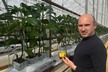
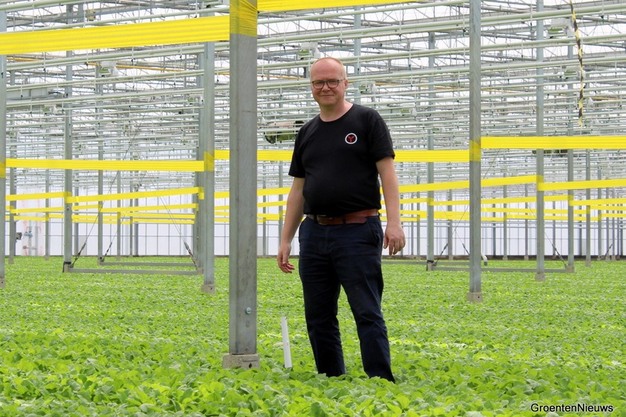
Wilfred van den Berg is a crop manager at Yilmaz Radish
Tackling other radish pests biologically
Every crop has its challenges. In radish, cabbage root fly is a key pest, but spider mites are also a concern. "We've recently started research into biological control options for spider mites as well," says Ron. "We're looking at monitoring techniques and the potential role of nitrogen."
Wilfred expects that preventative strategies like pheromone monitoring will become standard. "If we implement this system across all our greenhouses, it's going to be quite a task. We might even need a dedicated scouting employee, like in other major crops. But with the number of chemical options shrinking, I don't think we'll have a choice. That's why we're investing in this approach now."
 © Thijmen Tiersma | HortiDaily.com
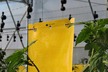
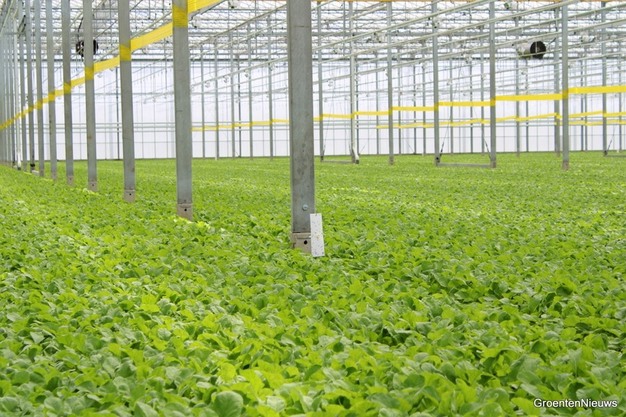
The advice is to place at least 20 white sticky traps with PheroRadicum per hectare, low above the crop.
 © HortiPro
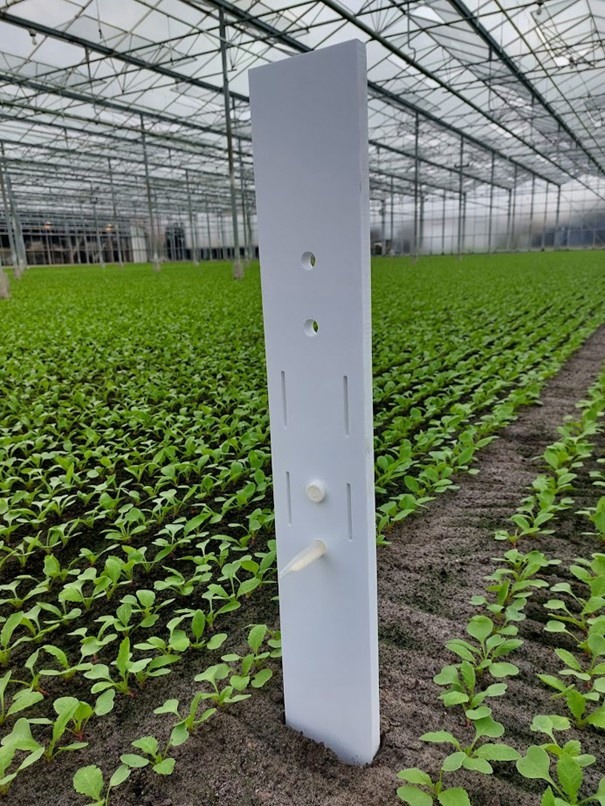
PheroPole™ in radish trial. A convenient way to clean the pole between short greenhouse crops is being worked on.
 © HortiPro
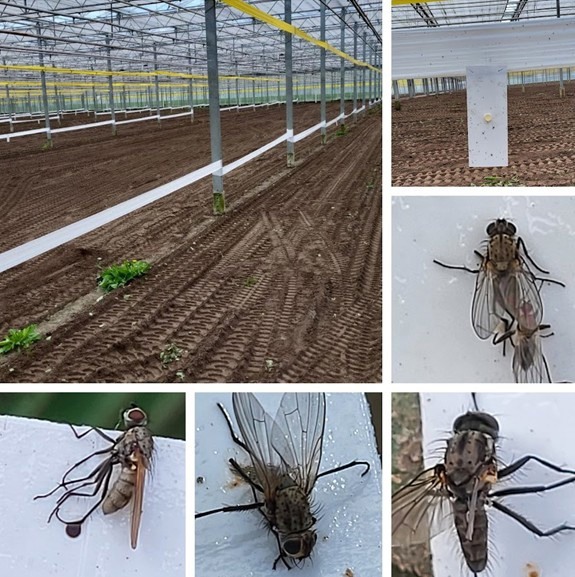
White catch ribbons have also been tested, but they appear to get in the way of the machines too much.
For more information:
Eric Kerklaan and Lennart Simonse
HortiPro
[email protected]
www.hortipro.com
Ron Kleijn
Van Iperen
[email protected]
www.iperen.com
Yilmaz Radish
www.yilmazradijs.nl