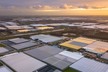
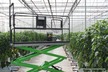
China has built the world's largest area of agricultural greenhouse to meet the requirements of climate change and dietary structure changes.
Accurate and timely access to information on agricultural greenhouse space is crucial for effectively managing and improving the quality of agricultural production. However, high-quality, high-resolution data on Chinese agricultural greenhouses are still lacking due to difficulties in identification and an insufficient number of representative training data. This study aimed to propose a method for identifying agricultural greenhouse spectral and texture information based on key growth stages using the Google Earth Engine (GEE) cloud platform, Landsat 7 remote sensing images, and combined field surveys and visual interpretation to collect a large number of samples. This method used a random forest classifier to extract spatial information from remote sensing data to create classification datasets of Chinese agricultural greenhouses in 2010, 2016, and 2022.
The overall accuracy reached 97%, with a kappa coefficient of 0.82. This dataset may help researchers and decision-makers further develop research and management in facility agriculture.
Sun, Y., Zhang, Y., Hao, J., Li, J., Ge, H., Jiang, F., Liu, J., Dong, X., Guo, J., Luo, Z., & Chen, F. (2025). Agricultural greenhouses datasets of 2010, 2016, and 2022 in China. Scientific Data, 12(1), 1-20. https://doi.org/10.1038/s41597-025-05412-y
Source: Nature Magazine