286 samples of staple British crops from The University of Warwick's UK Vegetable Genebank have been deposited into the Svalbard Global Seed Vault.
The University of Warwick's UK Vegetable Genebank is home to around 14,000 samples of largely root and leafy vegetable seeds. The facility is a treasure trove for plant breeders and researchers who are using cutting-edge technology to develop more sustainable and resilient vegetable crops.
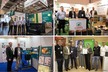
In this latest deposit, 286 samples represent crop genetic diversity in 16 types of staple British crops such as carrots, cauliflower, lettuce, broccoli and parsnips. The samples, originating from 37 different countries, have been handed over by The Foreign Secretary David Lammy to Svalbard Global Seed Vault coordinator Åsmund Asdal.
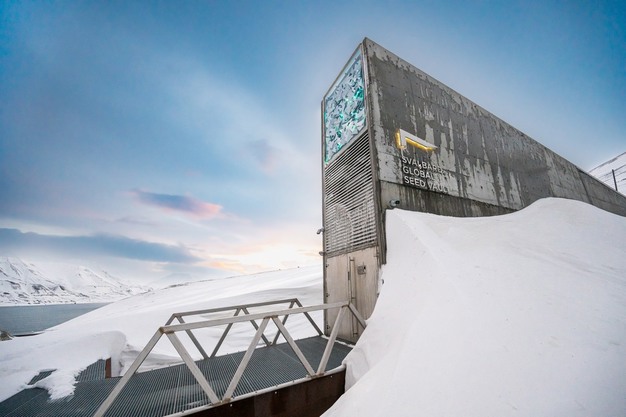 © Svalbard Global Seed Vault
The seeds are stored there in case national collections should be lost due to natural disaster or conflict and this vital contribution will help futureproof some of the UK's favourite vegetables for generations to come.
Dr Charlotte Allender, Head of the UK Vegetable Genebank at The University of Warwick said: "Conservation of crop genetic diversity is a vital activity to support a food secure future. We are delighted to continue the process of safeguarding the seed collections we manage at the Svalbard Global Seed Vault, ensuring their ongoing availability into the future."
The Svalbard Global Seed Vault is the ultimate insurance policy for crops that make up 80% of the world's food supply. It contains a unique genetic heritage of over 1.3 million unique varieties of the most important food crops (600 million individual seeds in total) developed by farmers and crop breeders over millennia.
The UK's contribution to the Svalbard Global Seed Vault is part of efforts to accelerate preparation for and adaptation to the consequences of climate change and biodiversity loss alongside global partners.
Foreign Secretary David Lammy said: "The climate and nature crisis is putting the natural world and our security at risk- from the food that we eat, to the air that we breathe. We must improve the health of our planet to guarantee stability for future generations.
"As part of our Plan for Change, we are cutting the UK's emissions by making Britain a clean energy superpower and by storing duplicates of well-loved British vegetables in the Svalbard Global Seed Vault, we are preserving the genetic diversity of Britain's crops, as well as our food security.
"The innovative research done globally is creating stronger crops that can withstand climate change, pests and disease."
Source: The University of Warwick