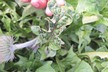
Tomato spotted wilt virus (TSWV) has caused significant problems for some fresh-market tomato and pepper growers in New Jersey the past few growing seasons. TSWV has already been detected in tomato this growing season. Although TSWV is not uncommon, economic losses these past few years have been extensive on some farms.
TSWV is vectored by various species of thrips, a common vegetable insect pest that seems to be on the incline and very difficult to control in vegetable production throughout the state. The most important vector of TSWV is the western flower thrips, Frankliniella occidentalis. It's mode of transmission is persistent propagative, meaning that thrips nymphs have to feed on an infected plant, whereby followed by a short incubation period (lasting from hours to days), the virus is then persistently transmitted throughout the rest of the insect's life span.
TSWV cannot be passed from infected females to eggs; and TSWV is not transmitted in seed.
The western flower thrips and TSWV both have a wide host range! Western flower thrips host range includes: tomato, pepper, onion, celery, cucumber, lettuce, potato, basil, strawberry; a wide range of herbaceous ornamentals (e.g., impatiens, geranium, marigold, petunia, dahlia, gerbera daisy, carnation) as well as many common weeds (e.g., pigweed, chickweed, lambs quarter, thistle, galinsoga). TSMV can infect over 1,000 plant species from more than 90 plant families.
In California and other tomato production regions, resistance-breaking (RB) strains (C118Y, C118F, T120N) of TSWV have recently been discovered that can overcome the single gene resistance (Sw-5b) bred into widely-grown processing and fresh-market tomato varieties. Recent research in TX has also shown that RB TSWV strains may increase western flower thrips fitness (ability to reproduce) by prolonging the adult period and increasing fecundity (i.e., a measure of an insect's reproductive success, often expressed as the number of eggs or offspring produced by an insect) compared to non-RB and non-viruliferous controls. Unfortunately, the breakdown of genetic resistance along with the potential increase in TSWV-infected thrips reproduction rates, may lead to significant problems in thrips and TSWV control in New Jersey and elsewhere.
Recent work in Texas has shown that RB-TSWV can break resistance (conferred by the commonly deployed TSW-mediated single gene resistance) in TSWV-resistant pepper (Capsicum annuum) with varying levels of symptom development in both resistant and susceptible cultivars; with none being completely immune.
In October 2022, samples of a TSWV-infected fresh market tomato variety with Sw-5b resistance were collected in southern New Jersey and sent for analysis. Results determined that RB (C118Y) TSWV was present in the state; and the strain found in New Jersey was similar to the RB TSWV found in fresh-market tomato from Mexico and processing tomato in California suggesting a high potential for its widespread movement.
So, where do we go from here? Based on the isolated reports of TSWV and RB-TSWV being found on on a few farms the past few growing seasons, it does not appear that RB TSWV is currently widespread throughout the state. However, this may likely change and all growers need to be diligent.
All vegetable growers, those who produce their own transplants or bring them in, need to carefully evaluate their thrips monitoring and mitigation programs this winter.
Growers should continue to utilize TSWV-resistant tomato and pepper varieties realizing the effectiveness of those in limiting TSWV is becoming compromised. All growers need to continue to follow best management practices (such as those listed above) and pay careful attention to current weaknesses in their production practices and thrips control programs and adjust their management practices heading into 2025 growing season.
Source: Rutgers University