When the U.S. first introduced new import tariffs, the assumption was that the added costs would flow through the supply chain. However, several months in, the reality on the ground looks different. "Most countries sending produce to the U.S. now face a 10 percent tariff, but the cost isn't being absorbed uniformly across the supply chain, says Maria Bermudez with Advance Customs Brokers (ACB). "Some parties share the cost while others are unwilling to take any of it, pushing the full burden onto the importers."
This dynamic has led to tough conversations with clients. "As brokers, we've had to explain to our shipping customers that this situation is beyond our control, said ACB's Pat Compres. "If they want to stay in business and remain in produce, they must find a way to manage and pay these tariffs. Unfortunately, it has already taken a toll—some companies have scaled back shipments or stopped altogether."
Program business has offered some insulation for those with pre-arranged deals ahead of the season. But for others, the outlook is more uncertain. "What happens to the shippers without structured programs?" Compres asked. "There are many who operate independently, and it's unclear how they'll navigate this environment."
Increased administrative burden
The new tariff regime has also added pressure to operations behind the scenes. "Our finance department has been hit hard—we now have to track and manage third-party tariff payments," said Bermudez. "That includes preparing thousands of entry summaries and providing U.S. Customs and Border Protection (CBP) statements for upcoming payments. It's a huge increase in workload."
To meet demand, ACB has had to reallocate internal resources and hire new staff. "While some systems are automated, many aspects require manual oversight," she said. "We're spending much more time helping importers reconcile duties and stay compliant. It's critical they stay on top of their obligations and pay CBP directly."
The added complexity has elevated stress levels for everyone involved. "It's a cumbersome process, but we're doing everything we can to continue supporting our customers," Bermudez emphasized.
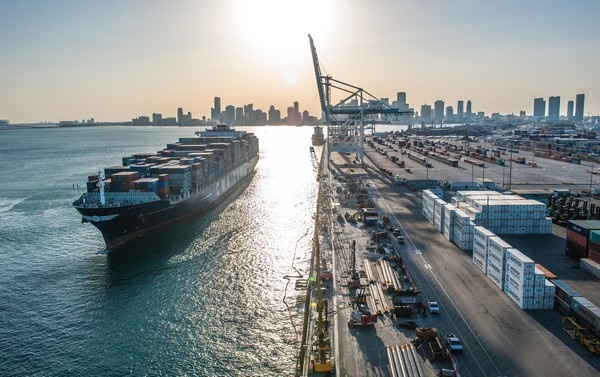 © Advance Customs Brokers
A shift toward alternative markets
Is the volume of produce entering the U.S. declining? "It's hard to tell right now—we're in a transition period," Compres explained. Offshore mango and melon seasons are ending, while citrus imports are starting up. "We did see a drop for a few weeks during the shift, but that's typical for this time of year."
Still, broader market forces are at play. The weakening U.S. dollar has made other destinations more attractive. "Grower-shippers in places like Peru or Honduras often make more sending produce to Europe, where there are no extra duties and the Euro is more stable," said Compres. "As a result, some are exploring other markets."
However, relying on alternative markets isn't a long-term fix. "The U.S. is a massive consumption market. Can other regions absorb the overflow?" Compres questioned. "If a shipper already sends five containers a week to Europe and wants to double that, will the market support it? Chances are that prices will have to drop to compete."
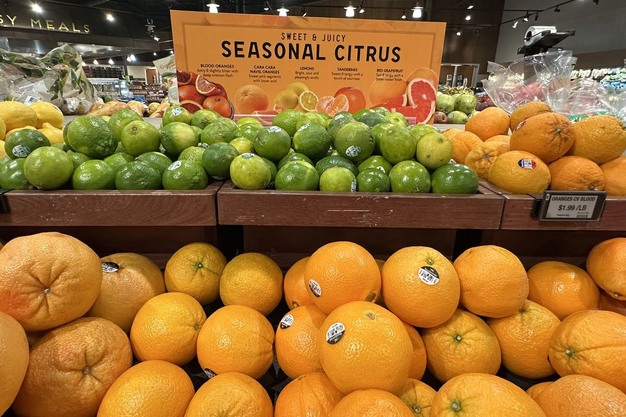 © 210AnalyticsPicture taken at The Fresh Market in Gainesville, FL. Source: 210Analytics.
Response from U.S. consumers
How is the American consumer responding to all of this? According to a monthly report from the IFPA, consumer support for tariffs declined sharply. Consumers report being concerned about the potential impact on prices, availability, and jobs. "Up until now, I don't really see the impact of import tariffs on consumer prices," says Anne-Marie Roerink with 210Analytics. "Consumer prices in the fruit category as a whole have slightly increased but that's a trend we've been witnessing from the start of the year. Vegetable prices have come down by three percent on average compared to last year," she mentioned.
This table shows the difference between the average price per pound paid at store level in April 2025 versus April 2024, 2023, and 2022 for a select number of produce items.
| Product | Price per pound April 2025 | Price change April 2025 vs. April 2024 | Price change April 2025 vs. April 2023 | Price change April 2025 vs. April 2022 |
| All fresh fruit | $1.82 | 0.9% | 4.2% | 2.2% |
| All fresh vegetables | $1.98 | -2.8% | -1.1% | 1.1% |
| Bananas | $0.60 | -2.4% | -0.8% | 2.4% |
| Berries | $4.45 | 2.7% | -6.2% | 0.4% |
| Grapes | $2.27 | -11.1% | 7.3% | 11.0% |
| Melons | $1.22 | -0.6% | 12.1% | 6.1% |
| Avocados | $2.79 | 11.6% | 27.9% | -8.2% |
| Mangos | $2.10 | 9.5% | 19.6% | 18.7% |
| Asparagus | $3.05 | 8.9% | 19.8% | 16.9% |
| Broccoli | $2.43 | 4.4% | -3.8% | 6.1% |
| Lettuce | $2.68 | -0.3% | 4.3% | 9.6% |
| Tomatoes | $2.30 | -1.6% | -1.0% | 0.1% |
It seems too early to tell if there is an impact on consumer prices and how consumers will respond. There have been speculations about consumers cutting down on more expensive exotic items and continuing to purchase produce like citrus for health reasons. "At this point, it is all a guessing game," Compres said. Part of it is also perception. "Consumers hear a lot about tariffs and going into the store, they may perceive a product as more expensive compared to last week, but do they remember the exact price they paid last week?"
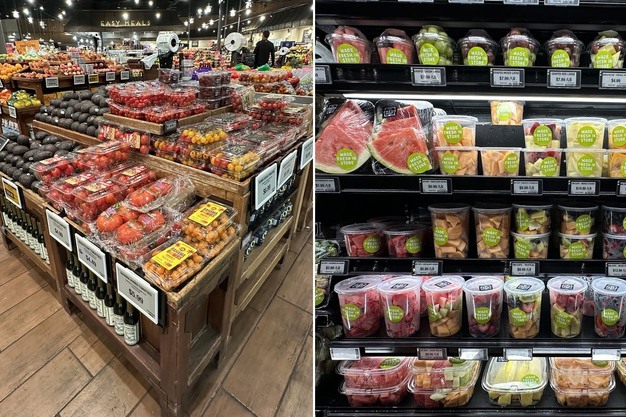 © 210AnalyticsPhotos taken at The Fresh Market in Gainesville, FL. Source: 210Analytics.
 For more information:
Pat Compres / Maria Bermudez
Advance Customs Brokers
Tel: (+1) 786-476-0700
[email protected]
[email protected]
www.advancecustomsbrokers.com
 Anne-Marie Roerink
210 Analytics LLC
Tel.: +1 (210) 651-2719
[email protected]
www.210analytics.com