A study has identified for the first time the Opius inflammatus wasp as a natural parasitoid of the Liriomyza bryoniae leaf miner, a pest mainly responsible for increasing damage to protected horticultural crops in Almería.
The study, published in the Spanish Entomology Association's journal, was carried out by the Biological Control Group of the Andalusian Research and Training Institute for Agriculture, Fishery, Food, and Organic Production (Ifapa) in Almería and Málaga, together with Almeria's Plant Production and Health Laboratory's Entomology Unit, and in collaboration with the Entomology and Pest Control Laboratory of the Cavanilles Institute of Biodiversity and Evolutionary Biology at the University of Valencia.
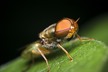
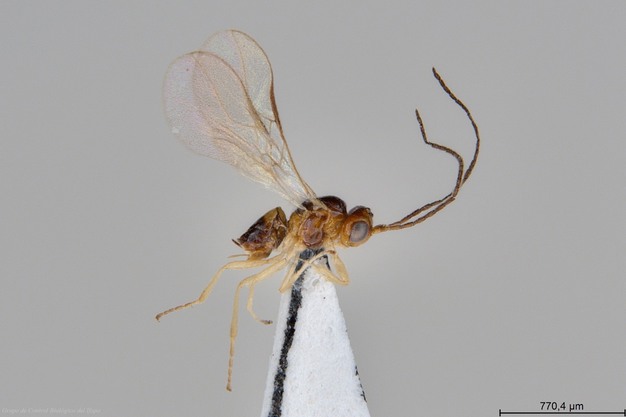 © IFAPA Opius inflammatus.
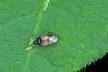
Liriomyza bryonia is a small fly known as a leaf miner due to the damage its larvae cause when they dig tunnels in leaves. The magnitude of the damage attributed to this leaf miner of the Liriomyza genus in greenhouse horticultural crops, especially in organic production, has been increasing since 2019.
In the recently published scientific paper, the researchers identified the Liriomyza bryonidae species as the main pest causing this damage and have recorded for the first time the presence of Opius inflammatus as its associated parasitoid. It's also the most abundant of all the species found, with 28% parasitism.
This study expands the complex of parasitoids described for Liriomyza, generating knowledge about new biological control agents with the potential to control this pest.
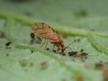
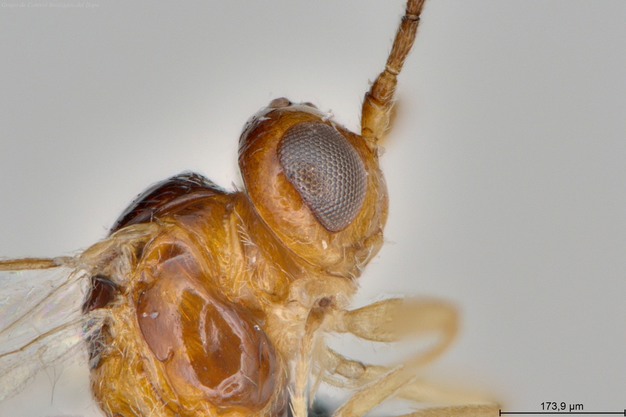 © IFAPA Opius inflammatus.
To date, no hosts of Opius inflammatus were known, so this identification expands the species' known distribution range in the western Mediterranean and adds a new agent to the complex of parasitoids that contribute to the natural biological control of Liriomyza spp. in protected horticultural systems.
This research is part of Ifapa's "Emerging and re-emerging pests in protected horticulture" project, carried out at Ifapa's La Mojonera centre (Almería) and co-financed by the European Regional Development Fund (ERDF).
For further information:
IFAPA - Junta de Andalucía
www.juntadeandalucia.es