In a recent trial with a lit tomato cultivation LED grow lights equipped with built-in fans have been used for the past few months. There is already plenty of research into the energy savings that the Climalux system brings, so this Dutch research instead focused on another major challenge: growing high-quality tomatoes under LED lighting. The researchers of demo center Proof concluded that the role of ventilation is as crucial in the growth of tomatoes as the light spectrum, which was the usual 90-5-5. Based on these results, they see enough reason to continue the study.
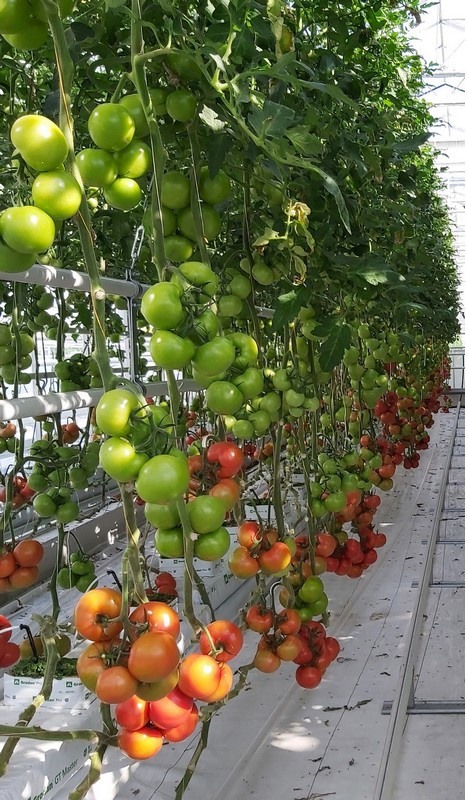 © HortiTechConvection heat
The special fixture of Climalux, which is located in Hoek van Holland where the grow lights are also manufactured, includes a fan that enables vertical ventilation. Ary de Jong of HortiTech explains: "The fan cools the fixtures and blows the warm air, or convection heat, into the crop, making the plants warmer than in regular LED cultivation. This warm air in the crop aids in moisture uptake." Ary conducted the trial on behalf of Climalux, alongside Elke van der Stok.
In the trial, big on the vine cluster tomatoes were grown under CLX-2 grow lights, designed as a one-to-one replacement for HPS lighting. A well-known tomato variety was selected, allowing the researchers to leverage a wealth of existing data. Ary explains: "Under full HPS lighting, tomato growers typically find that the crop can absorb 2.2 liters of water per square meter each day during the dark winter months. In contrast, under full-LED lighting, the absorption is about 1.8 liters. Even with more energy input, full-LED growers usually reach only 2.0 liters per square meter, which is less." Ary emphasizes that the market suspects this difference could be a key to solving current quality issues.
Uneven color
In the trial conducted at Proof, Ary and Elke received confirmation that they are on the right track. "The breeder who watched the trial alongside us confirmed to us that there was less uneven color in the fruits in our cultivation," Elke indicates. "Especially the first trusses showed less uneven color than in other cultivations." Uneven color, where tomatoes do not turn uniformly red during ripening and retain green spots, has been a persistent issue for growers. Such fruits cannot be sold, making this improvement significant.
In practice, growers dealing with the issue of unevenly colored fruits often explore various possibilities as to the cause, questioning whether it's a calcium issue or something else entirely, with each grower having their own theories as to the cause. Ary points out: "The fact remains that, regardless of where you seek the solution, moisture must effectively pass through the plant."
The usual response to unevenly colored fruits is to increase heating. However, in this research, Ary and Elke explored more than simply using more pipe heating. The experienced grower has noted that "a pipe at 55 degrees Celsius isn't always sufficient anymore." In this study, the researchers managed to increase screen hours by mixing greenhouse air with convection heat. By circulating air vertically through the greenhouse, they were able to dehumidify effectively and stimulate more activity at the top of the plants.
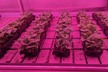
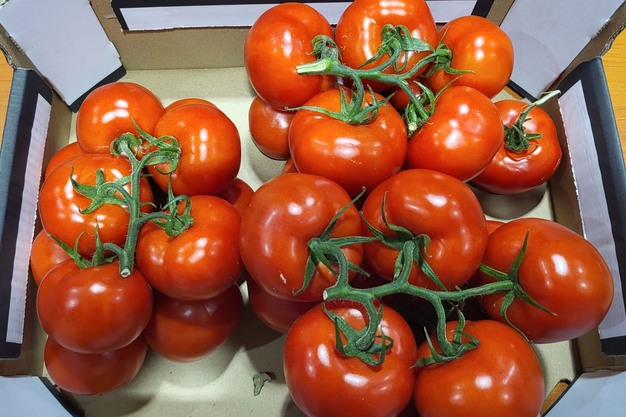 © HortiTechHarvest from the trial under Climalux grow light with fan
Dark winter days
To evaluate the effectiveness of the fan in Climalux's system, a smoke test was conducted. Elke explained: "We observed how the fan directs the smoke, and thus the air, into the crop." Ary added that this feature is particularly beneficial during the darkest period, referring to a trial where a flowering plant was planted on November 1. "There is a feature on the fan for extra air movement, which was especially helpful during the harshest winter days. Activating the fan's 'boost function' enhanced drainage and helped balance water drainage and supply during the darkest days. This gave the plants better water uptake, which improved nutrient absorption and strengthened them."
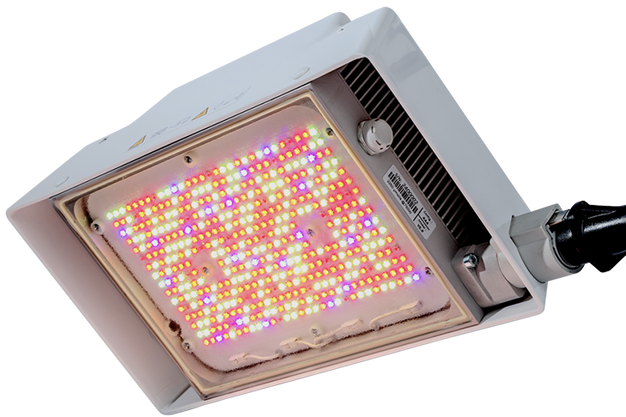 © Climalux
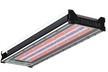
CLX-2 grow light from Climalux
For more information:
Niels Damen
Climalux
[email protected]
www.climalux.nu
Ary de Jong
Elke van der Stok
HortiTech
[email protected]
[email protected]
www.horti-tech.com