"ABBAonFire" and "Resist" are two collaborative in-house projects at the Julius Kühn Institute (JKI) that were selected from a pool of 13 outstanding proposals for funding. Both initiatives focus on harnessing natural organisms to sustainably combat plant diseases in organic farming and promote plant health.
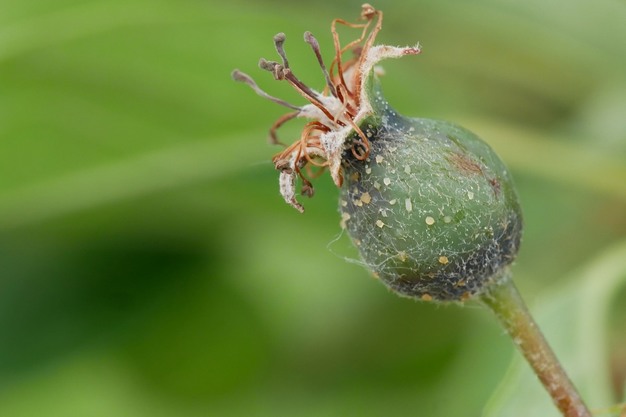
The project "ABBAonFire" – an acronym for Apple, Bee, Bacteria, and Antagonists – involves JKI researchers developing new strategies to control fire blight, a disease caused by the bacterium Erwinia amylovora. This innovative approach relies on so-called tailocins – naturally occurring, non-replicating derivatives of bacteriophages (viruses that exclusively infect bacteria). Tailocins attach to the target bacterium's cell wall, penetrate it, and irreversibly disrupt essential cellular functions. The project aims to identify plant-associated bacterial strains capable of producing tailocins that are effective against Erwinia amylovora, with a highly specific mode of action. Their efficacy and specificity will be evaluated in laboratory, greenhouse, and field trials. Promising candidates will undergo detailed assessment for their antagonistic potential and targeted impact on the fire blight pathogen. The research team will also examine possible effects on non-target organisms, such as pollinators like honeybees and bumblebees, and conduct an extended risk analysis in the context of plant health.
See project profile: ABBAonFire
 © Julius Kühn Institute
"Resist" – Boosting lettuce resilience in a changing climate
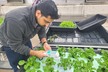
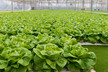
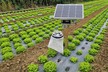
The "Resist" project was also considered eligible for funding by the independent selection committee. The aim of Resist is to enhance the resilience of organically grown lettuce to both biotic stressors (e.g. pathogens) and abiotic stressors (e.g. drought) – both of which are expected to increase with climate change. The researchers are employing the concept of "priming": lettuce plants are exposed to beneficial microorganisms to pre-activate their immune systems, enabling them to better cope with future stress conditions. The project focuses on pathogens such as Bremia lactucae (downy mildew) and Golovinomyces cichoracearum (powdery mildew), as well as the lettuce-specific aphid Nasonovia ribisnigri. Within the framework of "Resist", thirty different Lactuca lettuce varieties, including reference cultivars, are being grown organically and analysed in terms of their microbiomes and stress resilience. The goal is to identify lettuce varieties that show particularly strong positive responses to beneficial microbes.
See project profile: Resist
Background on the JKI in-house collaborative projects
This is the third time the JKI has issued a call for internal collaborative projects. The aim is to address key research needs in organic farming while fostering synergy through cross-institute cooperation. Funding eligibility requires collaboration with research institutions and partners from the organic farming sector, as well as the participation of at least one institute from each of the JKI's three scientific divisions.
For more information:
Julius Kühn-Institut (JKI)
Tel.: 0531 299 4441
www.julius-kuehn.de