The National Institute of Food and Agriculture supports research, education and extension efforts throughout the nation that aim for the creation of more and better market opportunities for farmers and producers, including those in urban areas.
NIFA’s Sustainable Agriculture Research and Education (SARE) program is just one of NIFA’s many programs focused on this goal. For decades, urban farms and community gardens have helped meet demand for fresh and local produce.
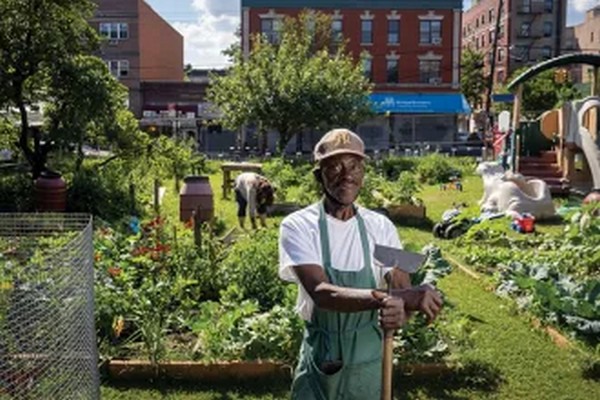
Urban farming creatively utilizes limited space, conserves land and transforms vacant lots or buildings into productive greenspaces. Farming in cities can be a way for communities to grow healthy food while receiving other interrelated environmental, economic and social benefits.
SARE Outreach’s newest bulletin, Best Practices for the Sustainable Urban Farm, outlines strategies that urban farmers can use to tackle the opportunities and challenges associated with urban production. It provides an overview of the issues for new farmers to consider as they establish and manage an urban farm or community garden. It also suggests where to go for in-depth information. From accessing land and managing production challenges (including soil, water and pests) to marketing farm products, the SARE publication shares some of the current practices that urban producers can use to develop their operations, as well as additional resource materials.
Dr. Vance Owens, NIFA’s national program leader for SARE, said this is just the most recent example of the work being conducted by SARE.
“Sustainable agriculture in both urban and rural areas is a NIFA priority,” said Owens. “Since 1988, SARE has guided more than 8,500 projects with funding support of about $389 million from NIFA. These projects cover a wide range of topics, including on-farm renewable energy, pest and weed management, cover crops, high tunnel and session extension, marketing, sustainable communities, and local and regional food systems.”
Source: nifa.usda.gov